
217KWH-50KW Hybrid ESS Solution
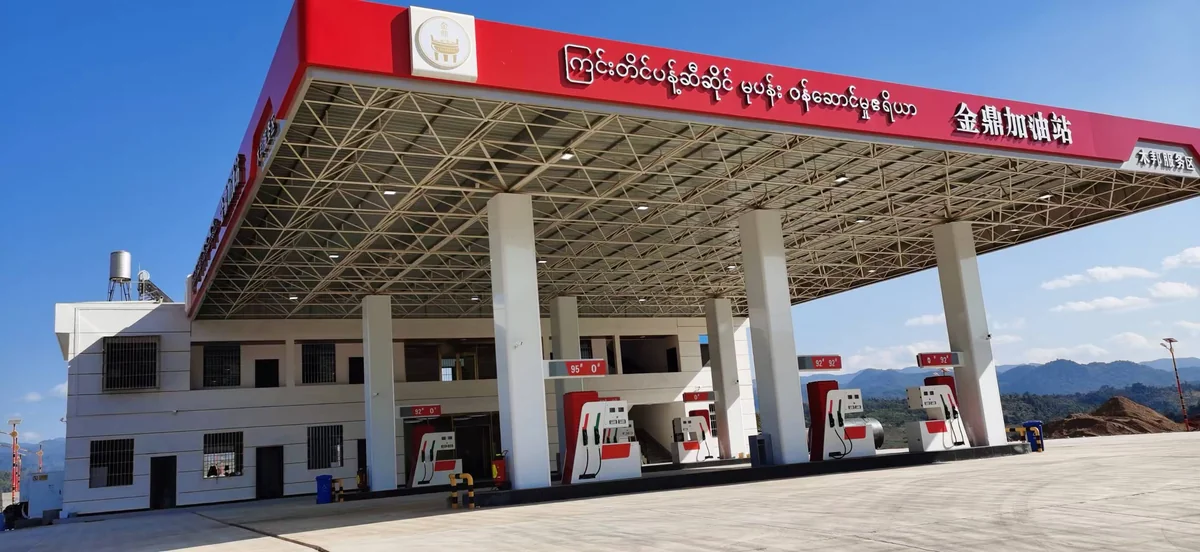
Myanmar Jinding Gas Station — Hybrid Solar + Storage Project
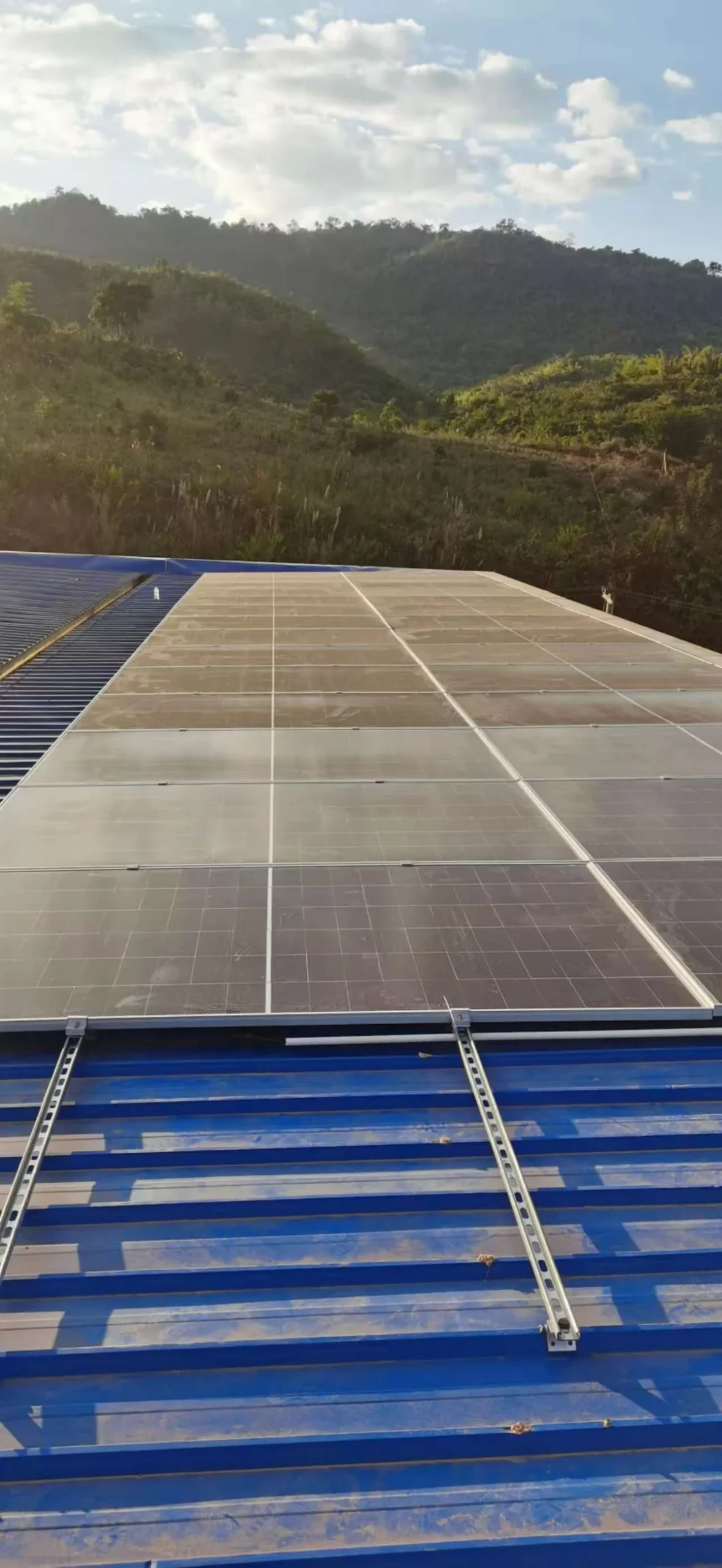
This project delivers a 217 kWh / 50 kW hybrid energy storage system (ESS) installed at the Jinding Gas Station in Myanmar. The system operates in hybrid mode, integrating grid power with rooftop solar photovoltaic (PV) generation to create a self-sustaining microgrid that charges during daylight hours and discharges at night to power station operations.
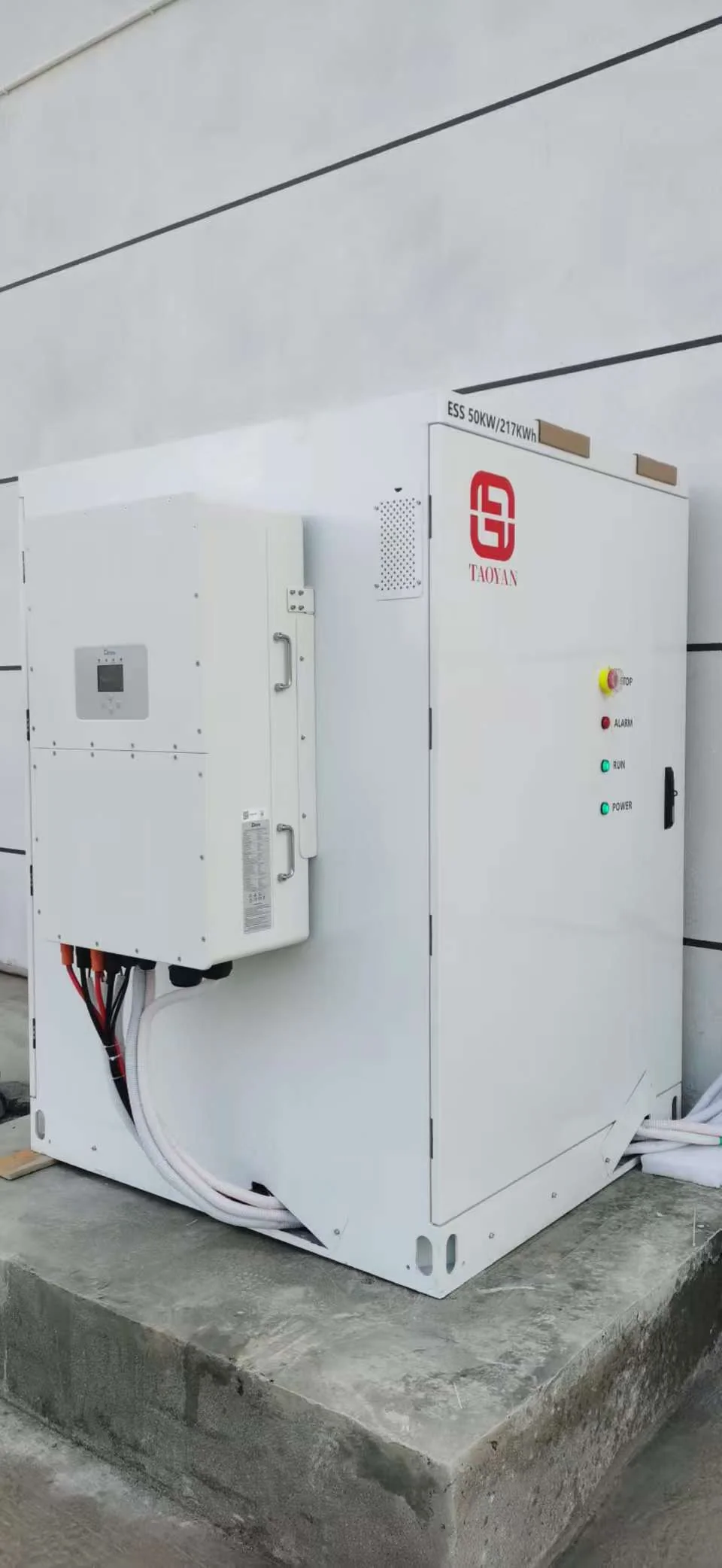
The solution centers on a compact cabinet-type all-in-one unit featuring an air-cooled lithium iron phosphate (LFP) battery pack (216S / 314Ah cells, 691.2V nominal) paired with a hybrid PCS/inverter that supports both AC grid connection and DC solar MPPT input (up to 850V). During daytime, excess solar generation charges the battery while simultaneously supplying station loads through the grid; at night, the stored energy is discharged to cover lighting, fuel pumps, and convenience store operations — dramatically reducing diesel generator dependency and electricity costs.
Total Energy Capacity
Rated Output Power
Grid + Solar MPPT
PCS Efficiency
Cell Chemistry
Protection Rating
🔌 Key Innovation: Compact Hybrid Cabinet ESS for Off-Grid Edge Sites
This solution packs 217kWh of air-cooled LFP storage plus a 50kW hybrid PCS into a single 1350×1350×2200mm cabinet — small enough to fit against the exterior wall of a gas station building without requiring a dedicated battery room or container pad. The hybrid inverter accepts both 400V AC grid input and up to 1000V DC solar PV input via built-in MPPT controllers (250–850V operating range), enabling true island-capable operation. With cycle life exceeding 8000 cycles at 80% DOD and a total weight of only 1.9 tonnes, this system represents the ideal balance of power density, deployment simplicity, and total cost of ownership for remote commercial sites with unreliable grid access.
- Air-Cooled LFP Battery Pack: 216S configuration using 3.2V / 314Ah prismatic LFP cells (217 kWh total, 691.2V nominal). Air cooling eliminates liquid coolant maintenance overhead. Cycle life ≥8000 cycles @ 80% DOD. Operating temperature range -25°C to 55°C.
- Hybrid PCS/Inverter: 50kW rated / 55kW peak output supporting simultaneous grid-tied operation and solar MPPT charging. Maximum PV input voltage 1000V, MPPT range 250–850V. Four-quadrant control, power factor adjustable.
- Solar + Grid Hybrid Operation: Rooftop PV array charges the ESS during daylight hours via built-in MPPT controllers. The system intelligently manages three power sources — solar, battery, and grid — prioritizing solar self-consumption first, then battery discharge, with grid as backup only.
- Nighttime Autonomous Supply: After sunset, the fully-charged 217kWh battery powers all station loads including fuel pump motors, LED lighting, POS systems, and refrigeration — eliminating or drastically reducing nighttime grid/diesel dependency.
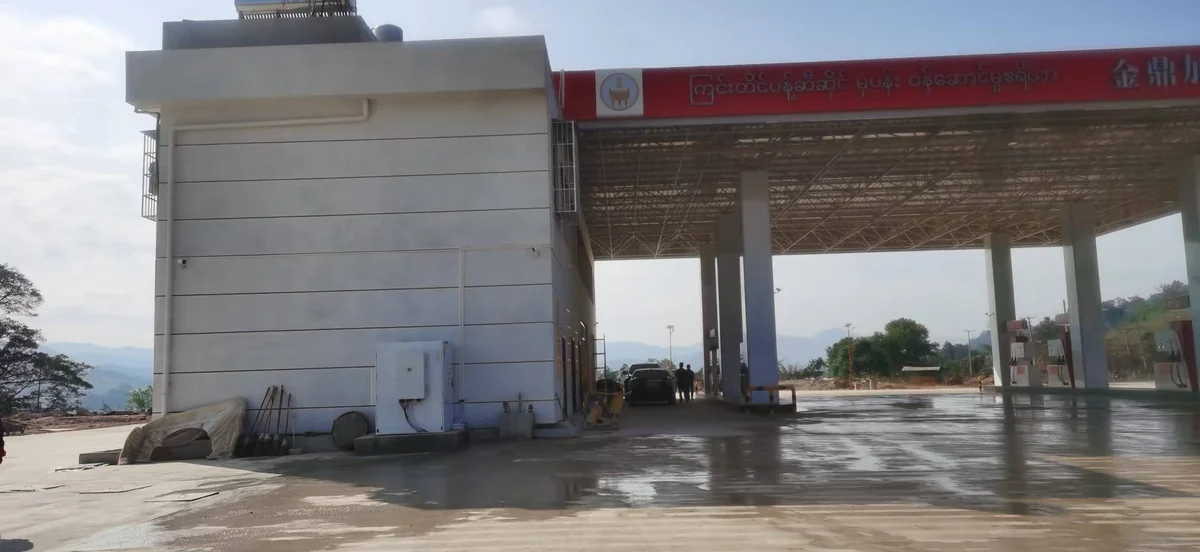
- Compact Cabinet Deployment: Single-cabinet design (1350×1350×2200mm, 1.9T) installs directly against the building exterior wall on a simple concrete plinth. No dedicated battery house, no container foundation, minimal civil works.
- Integrated BMS Safety: Multi-level Battery Management System with over/under voltage, current, and temperature protection. IP54 enclosure rating suitable for outdoor installation. Remote monitoring via TAOYAN EMS platform.
Project Images
Battery System Specifications
| Battery Pack Parameters | |
|---|---|
| Cell Type | LFP – 314Ah Prismatic |
| Total Capacity | 217 kWh |
| Battery Configuration | 1P216S (216 cells in series) |
| Nominal Voltage | 691.2 V DC |
| Voltage Range | 622 V – 760 V DC |
| Operating Temperature | -25°C to 55°C |
| Cooling Method | Air-Cooled (Natural Convection + Forced Fan) |
| Cycle Life | ≥ 8,000 cycles @ 80% DOD |
| Protection Rating | IP54 |
| Max Altitude | ≤ 4,000 m |
| Dimensions (W×D×H) | 1,350 × 1,350 × 2,200 mm |
| Total Weight | ≈ 1.9 Tonnes |
| Battery Module Specifications | |
| Module Capacity | 24.12 kWh |
| Module Configuration | 1P24S (24 cells in series) |
| Nominal Voltage | 76.8 V DC |
| Cell Capacity | 314 Ah |
| Module Dimensions (W×D×H) | 770 × 575 × 245 mm |
| Module Weight | 180 kg |
Hybrid Inverter & PCS Specifications
| Hybrid PCS Parameters (50kW) | |
|---|---|
| Inverter Type | Hybrid (Grid-Tied + Solar MPPT) |
| AC Rated Output Power | 50 kW |
| AC Maximum Output Power | 55 kW |
| AC Rated Voltage | 400 V AC (3-phase 4-wire) |
| Rated Frequency | 50 / 60 Hz |
| Maximum PV Input Voltage | 1,000 V DC |
| MPPT Operating Voltage Range | 250 V – 850 V DC |
| MPPT Full Load Voltage Range | 450 V – 850 V DC |
| DC Battery Voltage Range | 622 V – 760 V DC |
| Maximum Efficiency | > 96% |
| Cooling Method | Forced Air Cooling |
| Protection Rating | IP54 |
| Dimensions (W×D×H) | Integrated within cabinet (1,350×1,350×2,200 mm) |
| Total System Weight | ≈ 1.9 Tonnes |
TAOYAN Energy Management System (EMS)
This project is equipped with TAOYAN’s self-developed Energy Management System (EMS) — a comprehensive monitoring, control, and revenue optimization platform designed specifically for industrial BESS deployments. The EMS provides real-time visibility into every aspect of the energy storage system, from individual cell-level data to grid-wide economic performance.
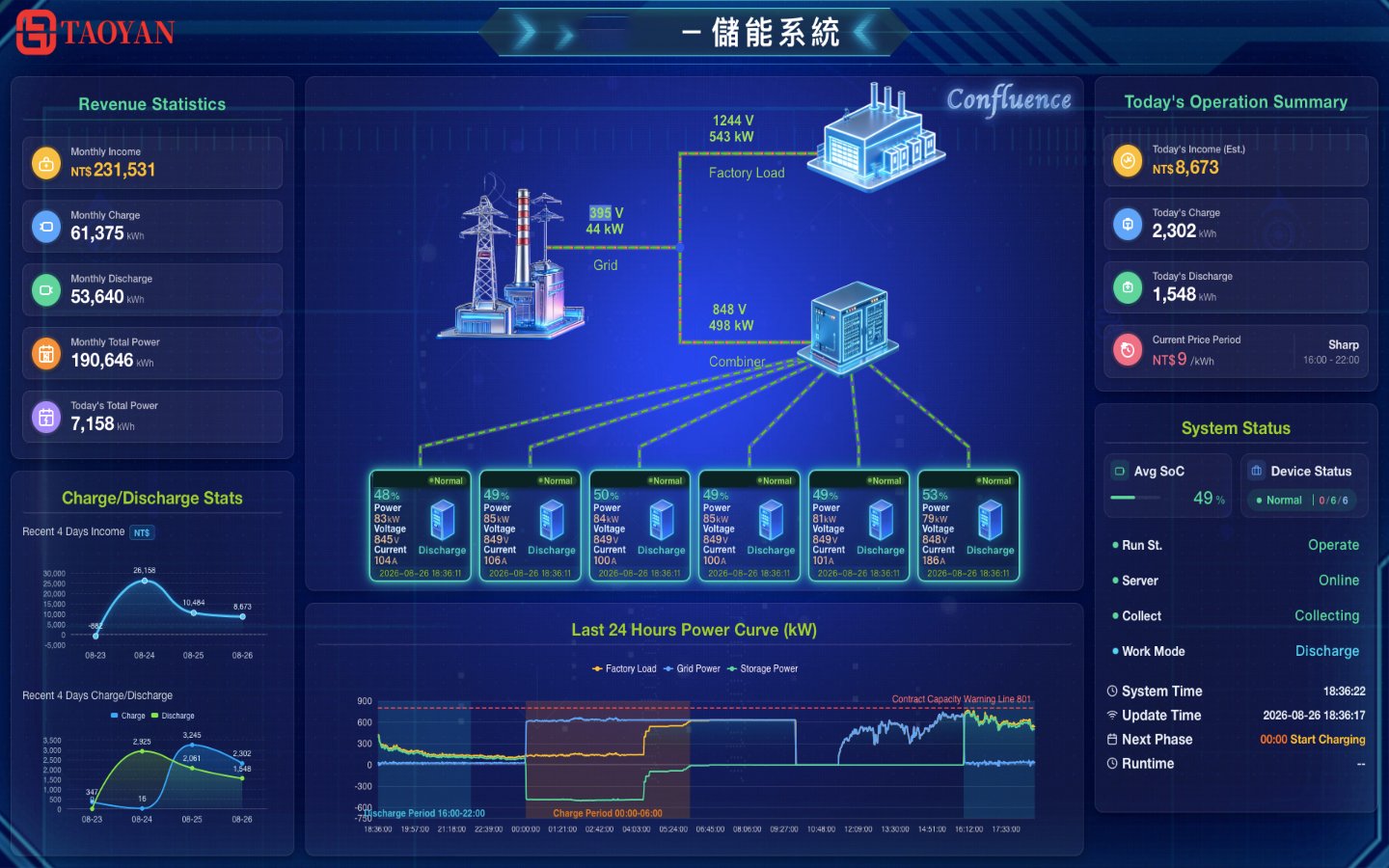
EMS Confluence Dashboard — Real-time system topology, unit status, revenue statistics & power curves
Core Capabilities
- System Topology Visualization: Interactive single-line diagram showing real-time power flow between Grid, Solar PV, Battery Unit, and Station Loads — with live voltage, current, and power readings at each node.
- Unit-Level Monitoring: Individual status for the battery cabinet — SoC %, charge/discharge power (kW), voltage (V), current (A), temperature, and health status with normal/warning/fault indicators.
- PCS Power & SoC Tracking: 24-hour rolling charts for hybrid PCS output power and battery State of Charge, enabling operators to verify scheduling execution and identify anomalies.
- Batch Control Panel: One-click operation mode switching between Manual Charge, Manual Discharge, All-weather Auto, and Scheduled modes — with immediate effect confirmation.
- Revenue Analytics: Daily/monthly/yearly income tracking broken down by tariff period with profit calculation based on local rate schedules.
- Charge/Discharge Statistics: Comprehensive kWh accounting with daily bar-chart comparison, cumulative totals, and exportable reports for financial reconciliation.
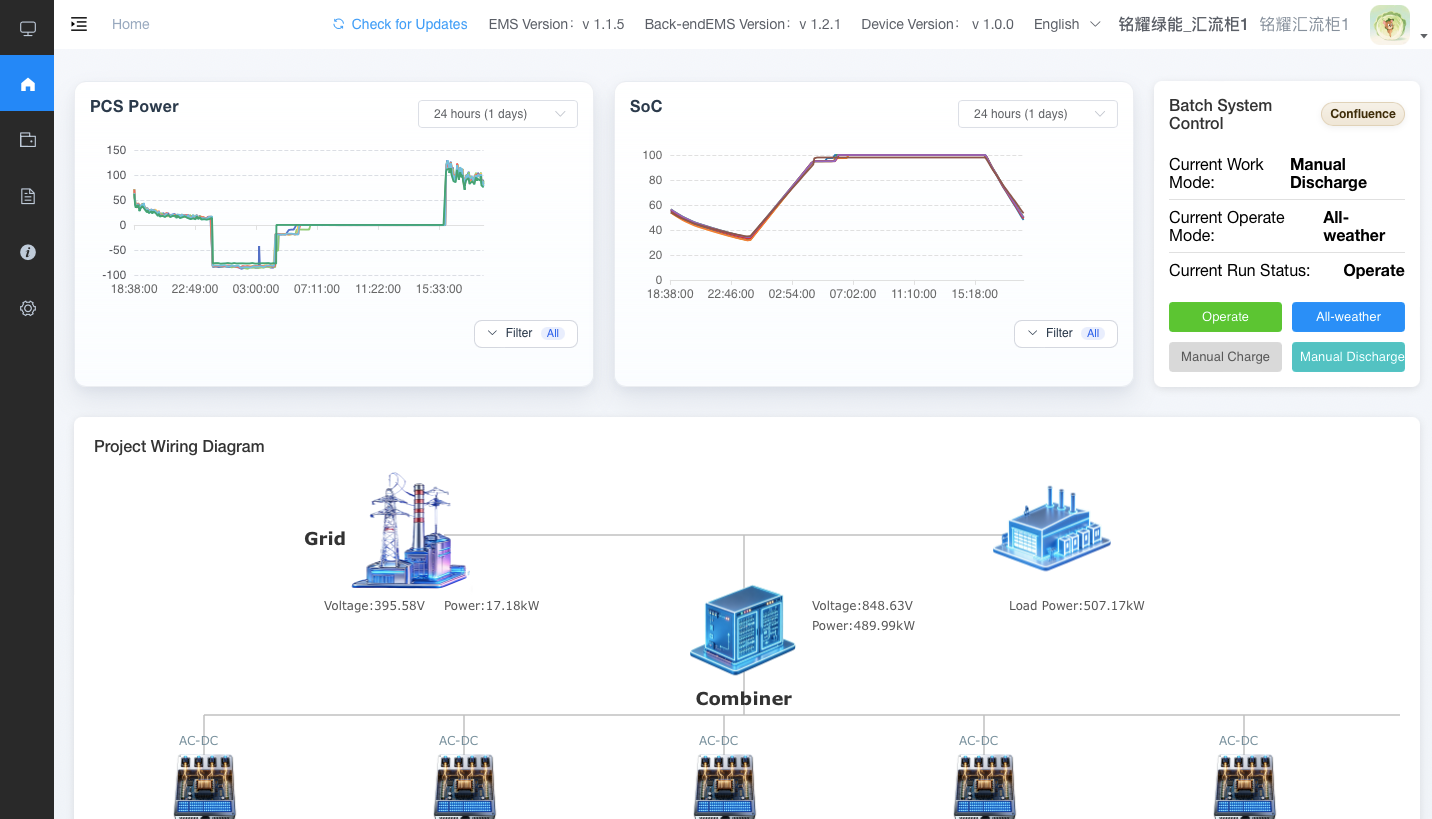
PCS power curves, SoC tracking, batch control panel & real-time wiring diagram
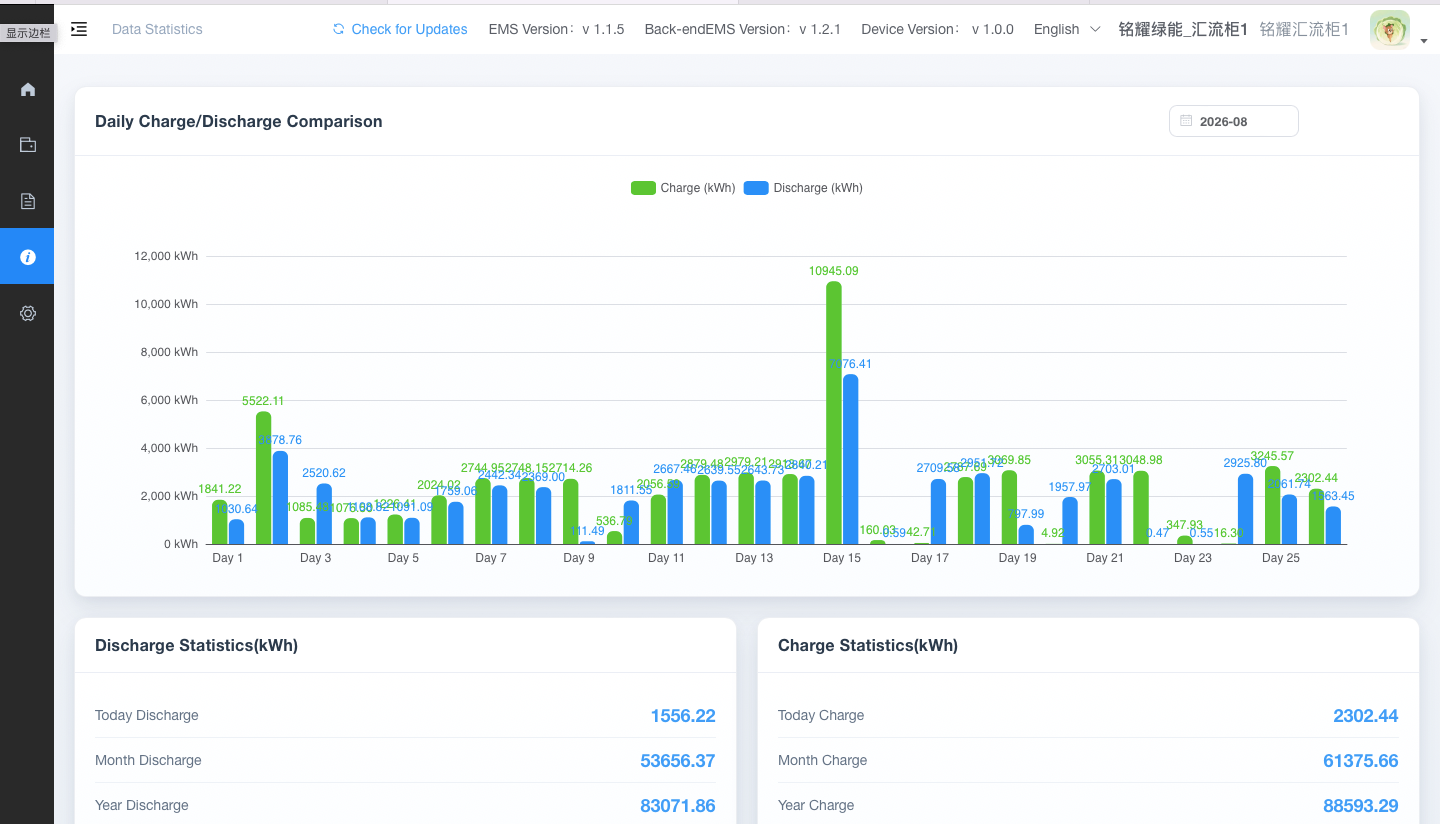
Daily charge/discharge comparison chart with period-based revenue breakdown