
783KWH-300KW Solution
Project Description
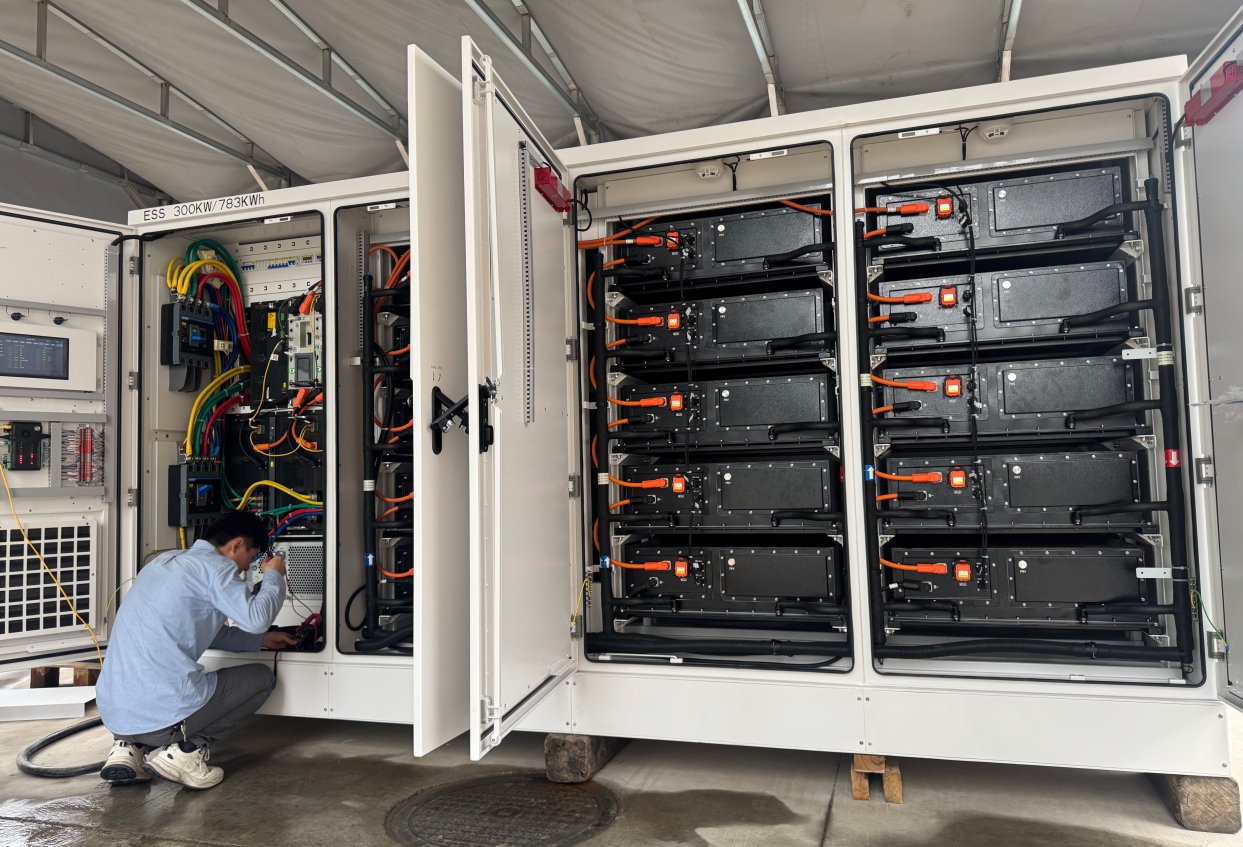
This project delivers a 783kWh / 315kW grid-connected battery energy storage system (BESS) deployed in São Paulo, Brazil — designed for commercial and industrial facilities requiring reliable power supply with seamless UPS backup capability.
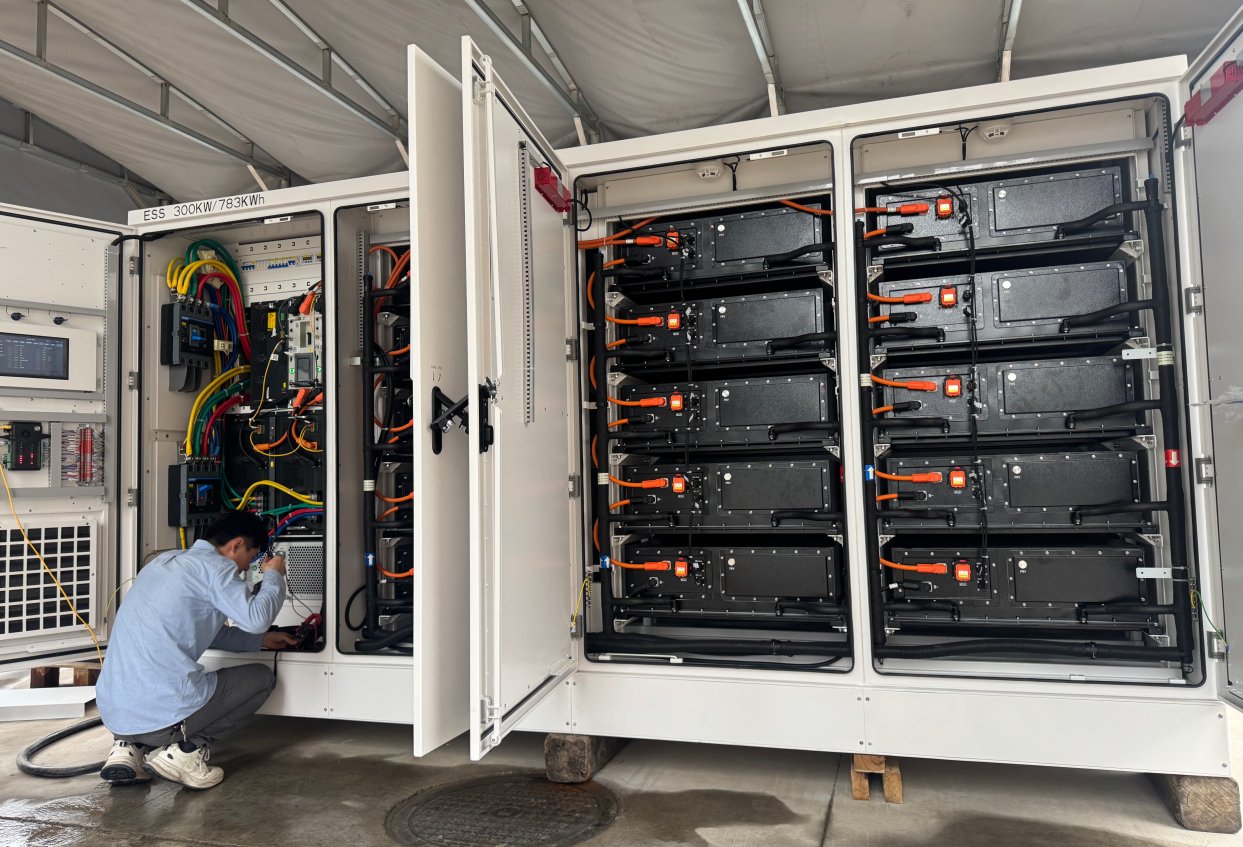
The system is housed in a single outdoor liquid-cooled cabinet featuring an integrated design: three (3) clusters of liquid-cooled LFP battery packs (832V / 314Ah each, 783.744 kWh total), three (3) parallel 105kW PCS modules, and a built-in 500kVA STS (Static Transfer Switch) for uninterruptible power backup with ultra-fast <20ms grid-to-battery transfer time.
The integrated liquid thermal management system maintains optimal cell temperatures across a wide -25°C to 55°C operating range. The all-in-one cabinet design (IP54) eliminates the need for dedicated battery rooms or containerized solutions, enabling rapid deployment with minimal civil works — ideal for Brazil’s growing C&I energy storage market.
Total Energy Capacity
Rated Output Power
Outdoor Cabinet
UPS Transfer Time
Cell Chemistry
Protection Rating
- Liquid-Cooled LFP Battery System: Three clusters of 832V / 314Ah LFP cells (783.744 kWh total) using 3.2V prismatic cells with integrated die-cast liquid cooling plates. Each module (52S1P, 166.4V / 52.25kWh) achieves IP67 protection. Cycle life ≥8000 cycles at 90% DOD.
- Modular PCS Architecture: Three × 105kW PCS modules (EPCS105-AM-F) operate in parallel via centralized DC bus, delivering 315kW rated / 346.5kW maximum output. Four-quadrant active/reactive control, power factor >0.99, THD <2%, max efficiency 98.5%.
- Integrated STS/UPS: Built-in 500kVA Static Transfer Switch (ESTS500-M) enables <20ms automatic transfer from grid to battery power upon detection of voltage/frequency anomalies. Eliminates need for separate UPS equipment.
- Advanced Thermal Management: Dual-circuit liquid cooling (5.2kW refrigeration + 2.5kW heating) maintains battery temperature within optimal range. PTC heater ensures reliable charging down to -25°C.
- All-in-One Outdoor Cabinet: Single-cabinet IP54 design (3800×1450×2000mm, ~9.5 tonnes) requires only concrete plinth and grid connection. Factory-tested complete unit for rapid deployment.
- Comprehensive Safety: Multi-layer protection including 3-level BMS (BMU/BCMU/BAMS), aerosol fire suppression (optional HFC-227ea), smoke/heat detection, and emergency stop.
Project Images
Battery System Specifications
| Cabinet Overview | |
|---|---|
| Cabinet Type | Outdoor Liquid-Cooled Integrated Cabinet |
| External Dimensions (L×W×H) | 3,800 × 1,450 × 2,000 mm |
| Total Weight | ≈ 9.5 Tonnes (∼9,500 kg) |
| Compartment Layout | Battery Chamber + Power Conversion Chamber (PCS+STS) |
| Battery Chamber Cooling | Liquid Cooling System (5.2kW refrigeration + 2.5kW heating) |
| PCS Chamber Cooling | Forced Air (fan cooling) |
| Protection Rating | IP54 (Cabinet) / IP67 (Battery Module) |
| Fire Suppression System | |
| Agent Type | Aerosol (Thermal) / Optional HFC-227ea Gas |
| Detection | Smoke sensors + Heat sensors + Acoustic/optical alarm |
| Safety Interlock | Automatic system shutdown upon detection; emergency stop button |
| BMS (Battery Management System) | |
| Architecture | 3-Level: BMU (module) → BCMU (cluster) → BAMS (array) |
| SOC Estimation Accuracy | ≤ 5% |
| Communication | CAN bus + RS485 + LAN (Ethernet) |
| Key Functions | Real-time monitoring, cell balancing (passive), over/under voltage/current/temp protection, thermal management, event logging (128MB storage) |
| EMS (Energy Management System) | |
| Functions | Real-time monitoring, peak shaving scheduling, TOU optimization, remote dispatch, fault alarm, reporting, curve analysis |
| Protocol Support | MODBUS RTU/TCP |
| User Interface | Touchscreen HMI + Remote SCADA connectivity |
Inverter & PCS Specifications
| PCS Parameters (EPCS105-AM-F) × 3 units | |
|---|---|
| Inverter Type | Grid-Tied (On-Grid) |
| Rated Output Power (total) | 315 kW (3 × 10⁵kW) |
| Maximum Output Power (total) | 346.5 kW (3 × 115.5kW) |
| DC Voltage Range | 650 V – 950 V DC |
| Maximum DC Current | 510 A (170 A × 3 strings) |
| DC String Count | 3 strings |
| AC Rated Voltage | 380 / 400 V AC (3-phase 4-wire) |
| Grid Voltage Range | 320 V – 460 V AC |
| Maximum AC Current | 501 A |
| Rated Frequency | 50 / 60 Hz |
| Power Factor | > 0.99 (at rated power) |
| Power Factor Range | -1 (leading) ~ 1 (lagging) |
| Total Harmonic Distortion | < 2% (at rated power) |
| Maximum Efficiency | 98.5% |
| Cooling Method | Forced Fan Cooling |
| Noise Level | < 75 dB |
| Dimensions (per unit) | 500 × 270 × 670 mm |
| Weight (total) | 178.5 kg (3 × 59.5kg) |
STS (UPS) Specifications
| STS Parameters (ESTS500-M) | |
|---|---|
| Load-Side Port Power | 500 kVA |
| Grid-Side Port Power | 500 kVA |
| Nominal Voltage | 400 V AC (3-phase) |
| Grid Voltage Range | 400V ±15% |
| Rated Frequency | 50 / 60 Hz |
| Transfer Time | < 20 ms (grid → battery) |
| Switching Mode | Static Transfer Switch (STS) / Automatic |
| Efficiency | > 99.5% |
| Protection Function | Over/Under voltage, frequency anomaly, phase loss detection |
| Communication | RS485 / ModBus RTU |
| Dimensions (W×D×H) | 440 × 200 × 500 mm |
| Weight | 39.6 kg |
Cabinet & Safety System Specifications
| Cabinet Overview | |
|---|---|
| Cabinet Type | Outdoor Liquid-Cooled Integrated Cabinet |
| External Dimensions (L×W×H) | 3,800 × 1,450 × 2,000 mm |
| Total Weight | ≈ 9.5 Tonnes (∼9,500 kg) |
| Compartment Layout | Battery Chamber + Power Conversion Chamber (PCS+STS) |
| Battery Chamber Cooling | Liquid Cooling System (5.2kW refrigeration + 2.5kW heating) |
| PCS Chamber Cooling | Forced Air (fan cooling) |
| Protection Rating | IP54 (Cabinet) / IP67 (Battery Module) |
| Fire Suppression System | |
| Agent Type | Aerosol (Thermal) / Optional HFC-227ea Gas |
| Detection | Smoke sensors + Heat sensors + Acoustic/optical alarm |
| Safety Interlock | Automatic system shutdown upon detection; emergency stop button |
| BMS (Battery Management System) | |
| Architecture | 3-Level: BMU (module) → BCMU (cluster) → BAMS (array) |
| SOC Estimation Accuracy | ≤ 5% |
| Communication | CAN bus + RS485 + LAN (Ethernet) |
| Key Functions | Real-time monitoring, cell balancing (passive), over/under voltage/current/temp protection, thermal management, event logging (128MB storage) |
| EMS (Energy Management System) | |
| Functions | Real-time monitoring, peak shaving scheduling, TOU optimization, remote dispatch, fault alarm, reporting, curve analysis |
| Protocol Support | MODBUS RTU/TCP |
| User Interface | Touchscreen HMI + Remote SCADA connectivity |
TAOYAN Energy Management System (EMS)
This project is equipped with TAOYAN’s self-developed Energy Management System (EMS) — a comprehensive monitoring, control, and revenue optimization platform designed specifically for industrial BESS deployments.
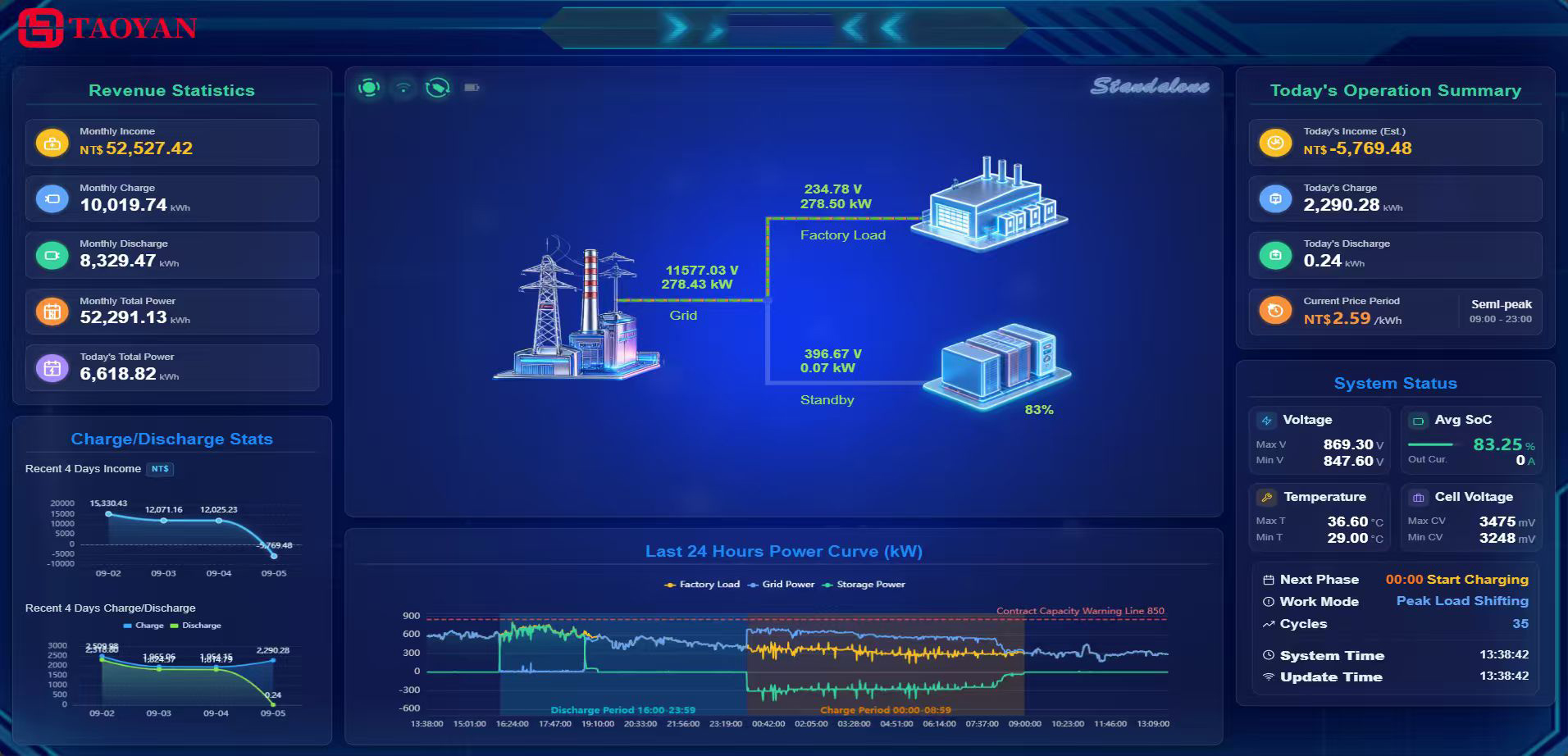
EMS Confluence Dashboard — Real-time system topology, unit status, revenue statistics & power curves
Core Capabilities
- System Topology Visualization: Interactive single-line diagram showing real-time power flow between Grid, STS, Battery Units, and Facility Load with live readings at each node.
- Unit-Level Monitoring: Individual status for each battery cluster — SoC %, charge/discharge power (kW), voltage (V), current (A), temperature, and health status.
- PCS Power & SoC Tracking: 24-hour rolling charts for PCS output power and battery State of Charge enabling operators to verify scheduling execution.
- Batch Control Panel: One-click operation mode switching between Manual Charge, Manual Discharge, All-weather Auto, and Scheduled modes.
- Revenue Analytics: Daily/monthly/yearly income tracking broken down by tariff period with profit calculation based on local rate schedules.
- Charge/Discharge Statistics: Comprehensive kWh accounting with daily bar-chart comparison and exportable reports.
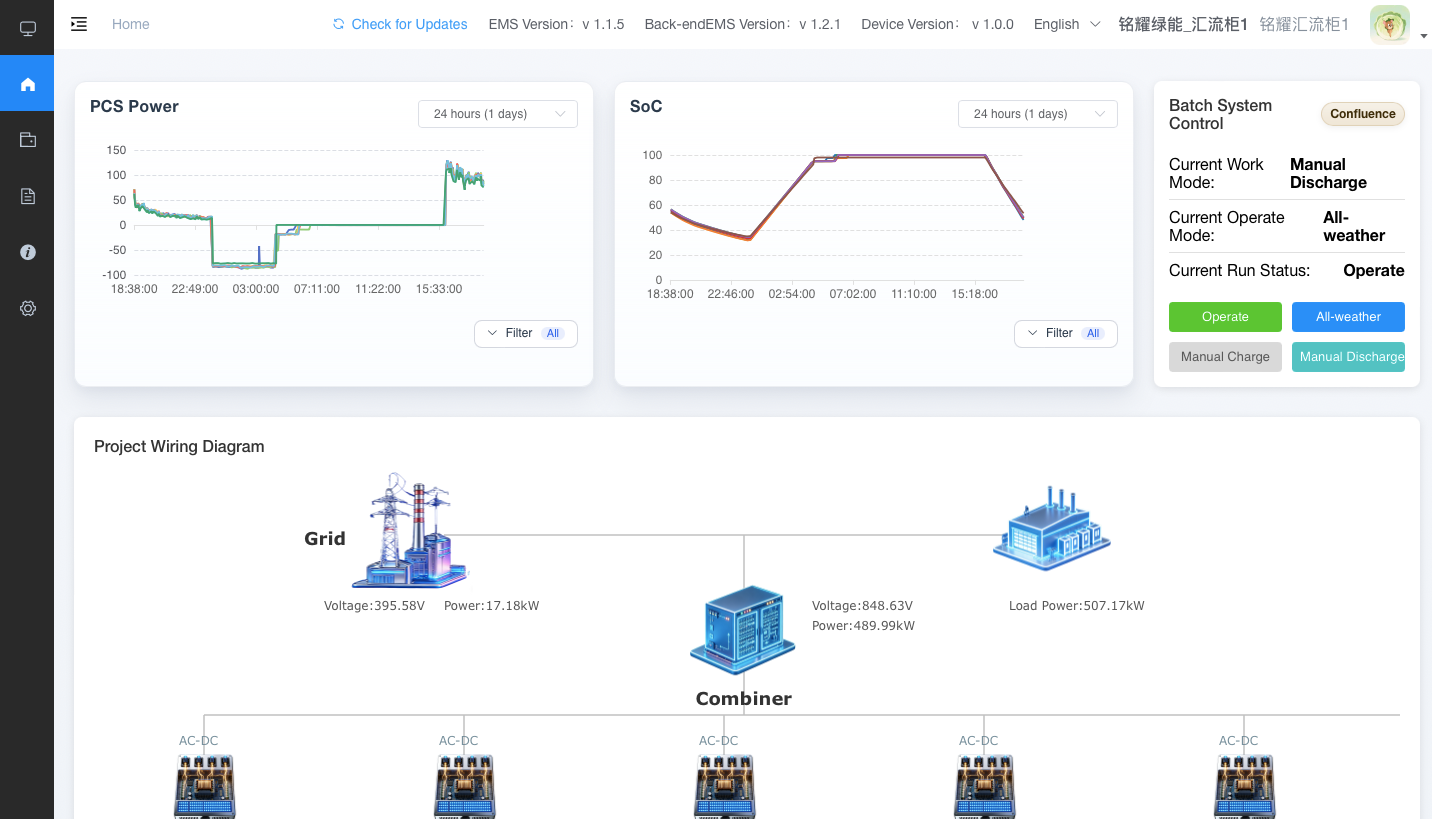
PCS Power curves, SoC tracking, batch control panel & real-time wiring diagram
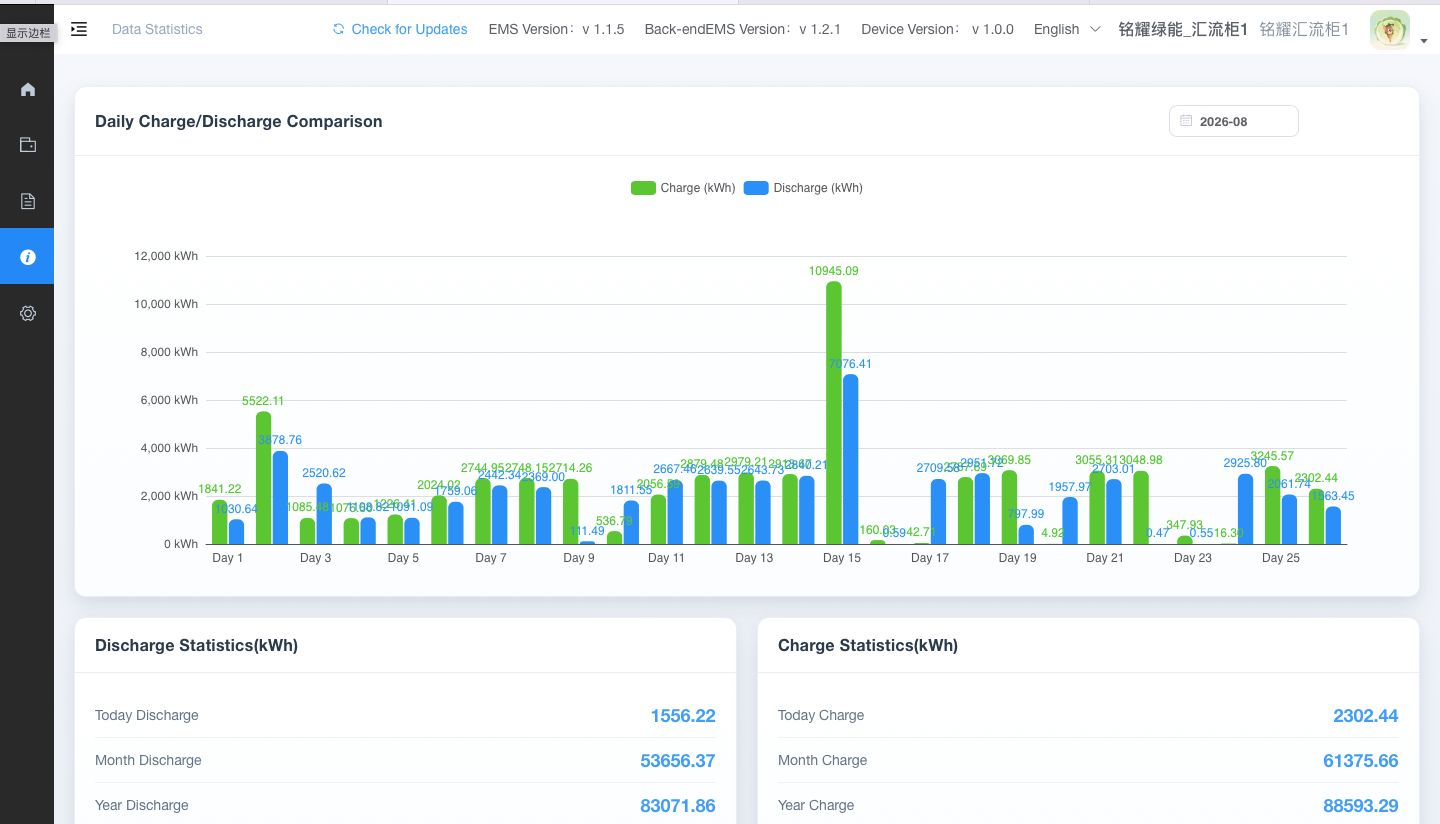
Daily charge/discharge comparison chart with period-based revenue breakdown
Hot Tags
Frequently Asked Questions
FAQ
What is the rated capacity and output of the 783kWh 300kW system?
The 783kWh system is rated at 300kW. It uses liquid-cooled LFP cells in a single-cabinet IP54 outdoor design, sized for industrial loads with high cycling demand.
Does the 783kWh cabinet need a dedicated battery room?
No. The IP54 cabinet design is intended to eliminate the need for dedicated battery rooms or containerised solutions, so it only requires a concrete plinth and grid connection, enabling rapid deployment.
What is the operating temperature range of the 783kWh system?
The integrated liquid thermal management system maintains optimal cell temperatures across a wide operating range, roughly -25 to 55 degrees Celsius, supported by 5.2kW refrigeration and 2.5kW heating plus a PTC heater for reliable low-temperature charging.
What are the cabinet dimensions and weight?
The single-cabinet IP54 design measures approximately 3800 x 1450 x 2000 mm and weighs about 9.5 tonnes. Civil work is limited to a plinth and the grid tie-in.
How does TAOYAN size the system for a different site?
Sizing starts from your peak and average load, required backup duration, solar input and ambient temperature. We then propose the cabinet count, PCS rating and protection scheme.
What is included in a TAOYAN project quotation?
The quotation covers the battery cabinets, PCS, EMS configuration, and the engineering package including protection settings and commissioning scope. Installation can be quoted separately.
Get a Quotation for the 783kWh / 300kW C&I Energy Storage System
Share your load profile, cycle frequency and installation site, and our engineering team will reply with a sized configuration, cabinet layout and quotation. Typical reply within one business day.