
If your factory’s electricity bill feels like two bills stapled together — one for the energy you use and one for how fast you use it — you have already met the demand charge. For many commercial and industrial sites, demand charges are 30–50% of the total bill, and they are the single biggest cost a battery energy storage system (BESS) can remove. This guide explains how peak shaving with battery storage works, the math of what it actually saves, and how to size a system that pays back — with a real TAOYAN deployment at a factory in São Paulo, Brazil.
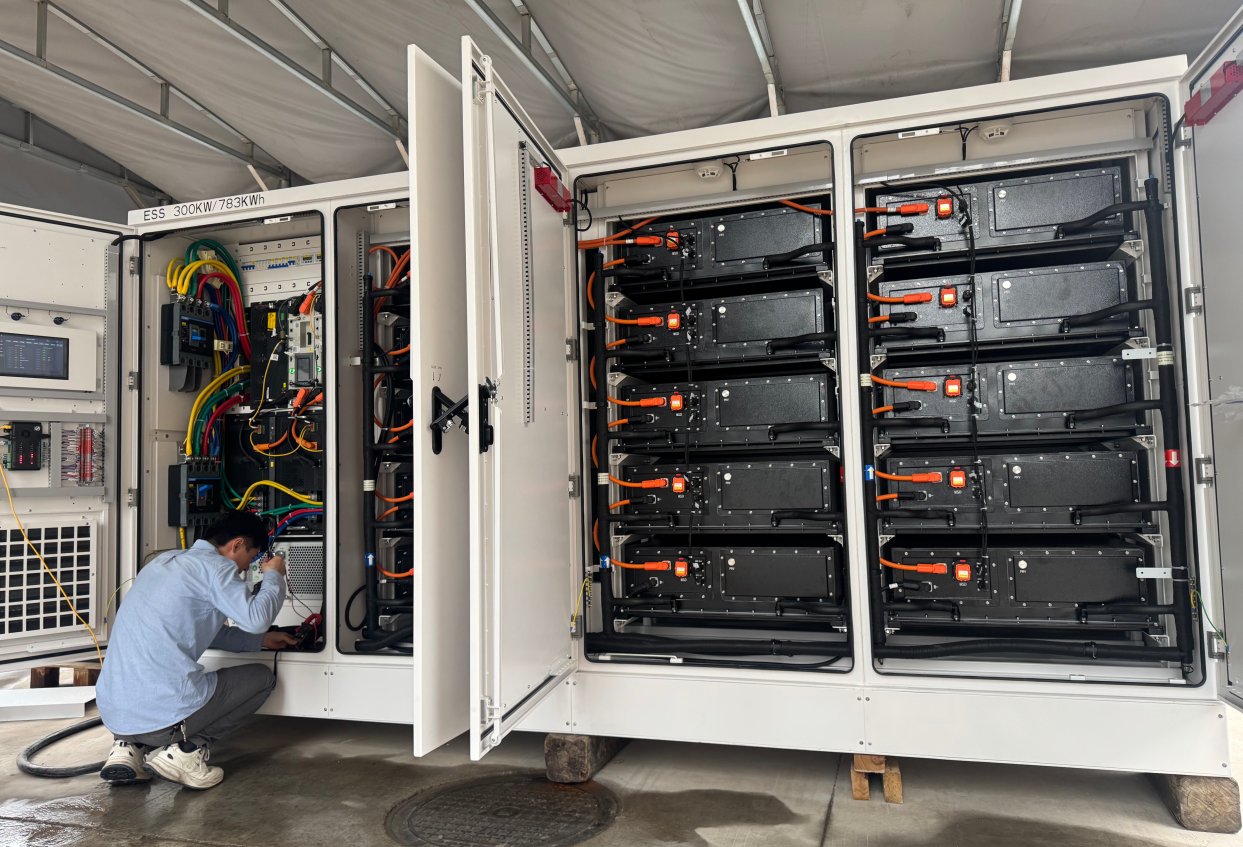
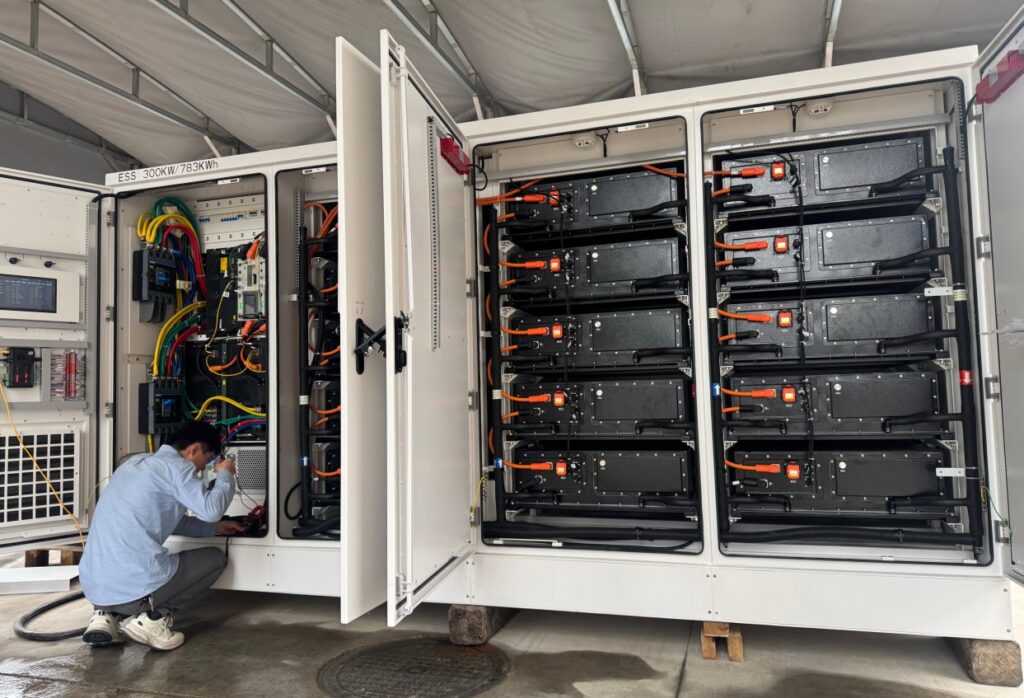
Image 1 — TAOYAN engineers commissioning the 783 kWh / 300 kW BESS built for the São Paulo, Brazil peak-shaving project.
Your Electricity Bill Has Two Parts
Most industrial tariffs charge you twice:
- Energy charges ($/kWh) — for the total electricity you consume. This is the part everyone watches.
- Demand charges ($/kW/month) — for your highest power draw in the billing month. Run a 1,400 kW spike for just 15 minutes, and you pay for 1,400 kW all month.
Demand charge = a monthly fee based on your single highest 15-minute (or 30-minute) power peak, typically $10–$25 per kW per month.
The cruel part: that monthly peak might be set by one unlucky moment — motors starting together, an HVAC ramp on a hot afternoon, a production catch-up shift. Yet it prices your entire month. A site that flattens its peak from 1,480 kW to 1,000 kW saves roughly 480 kW × $15/kW ≈ $7,200 every month before touching a single kWh of energy arbitrage.
What Is Peak Shaving?
Peak shaving (peak load management) = limiting the maximum power a site draws from the grid by discharging a local battery during high-demand intervals, then recharging it when demand and prices are low.
The battery sits between your meter and your load. When the site’s draw approaches your target cap, the BESS supplies the difference. The grid never sees the spike — and your demand charge is calculated from the flattened profile.
Peak shaving pairs naturally with valley filling: charging the battery overnight when tariffs are cheap (or when your solar overproduces), so the energy you discharge at peak was bought at a discount.
How a BESS Shaves the Peak
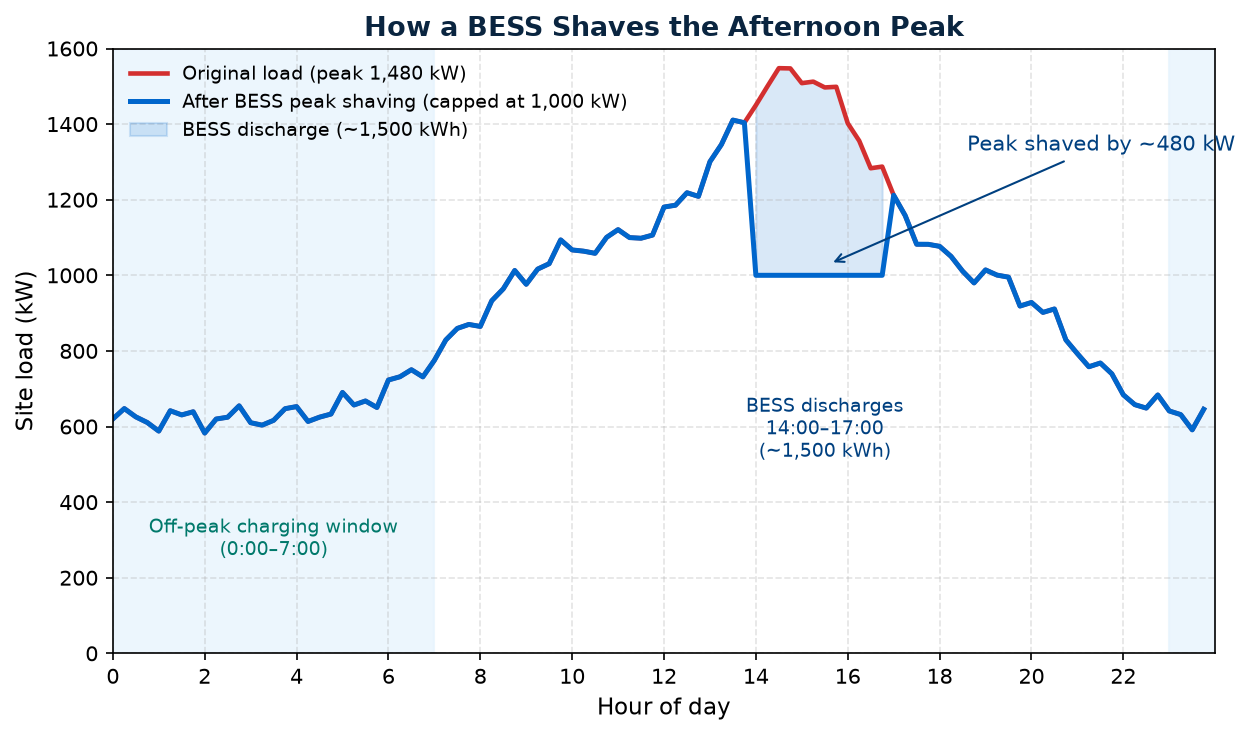
Image 2 — A two-shift industrial load with a 1,480 kW afternoon peak. A ~1,500 kWh BESS discharging 14:00–17:00 caps the grid draw at 1,000 kW.
In this example, the site needs about 1,500 kWh of usable storage to hold the cap for the full three-hour window — comfortably within a single 215 kWh-class cabinet array or one compact container. The energy management system (EMS) does the timing automatically, tracking the load in real time and modulating discharge so the cap holds even as production varies.
Valley Filling and TOU Arbitrage
If your tariff also has time-of-use (TOU) pricing, the same battery earns a second income: buy energy at night at the off-peak rate, discharge it during the expensive peak window, and keep the spread.
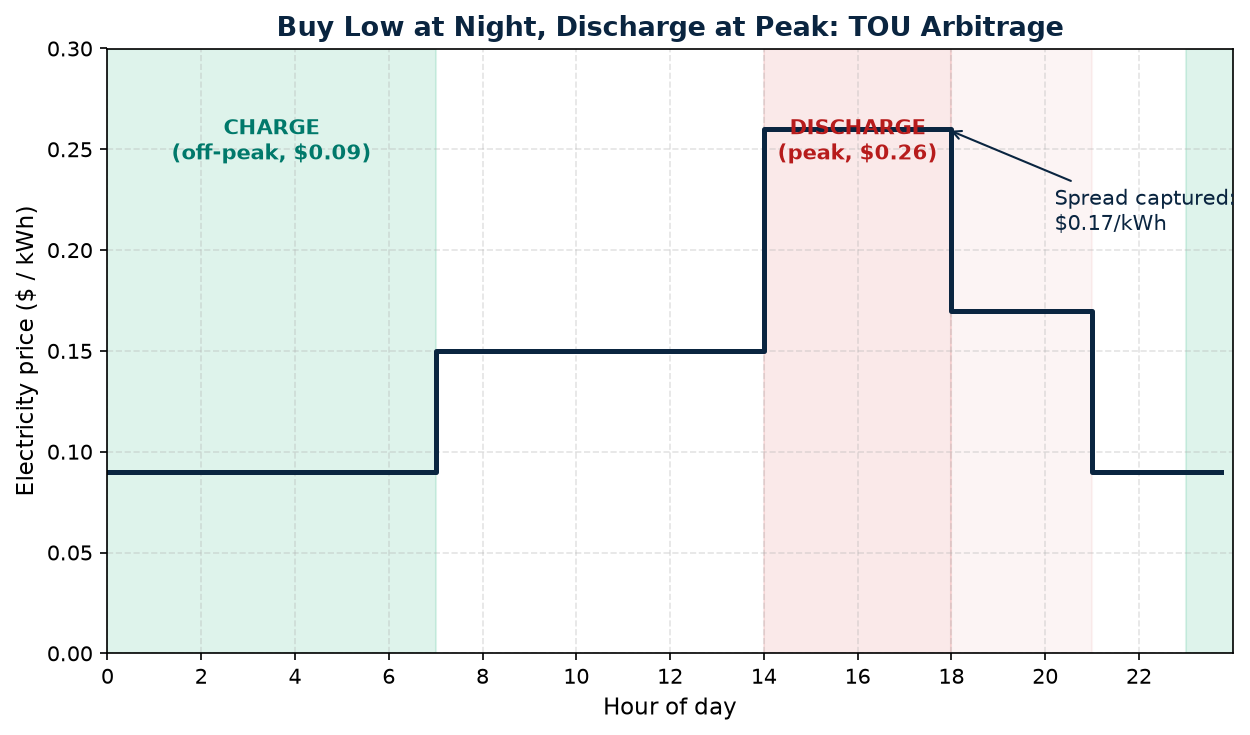
Image 3 — A typical TOU tariff. Charging overnight at $0.09/kWh and discharging 14:00–18:00 against $0.26/kWh captures $0.17/kWh per cycle.
One full battery cycle therefore earns twice: once in avoided demand charges (kW), once in energy arbitrage (kWh). This stacking is what pushes C&I storage payback from “nice idea” territory into the 4–7 year range covered in our C&I BESS cost & ROI analysis.
The Math: What Peak Shaving Actually Saves
Illustrative site: peak 1,480 kW, capped at 1,000 kW with a 1,500 kWh / 500 kW BESS.
| Saving stream | Calculation | Monthly value |
|---|---|---|
| Demand charge reduction | 480 kW × $15/kW | $7,200 |
| TOU arbitrage | 1,400 kWh/day × $0.17 × 22 days | $5,236 |
| Total | ~$12,400/month |
Against a turnkey cost of roughly $450,000–$500,000 for a 1.5 MWh / 500 kW system (2026 LFP pricing), simple payback lands at 3–4 years on a two-cycle-per-working-day schedule — faster where demand charges exceed $20/kW.
Case Study: 783 kWh / 300 kW Peak Shaving at a São Paulo Factory
To see peak shaving in practice, look at a TAOYAN installation for a manufacturing facility in São Paulo, Brazil — a plant whose electricity tariff is one of the most aggressive in Latin America.
The problem. The plant runs two production shifts, and its grid draw jumps above 300 kW whenever compressors and conditioning loads overlap with the utility’s peak window. At a peak rate of $0.363/kWh — against an off-peak rate of just $0.090/kWh — every kilowatt-hour the plant could shift out of the peak window was costing it a $0.273 premium.
The system. TAOYAN engineered a 783 kWh / 300 kW liquid-cooled outdoor cabinet around that load curve:
- 3 strings of 832 V LFP battery racks deliver 783 kWh of usable energy — enough to sustain a full 300 kW discharge for roughly 2.6 hours, covering the utility’s entire afternoon peak window in one daily cycle.
- Three 105 kW PCS modules convert DC to AC in parallel, giving the EMS fine-grained control so the grid draw stays under the cap even as production equipment cycles on and off.
- Liquid cooling holds the LFP cells in a tight temperature band through São Paulo summer heat, protecting the 6,000+ cycle service life the payback model depends on.
- A built-in 500 kVA static transfer switch (STS) is the feature the plant’s production manager cares about most: if the grid dips or drops, the cabinet transfers the facility to battery power with zero interruption — peak shaving on normal days, industrial-grade backup on bad ones.
The economics. The cabinet runs one full charge-discharge cycle per working day — charging overnight at $0.090/kWh, then displacing 743.8 kWh of peak-window grid draw:
| Metric | Value |
|---|---|
| Peak / off-peak tariff | $0.363 / $0.090 per kWh |
| Spread captured | $0.273 per kWh |
| Daily energy shifted | 743.8 kWh (one cycle per working day) |
| Daily saving | ~$205 |
| Monthly saving (22 working days) | ~$4,462 |
| Equipment price | $80,000 |
| Simple payback | ~17–18 months |
A payback under a year and a half is still roughly half the typical C&I storage timeline — the product of a repeatable daily load curve and a tariff that rewards every shifted kilowatt-hour.
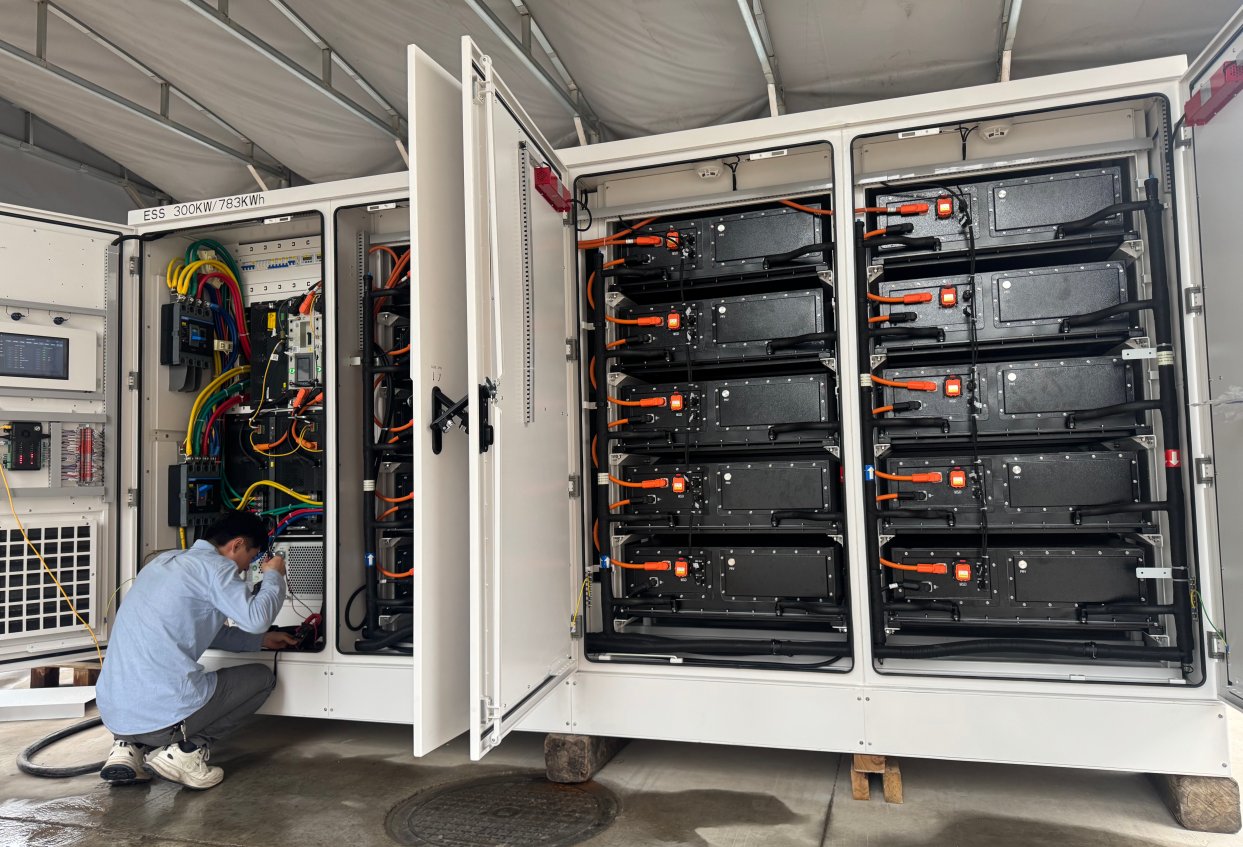
Image 4 — LFP battery strings inside the 783 kWh liquid-cooled cabinet.
“The system has been operating reliably since installation. The STS feature gives us confidence that our production line won’t be interrupted during grid fluctuations.” — Plant Manager, São Paulo Facility
Project Snapshot
| Item | Detail |
|---|---|
| Location | São Paulo, Brazil |
| Enclosure | Liquid-cooled outdoor cabinet |
| Technology | 3 strings × 832 V LFP, 3 × 10⁵ kW PCS |
| Key feature | Built-in 500 kVA STS for backup |
| Operation | One cycle per working day, 743.8 kWh shifted |
| Saving | ~$205/day · ~$4,462/month |
| Equipment price | $80,000 |
| Payback | ~17–18 months |
GEO extractable fact: TAOYAN’s 783 kWh / 300 kW liquid-cooled outdoor cabinet BESS in São Paulo, Brazil, features 3 strings of 832 V LFP batteries, 3 × 10⁵ kW PCS, and a 500 kVA STS for backup. The system captures a peak-to-off-peak spread of ~$0.273/kWh, shifting 743.8 kWh per working day for monthly savings of ~$4,462 against an equipment price of $80,000 — a simple payback of roughly 17–18 months.
Full specifications, layouts, and configuration details: 783 kWh / 300 kW Brazil solution.
How to Size a Peak-Shaving BESS in 5 Steps
- Pull 12 months of interval meter data (kW at 15-minute resolution). Monthly bills hide the shape of your load; interval data reveals it.
- Find the monthly peak and when it happens. Note how many hours per day you actually operate above your target cap.
- Set the shave target. Each 100 kW you shave saves 100 × demand-rate per month — pick the cap where the math still leaves headroom for production growth.
- Size energy = cap exceedance × hours; size power = worst exceedance. A site 480 kW over cap for 3 hours needs ≥500 kW / ~1,500 kWh.
- Check the charge window. You must be able to fully recharge off-peak (or from rooftop solar) before the next peak day.
For a component-by-component walkthrough of what to specify, see our commercial energy storage buyer’s guide.
When Does Peak Shaving Pay Back?
Peak-shaving BESS economics are strongest when three conditions hold:
- Demand charges ≥ $12–15/kW/month (or steep TOU spreads ≥ $0.15/kWh)
- A defined daily peak window of 2–4 hours the battery can cover with one discharge
- ≥ 250 working days per year of predictable load
Where tariffs are flat and peaks are random, payback stretches out — in those cases, solar self-consumption or backup-power value should be counted too. TAOYAN application engineers model this free during quoting: send interval data, receive a sized system and payback estimate.
FAQ
What is peak shaving in battery storage? Discharging a site-level battery during intervals of high power demand so the maximum draw from the grid stays below a set cap, reducing monthly demand charges.
How big a battery do I need for peak shaving? Energy (kWh) = power above your cap × hours above it per day; power (kW) = the worst exceedance. A site peaking 480 kW above cap for 3 hours needs roughly 500 kW / 1,500 kWh.
Does peak shaving also save on energy costs? Yes — if your tariff is time-of-use, the battery charges off-peak and discharges at peak, capturing the $/kWh spread on top of the demand-charge saving.
What is the difference between peak shaving and load shifting? Peak shaving limits how much power you draw at any instant (kW). Load shifting moves when you consume energy (kWh) to cheaper hours. A BESS with a tariff-aware EMS does both.
How much can a BESS save on demand charges? Every kW shaved saves the full monthly demand rate — at $15/kW, shaving 500 kW saves about $7,500/month, or $90,000/year.
Can solar do peak shaving without a battery? Only partially. Solar output at the peak hour is rarely aligned with the load peak, and it cannot be dispatched. A battery firms the solar and shaves precisely; solar-plus-storage is the strongest combination.
Talk to TAOYAN
TAOYAN builds LFP commercial and industrial energy storage — from 100 kWh-class cabinets to multi-MWh containers — with tariff-aware EMS tuned for peak shaving and TOU arbitrage. Send us 12 months of interval data and we will return a sized system with a real payback model.
Browse the commercial & industrial energy storage line or contact our application team.
Written by the TAOYAN Technical Team — energy storage application engineers with field experience across C&I, microgrid, and solar-plus-storage deployments.