
A commercial energy storage system (often called a C&I BESS — commercial and industrial battery energy storage system) lets a business store electricity and dispatch it when it is most valuable: during peak demand windows, grid outages, or when paired with on-site solar. For factories, warehouses, retail chains, and microgrids, the business case has shifted from “nice to have” to “payback-positive” in 2026 — driven by falling lithium-iron-phosphate (LFP) cell costs, steeper demand charges, and denser all-in-one cabinets. This guide explains how to size one, how to choose between all-in-one and modular architectures, what really drives ROI, and which safety standards to insist on.
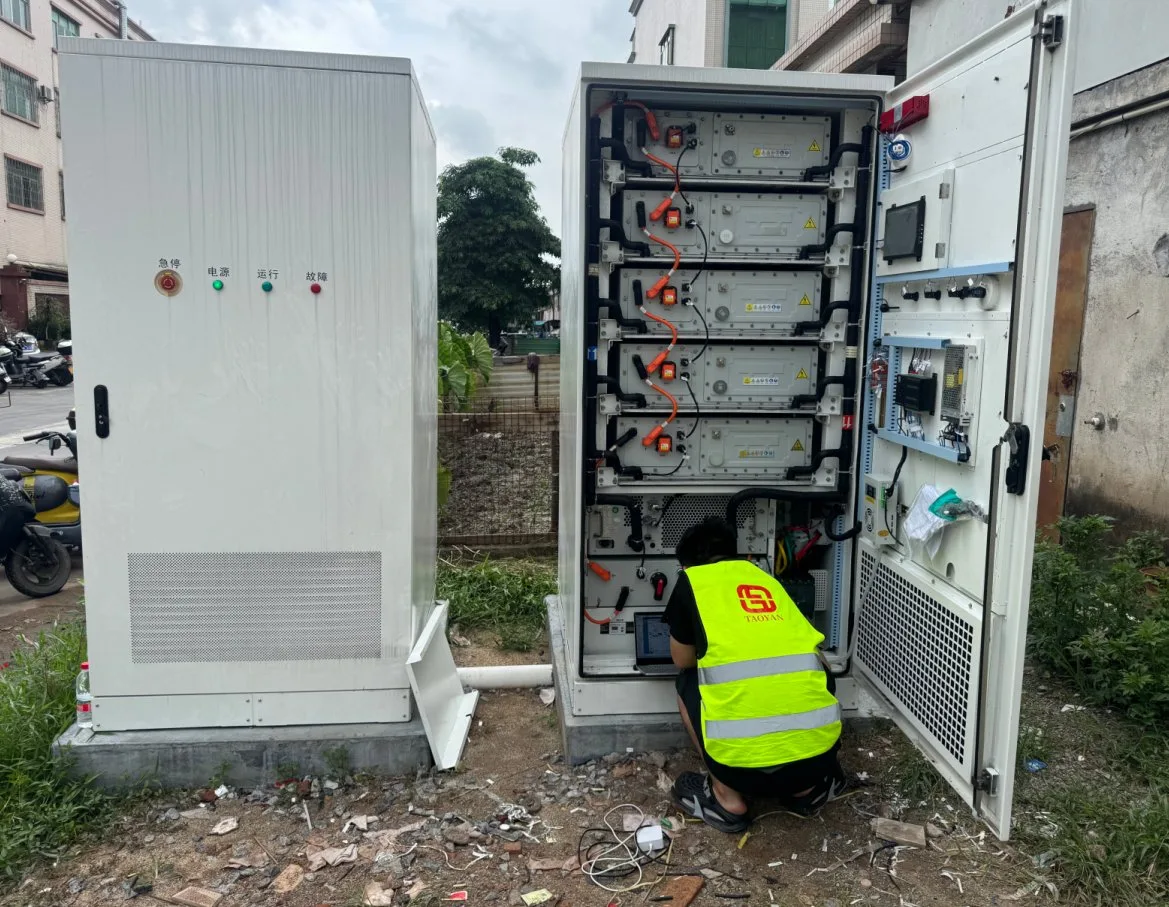
What Is a Commercial & Industrial Energy Storage System?
A C&I energy storage system is a complete, engineered package that stores DC energy in batteries and converts it to usable AC power through a power conversion system (PCS). Beyond the battery itself, a production-grade system includes:
- Battery modules — today almost universally LFP (LiFePO₄) for safety and cycle life.
- PCS / inverter — converts between DC and AC, and manages grid-forming or grid-following operation.
- EMS (energy management system) — the controller that decides when to charge, discharge, and how to respond to tariffs or signals. See our EMS energy management system.
- Thermal management — liquid or forced-air cooling to hold cells in their safe operating window.
- Fire safety & containment — suppression, insulation, and compliance to UL 9540 / IEC 62619 (covered below).
Unlike a residential battery, a C&I system is sized in the tens to thousands of kilowatt-hours and must integrate with three-phase commercial service, building management systems, and often a solar PV array.
How to Size a C&I Battery: Energy (kWh) vs Power (kW)
The single most common mistake is confusing the two ratings. They measure different things:
| Rating | Measures | Answers the question | Example |
|---|---|---|---|
| Capacity — kWh | Total energy stored | “How long can I run the load?” | 215 kWh runs a 100 kW load for ~2.15 hours |
| Power — kW | How fast energy can be delivered | “How much load can I cover at once?” | 100 kW covers a mid-size commercial peak |
A practical sizing workflow:
- Define the use case. Peak shaving, demand-charge management, backup, TOU arbitrage, and solar self-consumption each emphasize different ratios of kWh to kW.
- Pull 12 months of interval data. Your utility bill’s 15-minute demand profile reveals the true peak and the energy you would shave.
- Size power (kW) to the target peak. If your demand peaks at 250 kW and you want to trim 100 kW, size the PCS for ≥100 kW continuous discharge.
- Size energy (kWh) to the discharge window. 100 kW for 2 hours = 200 kWh of usable capacity (use ~90% depth of discharge to protect cycle life).
- Add a redundancy margin. Oversize 10–20% to absorb degradation over the system’s life.
For a mid-size site, a 215 kWh / 100 kW all-in-one unit is a common starting point; larger campuses scale with 1720 kWh / 800 kW or 2610 kWh / 1250 kW systems.
A Real Sizing Example: A Small Processing Factory in Malaysia
Generic steps are easier to trust once you see them on a real site. When our engineering team assessed a small processing factory in Malaysia, the load study told an unusual story: the site lost grid power for several hours almost every day. For this customer, demand-charge trimming was secondary — the priority was simply keeping production running through the daily blackouts.
Because the outages were repeated but finite, the right answer was a hybrid-grid system (mains + PV + storage): rooftop solar recharges the battery through the day, and the battery carries the critical process load the moment the grid drops. For this site we deployed two 261 kWh / 125 kW all-in-one ESS units — a combined 522 kWh / 250 kW — sized to ride through the typical multi-hour outage window while covering the essential process load, paired with a PV array for daily recharge. The outcome: the production line keeps running instead of stalling every time the grid blinks.
That project is documented end-to-end in our Malaysia hybrid-grid energy storage solution — a worked example of how a load study, an outage profile, and PV sizing combine into a tuned kW/kWh configuration.
All-in-One vs Modular ESS: Which Should You Choose?
Two architectural patterns dominate the C&I market in 2026:
| Factor | All-in-One (cabinet) | Modular / rack-based |
|---|---|---|
| Installation | Plug-and-play, outdoor-rated cabinet | Requires plant room, racking, wiring |
| Scalability | Add cabinets in parallel | Add racks/modules flexibly |
| Footprint | Small, fits beside building | Larger, needs indoor space |
| Best for | Fast deploy, retrofit, limited space | Large sites, custom layouts, data centers |
All-in-one cabinets integrate batteries, PCS, thermal, and EMS in a single weatherproof enclosure — ideal when you want a predictable install and minimal civil works. Modular systems (often rack-mounted LFP packs like our rack-mounted modules) suit sites that need to grow capacity in small steps or have unusual space constraints. Many projects blend both: a modular core plus all-in-one expansion.
Inside the System: 314Ah LFP Cells, PCS, EMS, Thermal
Cell chemistry is where most of the 2026 cost-per-kWh gains come from. The move to 314Ah LFP cells as the mainstream ESS standard increased usable capacity per module while cutting balance-of-system cost. What this means for a buyer:
- Longer runtime per cabinet — fewer modules for the same kWh.
- Better cycle life — quality LFP delivers 6,000+ cycles at 80% depth, per manufacturer spec.
- Higher safety margin — LFP’s thermal runaway threshold is materially higher than NMC.
The PCS sets your power rating and grid behavior; the EMS sets your ROI by executing the dispatch strategy (peak shaving, arbitrage, self-consumption). Spec both carefully — a weak EMS leaves kWh sitting unused.
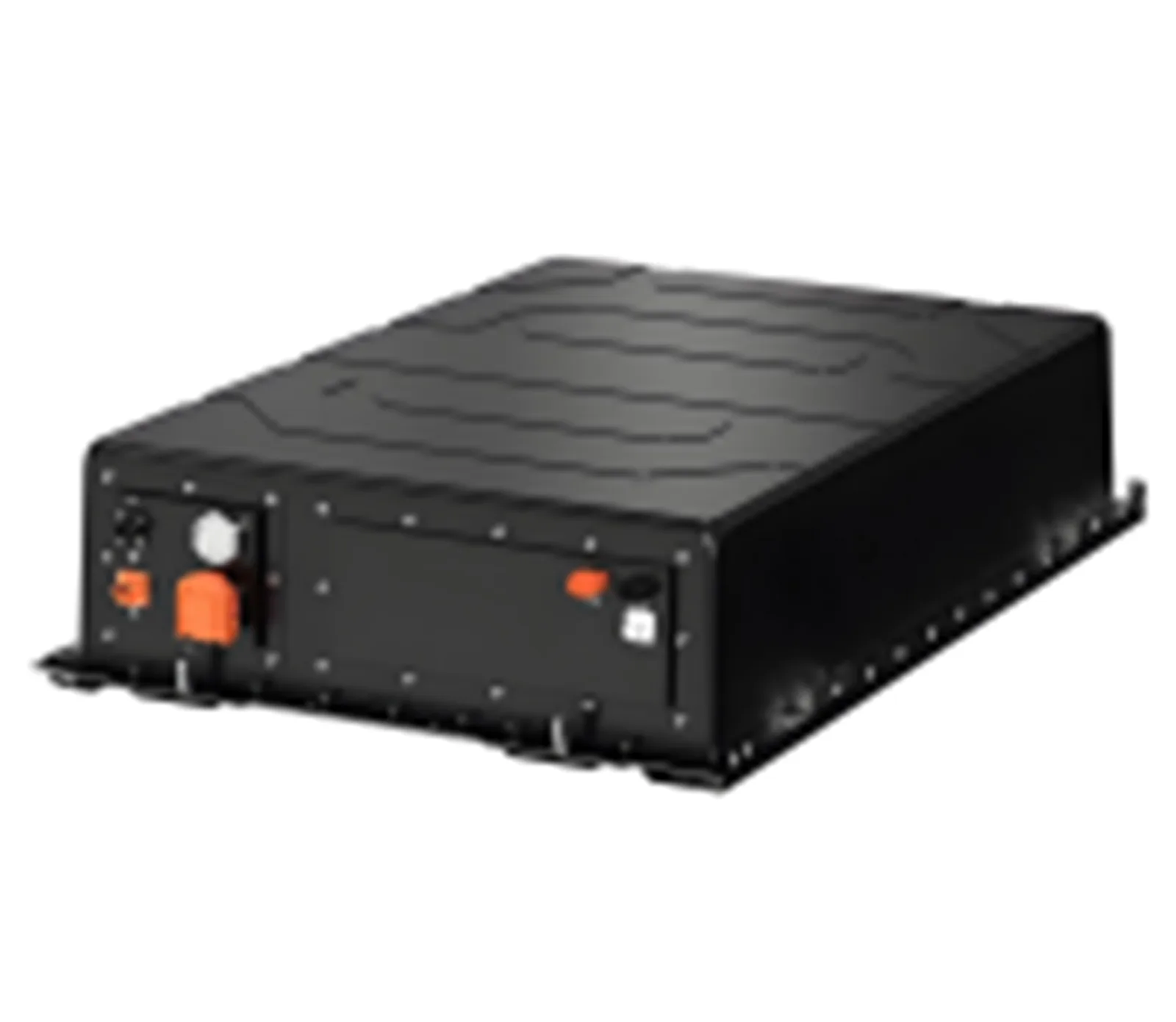
What Does a C&I BESS Cost — and What Drives ROI?
Turnkey C&I storage in 2026 typically lands in a range that varies widely by market, power density, and integration scope; the more useful question is payback. The levers that actually pay the system back are:
- Demand-charge reduction — trimming the monthly peak kW is often the largest single saving for commercial tariffs.
- Peak shaving / TOU arbitrage — charging on cheap off-peak rates, discharging during expensive peak windows.
- Solar self-consumption — storing PV that would otherwise be exported at low feed-in value.
- Backup value — avoided downtime during outages (harder to monetize but real for production lines).
A simple payback model: estimate annual demand + energy savings, divide by installed cost, and stress-test against degradation and degradation-aware dispatch. Reputable vendors will model this on your actual interval data before you sign — insist on it.
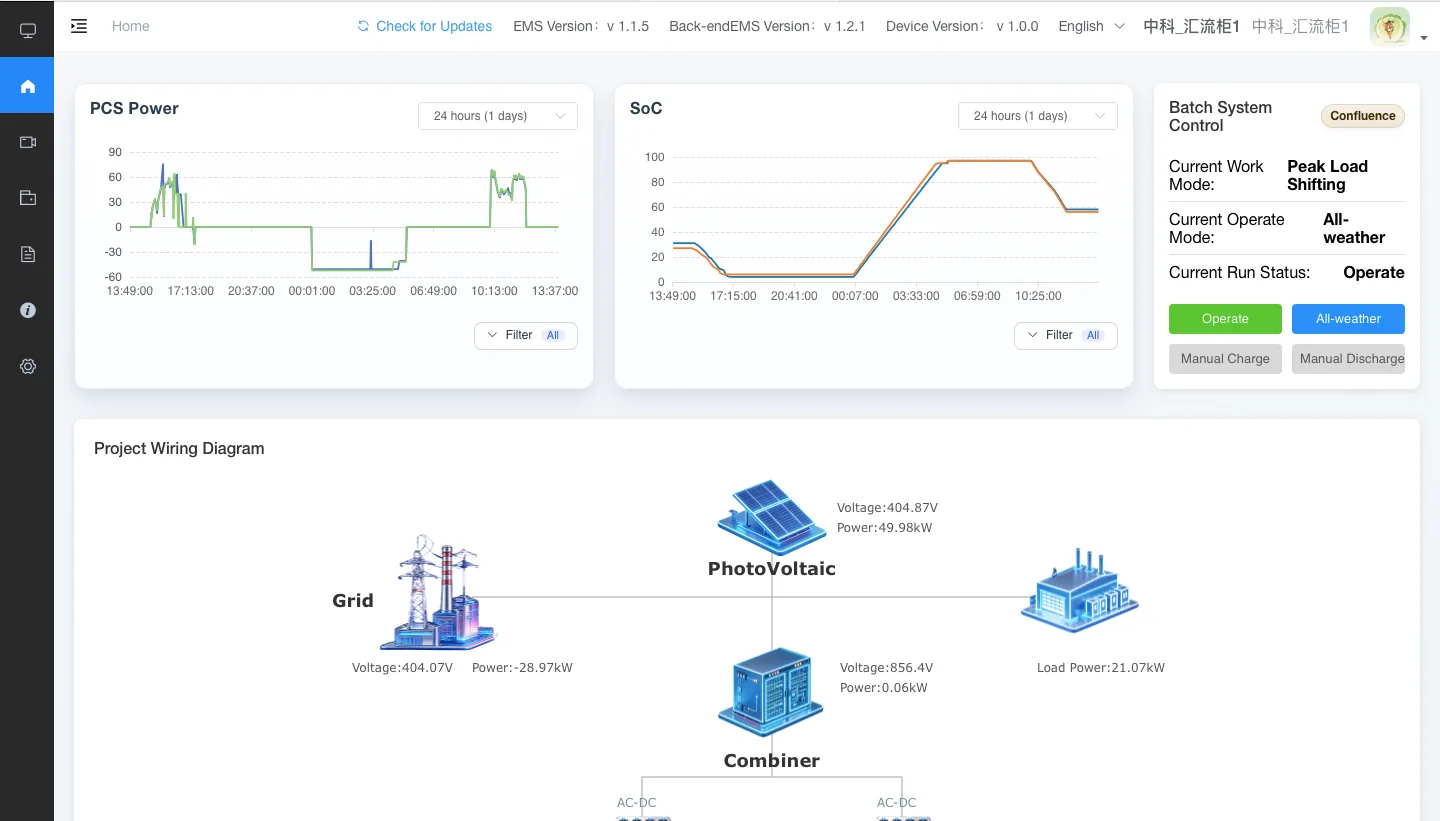
Pairing Solar with Storage
A commercial energy storage system paired with PV multiplies the value of both. Solar alone is exported cheaply or clipped; with storage, that energy is time-shifted to peak windows and the site’s self-sufficiency rises. For sites with existing or planned rooftop solar, size the battery to absorb midday PV surplus and cover the evening peak. The EMS should prioritize: (1) self-consume solar, (2) charge from grid only on cheapest windows, (3) discharge on the most expensive windows.
Safety & Compliance: UL 9540, IEC 62619, UN 38.3
For a permanently installed system, compliance is non-negotiable. Insist on documentation for:
- UL 9540 (North America) — safety of energy storage systems and equipment, including fire propagation testing (UL 9540A).
- IEC 62619 (international) — safety requirements for industrial Li-ion cells and batteries.
- UN 38.3 — transportation testing for lithium cells.
- Local electrical & fire codes — AHJ review, disconnects, and spacing per your jurisdiction.
Authoritative references: the UL 9540 overview and IEC 62619. For market context, the IEA’s battery storage analysis and NREL’s battery cost research track the trends behind 2026 pricing.
Deployment in 6 Steps
- Load & tariff study — 12 months of interval data + demand profile.
- Use-case definition — peak shaving, backup, arbitrage, or solar pairing (often combined).
- Sizing & architecture — all-in-one vs modular; kW and kWh from the workflow above.
- Vendor validation — cell spec, cycle life, warranty, and compliance certificates.
- EMS dispatch design — encode your tariff and site rules into the controller.
- Commissioning & monitoring — verify SOC accuracy, protections, and remote visibility.
Frequently Asked Questions
How big a commercial battery do I need?
It depends on your peak power (kW) and how many hours you want to cover (kWh). A 100 kW peak trimmed for 2 hours needs roughly 200 kWh usable. Start from 12 months of interval data and size to your dominant use case.
All-in-one or modular — which is cheaper?
All-in-one cabinets usually win on installed cost and speed for small-to-mid sites because civil works and wiring are minimal. Modular systems can be cheaper per kWh at very large scale or where space is custom-built.
What does a C&I battery system cost in 2026?
Turnkey pricing varies by market and scope; the better metric is payback from demand-charge and peak-shaving savings. Ask any vendor to model payback on your real interval data before committing.
Are LFP batteries safe for commercial buildings?
LFP has a higher thermal-runaway threshold than NMC and is the default for stationary storage. Safety still depends on cell quality, thermal management, and certified enclosure design (UL 9540 / IEC 62619).
Can I add storage to existing solar?
Yes. A C&I BESS pairs with existing PV to store midday surplus and discharge on the evening peak, raising self-consumption and cutting grid draw during expensive windows.
Conclusion
Choosing a commercial energy storage system in 2026 is less about picking a brand and more about matching architecture, kWh/kW, and EMS dispatch to your tariff and load. Start from interval data, validate compliance, and model payback before you buy. If you want a sized starting point, our 215 kWh / 100 kW all-in-one covers most mid-size C&I sites, while 1720 kWh / 800 kW and 2610 kWh / 1250 kW scale to campuses and microgrids.
Ready to size a system for your site? Contact Taoyan for a site-specific sizing model and payback analysis. If you already know your demand profile, our team can turn it into a recommended kW/kWh configuration within one business day.