
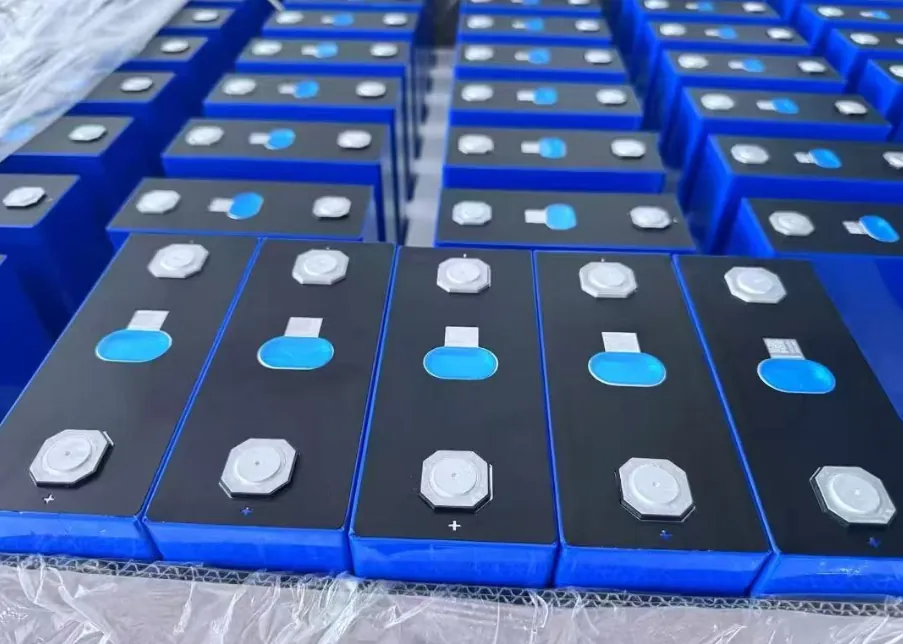
For most of the last decade, the 280Ah LFP (lithium iron phosphate) cell was the default building block for commercial and industrial battery storage. Around 2023, that started to change. Leading cell makers began mass-producing 314Ah cells on the same standard footprint, and by 2024–2025 the 314Ah had effectively become the new mainstream for high-capacity ESS packs. If you’re an EPC, integrator, or factory specifying storage in 2026, this shift changes more than a datasheet number: it affects how many cells you need, how your container is laid out, and your levelized cost of storage. This article explains the technical reasons behind the move, what it means for system design and ROI, and the questions you should be asking suppliers.
From 280Ah to 314Ah: What Actually Changed
The short version: you get about 12% more usable energy from a cell that takes up the same physical space.
The industry standardized on the VDA/MEB “large prismatic” footprint (roughly 71.7 × 173 × 207 mm for the 280Ah class, carried over unchanged to 314Ah). So when cell makers pushed capacity from 280Ah to 314Ah, they did it without changing the mechanical envelope. That’s the whole trick — and it’s a big one.
A 280Ah cell at 3.2V nominal delivers about 896 Wh. A 314Ah cell at the same 3.2V delivers about 1,005 Wh. Same box, ~12% more energy. Multiply that across thousands of cells in a container and the impact compounds.
Here’s the side-by-side that matters for spec sheets:
| Parameter | 280Ah LFP | 314Ah LFP | What it means for you |
|---|---|---|---|
| Nominal capacity | 280 Ah | 314 Ah | +12% energy per cell |
| Nominal voltage | 3.2 V | 3.2 V | No change to string voltage (1P52S ≈ 166 V) |
| Energy per cell | ~896 Wh | ~1,005 Wh | Fewer cells for the same pack kWh |
| Cycle life @ 80% DoD | 6,000–8,000 | 8,000–10,000+ | Longer service life |
| Mechanical footprint | 71.7×173×207 mm | Same | No extra cabinet or container space |
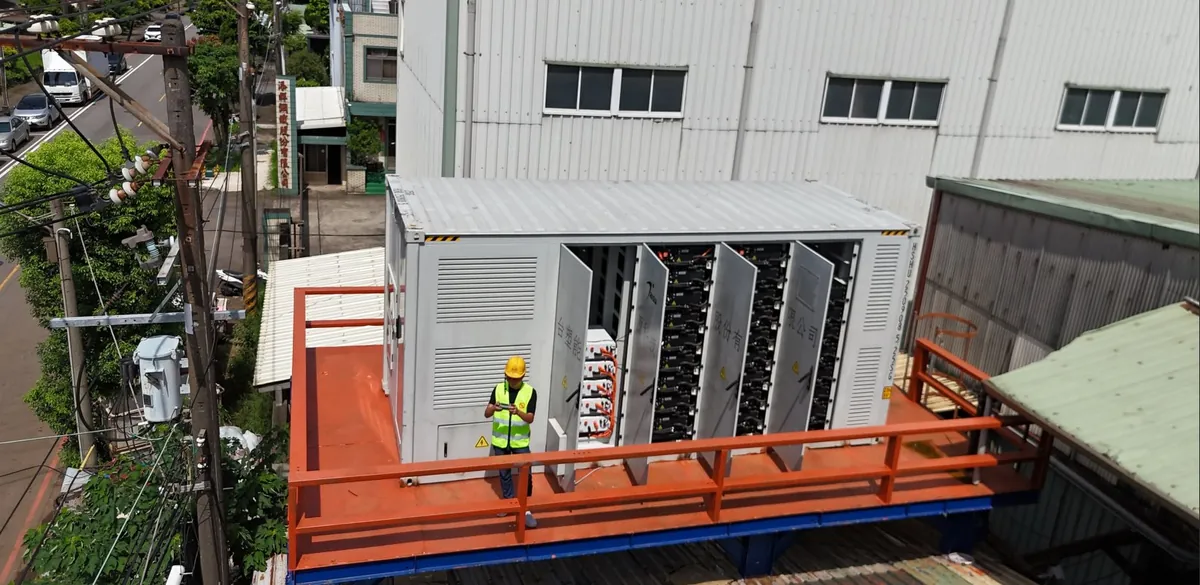
| Typical 20ft container capacity | ~3.7 MWh | 5.0 MWh+ | +35% energy in the same box |
| Relative LCOS | Baseline | ≈ −8% to −15% | Lower $/kWh delivered |
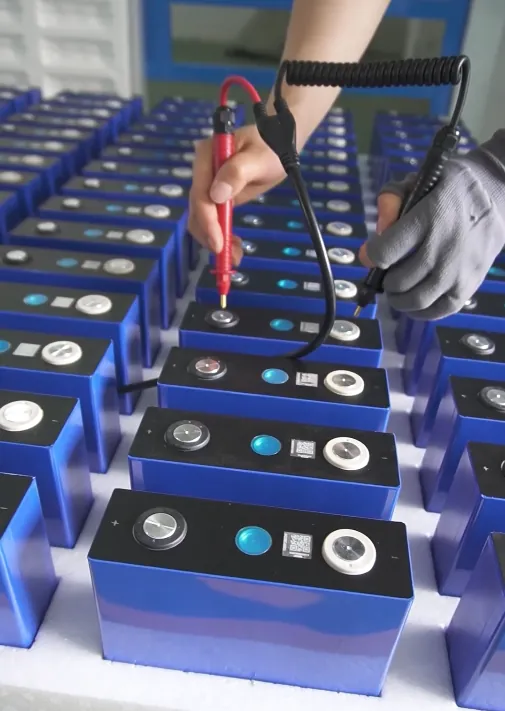
A couple of points worth flagging. First, the cycle-life improvement isn’t just marketing — larger, more uniform cells from tier-1 production lines tend to show better consistency, which helps the pack hit its rated cycles. Second, the “5 MWh in a 20ft container” figure you now see from most vendors is a direct result of 314Ah; the same container with 280Ah topped out around 3.7 MWh. If a supplier is still quoting 280Ah for a new 2026 project, ask why.
Why This Matters for System Design and ROI
The 12% capacity bump sounds modest until you follow it through a real bill of materials.
Fewer cells, fewer failure points. A 1 MWh pack needs roughly 12% fewer cells with 314Ah than with 280Ah. Every cell you remove is one less busbar connection, one less point of potential thermal or contact-resistance failure, and a small reduction in labor to assemble and inspect. At system scale, that’s meaningful.
Lower balance-of-system (BOS) cost. Because you’re packing more energy into the same volume, the fixed costs — container, HVAC, fire suppression, racks, wiring runs — get spread over more kWh. That’s the primary driver behind the −8% to −15% LCOS reduction cited above, not the cell price alone.
Better fit for C&I cabinets and containers. Take a 2-hour system like our 2610kWh / 1250kW container, or a compact 215kWh C&I cabinet. Moving to 314Ah lets you hit the target energy with fewer parallel strings, which simplifies the BMS topology and reduces balancing current. For installers, fewer strings also means faster commissioning.
ROI reality check. For a factory using storage for peak shaving or TOU arbitrage, the LCOS drop translates directly into a shorter payback. If your storage saves you, say, $0.12/kWh on peak demand and your system now costs ~10% less per kWh to deliver, the payback window tightens by roughly the same order — often shaving several months off a 4–6 year return.
The takeaway: 314Ah isn’t a spec-sheet flex. It’s the current cost-optimal choice for high-capacity packs, and specifying 280Ah today usually means leaving margin on the table.
Frequently Asked Questions
Q1: Are 314Ah cells a drop-in replacement for my existing 280Ah BMS and PCS?
Voltage-wise, yes — both are 3.2V LFP, so a 1P52S string still lands at ~166 V, and your PCS kW rating is unchanged. But you should re-validate three things: (1) your BMS current sensors and contactors are rated for the new pack’s continuous and peak current; (2) the SOC/SOH algorithm is tuned to the larger capacity; and (3) your string configuration (number of parallels) is re-balanced so you’re not over-provisioning cells. Don’t assume “same voltage = same everything.”
Q2: Does a larger cell mean worse safety?
No — and this is a common misconception. Safety in LFP is driven by the chemistry, not the amp-hour rating. A 314Ah LFP cell has the same cathode chemistry and the same high thermal-runaway threshold (~270°C) as a 280Ah cell. If anything, fewer series connections means fewer interfaces to manage thermally. What actually protects you is system-level design: proper thermal management, fuses, aerosol suppression, and certified enclosures (IEC 62619 / UL 1973). Capacity alone doesn’t make a pack safer or riskier.
Q3: How do I verify a supplier’s “314Ah” claim before signing?
Ask for a third-party test report, not just a datasheet. Specifically: (1) measured capacity at 0.5C — many “rated” cells test lower under real conditions; (2) a cycle-life curve at 80% DoD showing where capacity falls to 80%; (3) cell-level certifications (IEC 62619, UL 1973, UN 38.3); and (4) the supplier’s track record of volume shipments. A credible OEM/ODM partner will hand you these without hesitation.
Q4: What warranty and cycle-life guarantee comes with a 314Ah LFP ESS?
Reputable manufacturers typically back 314Ah LFP packs with a 10-year or 6,000–8,000-cycle warranty (whichever comes first), guaranteeing capacity retention to ≥80% at end of warranty under 80% DoD. Always ask for the warranty statement tied to the exact cell model and the certified test report — not a generic “10 years.”
Q5: Can a 314Ah-based ESS be expanded later as our load grows?
Yes. Because 314Ah cells share the same mechanical footprint, most cabinet and container systems are modular — you can parallel additional racks without changing the PCS voltage class. For a facility expecting growth, choose a system with spare string capacity or a container designed for field expansion. A 2-hour 2610kWh / 1250kW container is a common starting point that scales in ~1.25MW building blocks.
Q6: How do I estimate the kWh capacity my facility actually needs?
Start from your peak demand (kW) and the hours you want to shift or back up. A simple estimate: required kWh ≈ peak load (kW) × desired discharge hours × 1.1 (efficiency buffer). For peak-shaving, size to the kWh needed to flatten your highest demand window — not full-day storage. For a precise design, share your load profile with the supplier; most will run a simulation and propose a configured cabinet or container rather than a one-size-fits-all pack.
Looking for 314Ah LFP packs or a complete C&I ESS?
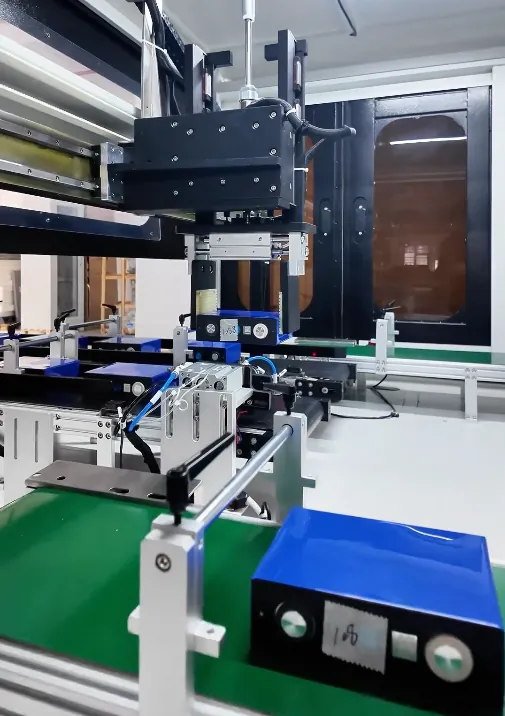
As an industrial battery pack manufacturer focused on OEM/ODM, we design and build high-capacity LFP battery packs and turnkey C&I ESS cabinets and containers — including 215kWh cabinets and 2610kWh / 1250kW containers built on 314Ah cells.
👉 Browse our high-capacity ESS product lineup or explore Commercial & Industrial Energy Storage Systems to see configured options.
Need a customized C&I BESS ROI calculation for your factory?
Send us 12 months of interval data – our application engineers will return a sized system with a real payback model.
Contact Our Engineers