

BESS Safety: How Modern Battery Energy Storage Systems Stay Safe
A battery energy storage system (BESS) looks unremarkable from the outside — a cabinet or container sitting behind a factory, a shop, or a wastewater plant. Inside, it holds enough energy to run the site for hours. That is exactly why every buyer, installer, and fire inspector eventually asks the same question: how safe is a BESS, really? The short version: a modern, properly engineered one is very safe, and not by luck. Safety comes from a chain of decisions — the cell chemistry chosen, the way each cell is watched, how heat is removed, how the enclosure is built, and which fire code the installation follows. The rest of this page explains that chain, the certificates that verify it, and what to check before you sign a purchase order.
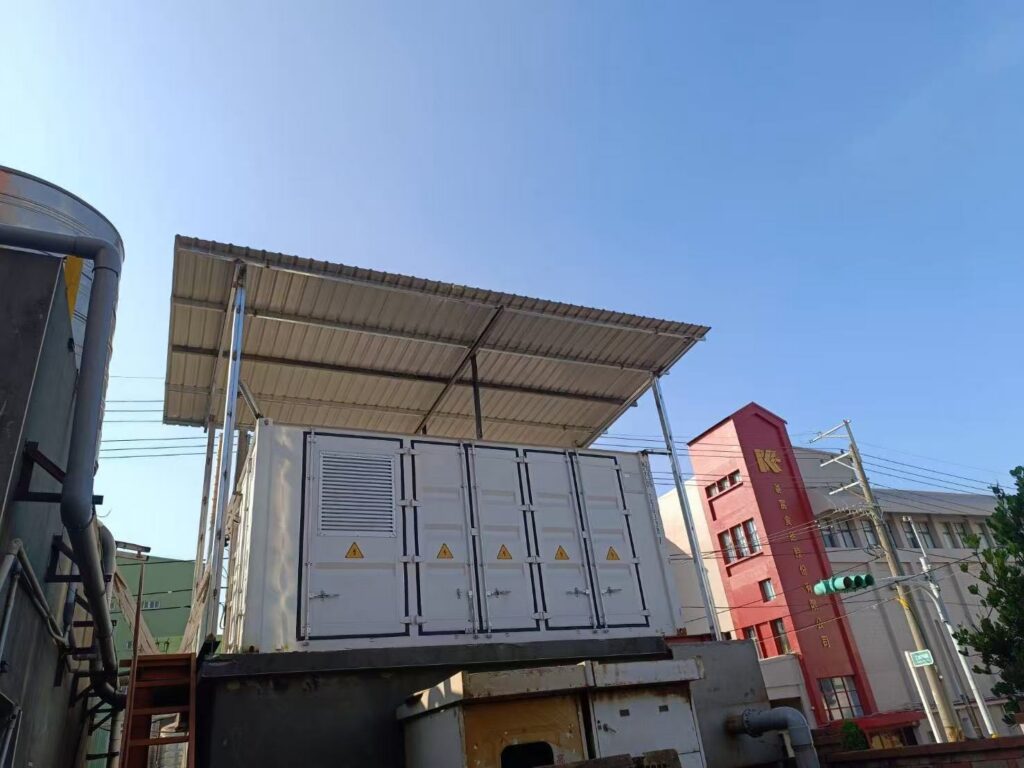
TAOYAN’s LFP BESS with per-cell BMS and liquid cooling meets UL 9540 / IEC 62619 and is deployed in a 1.72 MWh wastewater treatment plant in Taoyuan, Taiwan, China.
- Chemistry: Lithium iron phosphate (LFP) — intrinsically stable, thermal-runaway onset near 270 °C.
- Monitoring: Per-cell BMS tracking voltage, current, and temperature with automatic fault disconnect and remote alarms.
- Thermal management: Active liquid cooling holds cells within a safe operating band.
- Certifications: Engineered to UL 9540 and IEC 62619; enclosure laid out to NFPA 855 separation rules.
Why BESS Safety Is a Serious Engineering Problem
Battery packs store a lot of energy in a small volume, and the energy is chemical. When a cell fails, it can overheat, vent hot gas, and push the cells next to it into the same failure. Engineers call this thermal runaway. Nearly every serious fire that made headlines in the 2010s traced back to the same combination: an unstable early chemistry such as NMC (nickel-manganese-cobalt), an enclosure with no monitoring, and no designed way to vent or contain the event.
None of those incidents were mysterious. Each one pointed at a specific design gap, and the industry closed the gaps one at a time:
- Chemistry came first. LFP replaced NMC in most stationary systems because it is far harder to push into runaway in the first place.
- Then monitoring. A battery management system (BMS) now watches every cell, continuously, and disconnects the moment readings go abnormal.
- Enclosures got the attention they deserved. Venting, compartmentalization, and separation distances are written into fire codes now instead of being left to the installer’s judgment.
Where That Leaves a Buyer Today
LFP now dominates stationary storage for a plain reason: it fails slowly and rarely ignites. Combined with the monitoring and enclosure practices above, a code-compliant installation has no single point where a small fault turns into a large one. That result was engineered, incident by incident, over roughly a decade.
A BESS Is Safe Because of Layered Defense
Ask a supplier which single component keeps their battery safe. A good one will tell you none does. A BESS stays safe because several independent measures back each other up — what engineers call defense in depth — and a fault has to defeat all of them before it becomes an incident. Reading the stack from the cell outward makes the logic easier to follow:
Defense in depth: each outer layer contains the failure of any inner layer
| Layer | What it does | Why it matters |
|---|---|---|
| Cell chemistry (LFP) | Stable cathode, high thermal onset temperature | Sets the ceiling on failure severity |
| BMS | Per-cell voltage, current, temperature monitoring; disconnect on fault | Catches abnormal behavior before it spreads |
| Thermal management | Liquid or forced-air cooling keeps cells in a safe band | Heat is the trigger for thermal runaway |
| Enclosure & venting | IP-rated, fire-rated cabinet/container with controlled venting | Contains a fault, protects people and property |
| Fire suppression | Aerosol, gas, or water mist systems with detection | Stops propagation if a cell does fail |
| EMS & site design | Smart control + spacing/separation per fire code | Keeps the whole installation within safe limits |
Why LFP Became the Safe Choice for Stationary Storage
Most stationary systems run on one of two lithium-ion chemistries, and the gap between them matters more than any datasheet suggests:
| Property | LFP (LiFePO₄) | NMC (LiNiMnCoO₂) |
|---|---|---|
| Thermal runaway onset | ~270 °C | ~150 – 200 °C |
| Oxygen release on failure | Very low (stable cathode) | Higher (fuels fire) |
| Cycle life | 6,000 – 10,000+ cycles | ~2,000 – 4,000 cycles |
| Dominant use | Stationary storage (C&I, residential, utility) | EVs, some portables |
The table explains why LFP took over stationary storage. Its cathode holds onto its oxygen, so a failing cell mostly vents hot gas instead of feeding a fire — and it survives far more daily cycles while doing it. That is why TAOYAN builds every cabinet, wall-mounted, and container system on LFP, and why we advise buyers to treat NMC-based stationary storage with caution. See our wall-mounted residential BESS and rack-mounted battery packs for what LFP designs look like in practice.
The Certifications That Prove a BESS Is Safe
Any manufacturer can print the word “safe” on a datasheet. Third-party certificates are what separate a tested system from a tested claim. These are the ones buyers, EPCs, and inspectors actually look for:
| Standard | Scope | Region |
|---|---|---|
| UL 9540 | Safety of energy storage systems and equipment (the baseline BESS standard) | North America / global reference |
| UL 9540A | Test method for thermal runaway fire propagation in BESS | North America |
| IEC 62619 | Safety requirements for industrial lithium cells and batteries | International |
| NFPA 855 | Installation of stationary energy storage systems (fire code) | United States |
| UN 38.3 | Transport safety testing for lithium batteries | International (shipping) |
Logos are easy to print; certificate numbers are not. Ask for the actual UL 9540 / IEC 62619 certificates and read the scope — it should cover the cell and pack level. Then ask how the enclosure meets NFPA 855 separation and fire-protection requirements in your jurisdiction. A vendor who hesitates on either question has answered it for you.
BESS Safety Best Practices for C&I and Residential Sites
- Location decides most of the outcome. A stable, non-combustible base, clear of ignition sources and above flood level, prevents problems no other layer can fix later.
- Separation distances exist for a reason. NFPA 855 and local codes spell out how far storage must sit from occupied buildings. Compressing them to save footprint is the shortcut inspectors flag first.
- Monitoring only helps if someone sees it. Route BMS temperature, state-of-charge, and fault data to a dashboard or EMS with active alerts — not a screen nobody opens.
- Leave the protection alone. Fuses, disconnects, and the BMS are certified as one system; field modifications void that certification faster than any other mistake.
- Budget for service, not just purchase. Periodic inspection and current firmware keep the protection working for the system’s whole life. Most modern BESS take updates over the air.
Daily operation matters too. Our guides on peak shaving and solar + storage cover the operating side, and container vs cabinet BESS covers the form-factor trade-offs that affect siting.
Safety by Design at TAOYAN
TAOYAN builds every system the same way, whether it is a 5 kWh wall-mounted home unit or an MWh-scale container: LFP cells, a BMS that watches each one, active thermal management, a fire-rated enclosure, and EMS control integrated at the factory. The systems speak standard PCS/EMS protocols (MODBUS / CAN), so they drop into a code-compliant installation without custom engineering. There is also a deployment you can look at rather than take on faith — the 1.72 MWh LFP system running at a wastewater treatment plant in Taoyuan, Taiwan, China, covered in the case study below and in our C&I energy storage overview.
When Specifying a Safe BESS
Four checks catch most bad systems before they reach your site: confirm the cells are LFP, ask for certificate numbers (UL 9540 / IEC 62619), verify the BMS reports remotely, and have someone qualified review the enclosure against your local fire code. A supplier who clears all four has earned a closer look.
Case Study: Safety by Design at the 1.72 MWh Taoyuan Plant
A concrete field example: TAOYAN deployed a 1.72 MWh lithium iron phosphate (LFP) battery energy storage system at a wastewater treatment plant in Taoyuan, Taiwan, China. The site runs mission-critical loads around the clock, and the safety design had to hold up to a working plant, not a brochure.
Safety configuration at a glance
| Safety element | Taoyuan project configuration |
|---|---|
| Battery chemistry | LFP (LiFePO₄) cells — high thermal-runaway onset, minimal oxygen release on failure |
| BMS | Per-cell voltage / current / temperature monitoring with automatic fault disconnect |
| Thermal management | Active liquid cooling holding cells in a safe operating band |
| Energy Storage Thermal System (ESTS) | Integrated thermal-control subsystem managing cell and cabinet temperature |
| Fire protection | Detection plus suppression engineered per NFPA 855 |
| Enclosure & separation | Fire-rated enclosure with controlled venting, spaced per NFPA 855 / local AHJ requirements |
| Certifications | Engineered to UL 9540 / IEC 62619; installed to NFPA 855 separation rules |
How it meets the standards
The LFP cells and per-cell BMS form the first lines of defense; the liquid-cooling loop limits heat accumulation that could trigger thermal runaway; and the fire-rated, code-separated enclosure contains any fault. Together they satisfy the design intent of UL 9540A fire-propagation resistance and the installation requirements of NFPA 855.
1.72 MWh · LFP · per-cell BMS · liquid cooling · UL 9540 / IEC 62619 · wastewater treatment plant, Taoyuan, Taiwan, China.
Frequently Asked Questions
Are battery storage systems safe in homes?
Yes — with two conditions: certified equipment and a licensed installer. Home BESS built on LFP chemistry, a certified BMS, and a fire-rated enclosure have been running in millions of homes worldwide for years. Most reported problems trace back to DIY installs or uncertified hardware, not the technology itself.
What causes BESS fires?
Incident reports show a consistent pattern: early NMC-type chemistry, no cell-level monitoring, poor ventilation, or post-installation modification. Remove those factors — which is exactly what modern LFP systems with continuous BMS monitoring and code-compliant enclosures do — and the risk drops to a level firefighters no longer treat as special.
What is thermal runaway?
A chain reaction: one cell overheats, fails, and releases enough heat to push its neighbors into failure too. Stopping it is less about one magic feature and more about layering — LFP cells that resist starting the reaction, cooling that removes heat before it accumulates, and compartments that contain the event if a cell fails anyway.
Which BESS safety certifications matter most?
In North America, UL 9540 for the system and UL 9540A for fire-propagation testing. Internationally, IEC 62619 covers the cells and battery. NFPA 855 governs the installation itself. Ask for certificate numbers and check they name your supplier — logos in a brochure prove nothing.
How should a BESS be maintained for safety?
Mostly, stay out of its way. Keep the enclosure and vents unobstructed, make sure BMS alerts actually reach a person, apply firmware updates, and schedule periodic inspection. One hard rule: never modify protective devices in the field.
Is LFP safer than other lithium batteries?
For stationary storage, yes, and the chemistry explains why. LFP’s cathode is thermally stable and does not release oxygen when a cell fails, so it resists ignition and propagation far better than NMC-type cells. It also tolerates more charge/discharge cycles, which is why it lasts longer in daily duty.
How did the Taoyuan project meet local fire code?
The 1.72 MWh LFP system at the Taoyuan wastewater treatment plant was engineered for code compliance from day one: LFP chemistry and a per-cell BMS minimize ignition risk, active liquid cooling controls heat buildup, and the fire-rated enclosure was laid out with the separation distances required by NFPA 855 and the local authority having jurisdiction (AHJ).
Specify a Safe, Certified BESS with TAOYAN
Tell us your site, load, and local code — we’ll size an LFP system engineered to international safety standards.
Contact Our Team →