
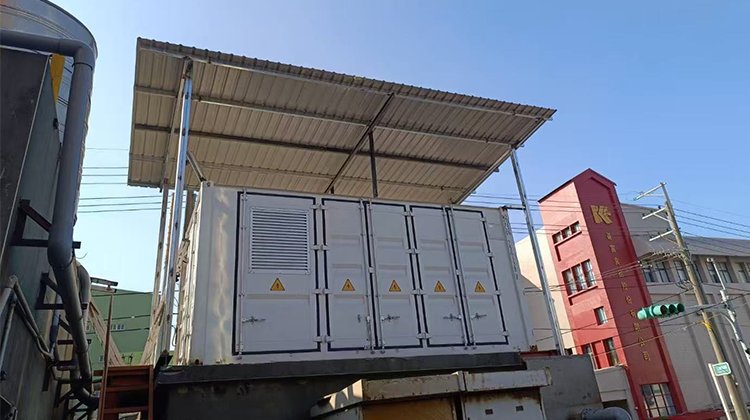
Black Start with Battery Storage: How Grid-Forming BESS Restarts a Dead Grid
When the power goes out across a region, the first question is rarely “when will it come back?” It is “how do we start it again?” A grid cannot restart itself — it needs a source that can energize the lines from zero, without being fed by the grid it is trying to revive. That capability is called black start. For most of power history, black start meant diesel generators or hydro plants with enough stored headwater to spin a turbine unassisted. Today, battery energy storage with grid-forming control is becoming the fastest, cleanest black-start resource available — and on weak or islanded grids, it is often the only option that works. This article explains what black start is, why a battery can do it, how grid-forming (GFM) control makes it reliable, and where operators are already depending on it.
Key Facts
- Black start: the ability to energize a local network from a dead stop, with no external power source
- Why batteries: instant response, zero fuel, emissions-free, modular — unlike diesel or gas peakers
- GFM requirement: only grid-forming storage can black-start; grid-following (GFL) inverters need an existing reference and fail at zero voltage
- Cluster black start: TAOYAN’s 20MWh GFM BESS in West Asia restored its 690V bus in <3s from a cold start across multiple paralleled units
- Islanding + resync: after start-up the system runs the load stand-alone, then reconnects seamlessly when the utility returns
- Resync: matches voltage, frequency and phase to the returning grid before closing the tie — no disruptive reclosing transient
- Standards: IEEE 1547-2018 (interconnection), UL 1741 (inverters), IEC 62933 (BESS), UL 9540A / NFPA 855 (safety)
- Use cases: remote mines, island microgrids, military bases, data centers, developing-grid utilities
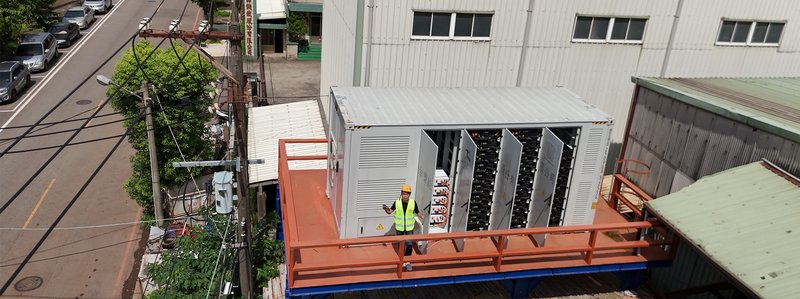
What Is Black Start, Exactly?
A power system at rest has no voltage anywhere. To bring it back, you need a generating unit that can build up its own excitation and frequency on its own, then feed the first stretch of line, then spin up larger machines, then progressively rebuild the network. That first unit is the black-start resource.
Black start is the ability of a resource to energize a local network from a completely dead state, with no external power.
Traditionally this was a hydro unit (water pressure spins the turbine with no outside power) or a fossil peaker kept warm and fueled. The catch: diesel and gas units take minutes to spin up, burn fuel, emit locally, and need a supply chain that itself may be disrupted during the very emergency they are meant to fix.
The defining test is simple to state and hard to meet: start from absolute zero, with no grid to lean on. A unit that merely rides through a sag is not a black-start resource. A unit that must first be synchronized to a live bus is not either. By that definition, most modern inverter-based renewables are disqualified — unless they are deliberately designed to form the grid rather than follow it.
Why Battery Storage Is the Natural Black-Start Resource
Battery storage changes the economics and physics of black start in four practical ways:
Speed. An inverter can produce a voltage waveform the instant its DC bus is charged — no combustion, no warm-up, no spinning mass to accelerate. Where a diesel unit needs tens of seconds to minutes, a BESS can present a stable bus in under a second.
No fuel, no emissions. A black start often happens during the worst moments — storms, fuel shortages, supply-chain breaks. A battery does not care. It carries its energy locally and delivers it cleanly, which matters for indoor, underground, or emission-sensitive sites.
Modularity. You do not need one giant black-start machine. You can stage black start across many smaller units, which also removes the single point of failure — if one unit is unavailable, the rest still start the grid.
Recyclability into normal operation. The same battery that black-starts the site also does peak shaving, arbitrage, and frequency regulation the rest of the time. It is not a dormant insurance unit; it earns its keep daily.
Why It Has to Be Grid-Forming, Not Grid-Following
This is the part most specifications get wrong. A grid-following (GFL) inverter measures an existing voltage and frequency, locks on with a phase-locked loop, and injects against that reference. At black-start conditions — zero voltage, zero frequency everywhere — there is no reference to follow. A GFL inverter simply has nothing to synchronize to, and it will not start.
A grid-forming (GFM) inverter is the opposite. Through virtual-synchronous-generator (VSG) control, it computes its own rotor angle and frequency from the local power balance, presenting a voltage and frequency of its own. At a dead bus, the GFM unit stands up first, creates the reference, and everything else — other inverters, generators, loads — then synchronizes to it. In a GFM system, the battery can literally be the grid. That is the whole reason grid-forming storage is the only credible black-start option on a renewable-heavy or inverter-dominated network.
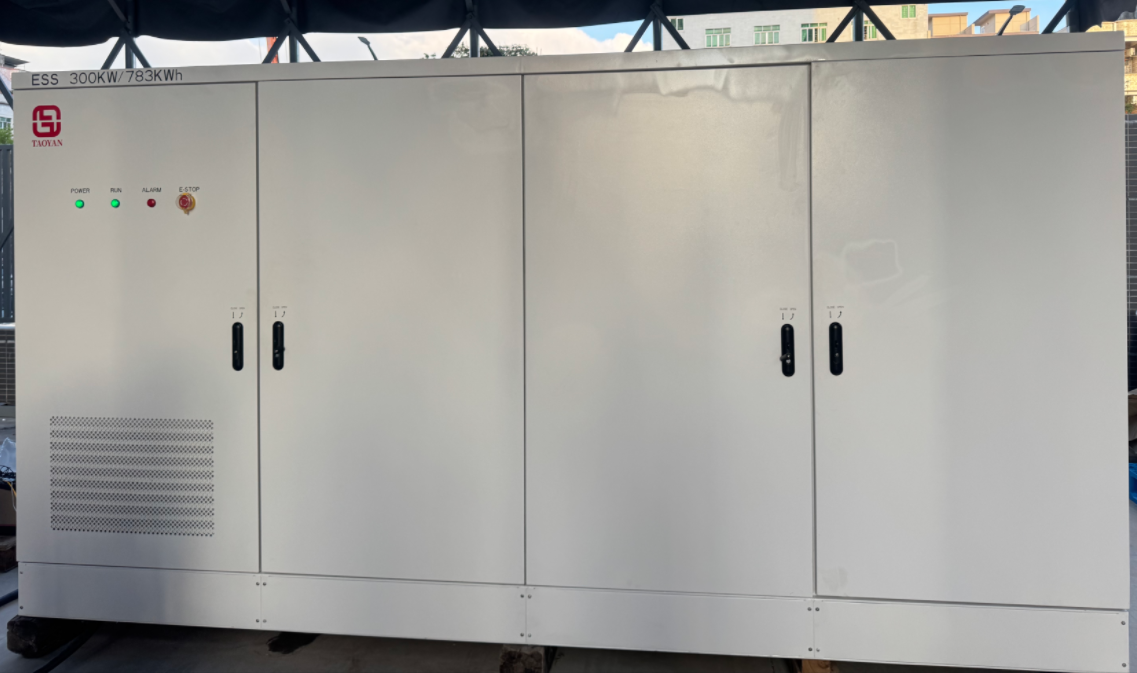
How a Grid-Forming BESS Performs Black Start
The sequence on a real site is more choreography than drama. After a total outage:
On TAOYAN’s 20MWh project in West Asia, this was measured end to end: from a cold start, the 690V bus was restored in under three seconds, with multiple step-up units participating in parallel. That number matters because it is not a laboratory claim — it is commissioning data from a live weak-grid site.
Islanding and Seamless Resynchronization
Black start is only the first act. The harder commercial question is what happens next. Once the BESS has brought the bus up, the site needs to keep running while the utility source is still down — this is islanding. The GFM system supplies the load, holds frequency, and absorbs or supplies the net imbalance in real time.
Then, when the upstream grid returns, the unit performs resynchronization: it measures the returning source’s voltage, frequency, and phase, nudges its own output to match, and closes the tie only when the two are aligned. Done correctly, the transition is invisible to the load — no breaker chatter, no reclosing transient, no restart. A grid-following design would instead suffer a disruptive reclose. For a hospital, a mine, or a water-treatment plant, that seamless handover is the difference between “we kept running” and “we tripped again the moment the grid came back.”
Real-World Deployment: Where Black-Start BESS Already Counts
The pattern repeats across the projects we have delivered. On the 20MWh grid-forming deployment in West Asia, black start was not a nice-to-have — it was a contract requirement on a network with multiple daily outages and no stiff reference to follow. The site runs at 45°C and 1,800m, so the black-start capability had to be proven alongside custom altitude/heat derating curves. The full engineering story is documented in our deep-dive: Engineering a 20MWh Grid-Forming BESS for a Weak Grid.
A different but related case is the 1.72MWh microgrid at a Taiwan wastewater-treatment plant, where a GFM battery turns scattered generation into a stable, self-sufficient power island — the same black-start-and-island logic applied to a continuous, rather than emergency, duty cycle. See our grid-forming explainer for the underlying control principles.
Standards and Compliance for Black-Start BESS
Capability does not replace certification. A black-start-capable BESS is still held to the same safety and interconnection baseline as any grid asset:
- IEEE 1547-2018: Interconnection and islanding ride-through for distributed energy resources
- UL 1741 (SA/SB): Inverter grid-support functions
- IEC 62933: BESS system requirements
- UL 9540A / NFPA 855: Fire-safety and installation of stationary storage
For a black-start site where external fire response may itself be compromised, a two-level suppression scheme — aerosol at the cell/module level and water at the container level — is not optional.
Engineering Checklist: Sizing a Black-Start-Capable BESS
If you are specifying a black-start BESS rather than just buying storage, four items decide success:
1. N+1 redundancy. Size the step-up units so any single trip still leaves enough capacity to carry the black-start and critical-load duty. On the West Asia project, 10MW of contracted delivery was backed by three 6.25MVA units — one trip still leaves 12.5MVA. Two 5MVA units would have dropped below contract the moment one failed.
2. GFM control, explicitly. Confirm the inverter is grid-forming (VSG), not grid-following. If the datasheet only talks about “grid-tie” and PLL synchronization, it will not black-start.
3. Environment-specific derating. High altitude and high ambient temperature shrink thermal headroom. Project-specific derating curves — calibrating PCS current, cooling flow, and usable SOC together — keep the system from tripping exactly when the outage hits.
4. Metering at the point of interconnection. A revenue-grade meter at the PCC, plus independent loss-decomposition metering on the PCS and separately metered auxiliaries, turns the availability and efficiency guarantees into something testable after commissioning.
🛠️ Sizing a black-start BESS for your site?
Send us your load profile and grid conditions. TAOYAN application engineers will return a GFM configuration and black-start sequence within 2 business days.
Where Black-Start-Capable Storage Is Deployed
Black start is not a niche. The sites that cannot afford to wait for the utility fall into clear groups:
Remote mines and industrial sites far from any stiff connection, where an outage halts production worth far more than the storage; island and resort microgrids that already run islanded by design; military bases with mission-critical, disruption-intolerant loads; data centers and hospitals where even a momentary gap is unacceptable; and developing-grid utilities where daily outages are the operating condition, not the exception. In each, a grid-forming BESS converts “we have batteries” into “we can bring the power back ourselves.”
What is black start in energy storage?
Black start is the ability of a resource to energize a local network from a completely dead state, with no external power. A grid-forming BESS can do this because its inverter creates its own voltage and frequency via VSG control.
Can a grid-following battery black-start a grid?
No. A grid-following inverter needs an existing voltage and frequency reference to lock onto. At black-start conditions there is none, so it cannot start. Only grid-forming storage can stand up a dead bus.
How fast can a grid-forming BESS black-start?
In clustered deployments the master unit energizes the bus first and remaining units synchronize within roughly half a second each; TAOYAN’s 20MWh West Asia project restored its 690V bus in under three seconds from a cold start.
What happens after black start — does the site stay up?
Yes. The system islands and supplies the load, then performs seamless resynchronization with the returning utility source, matching voltage, frequency and phase before closing the tie.
What was the hardest part of proving black start on the West Asia project?
The environment. At 1,800m and 45°C, generic derating would have let the system trip on thermal protection mid-event. Project-specific derating curves — jointly calibrating PCS current, cooling, and usable SOC — kept it stable through both the black start and the islanded run.
Related Reading
More engineering notes from the TAOYAN team on the TAOYAN Blog.
Engineering a 20MWh Grid-Forming BESS for a Weak-Grid Microgrid in West AsiaA 20MWh system engineered for a weak-grid microgrid in West Asia
Microgrid + BESS: Building Resilient, Self-Sufficient PowerHow to size a microgrid BESS for resilient, self-sufficient power