
Choosing a C&I Energy Storage Manufacturer in China: A Factory Buyer’s Checklist
Searching for a C&I energy storage system manufacturer in China produces an uncomfortable number of results, because the term “manufacturer” is used loosely across the supply chain. Some suppliers are true factories with their own cell-to-pack lines and test rigs. Others are system integrators who assemble other people’s modules, and a third group simply re-labels hardware bought from a trading company. All three can ship you a cabinet that works on day one, and only one of them can support you for the next ten years.
This guide is written for EPC contractors, developers and industrial buyers who are evaluating a Chinese BESS factory for a commercial or utility project. It is not a supplier directory. We have answered this question from the other side of the table — as a buyer of cells, as a factory with our own production line, and as a supplier writing back the same emails you are reading now. What follows is the checklist we use ourselves when a customer asks us whether a competitor’s quotation is real. It is a checklist: nine things to verify on the production floor, the questions to send before you request a quotation, the commercial terms that decide whether a low quote is a good deal, and the pitfalls that cost first-time importers the most money. It also shows how a factory such as TAOYAN, a C&I energy storage manufacturer in Dongguan, answers each point with concrete equipment, documentation and reference projects.
Key Facts
- Three business models: true manufacturer (owns cell-to-pack production), system assembler (buys modules, builds cabinets), and trader (re-labels other people’s hardware) — all three exist under the same “manufacturer” label
- The three hardest signals to fake: in-house cell-to-pack equipment, in-house BMS/EMS firmware, and type-test certificates that match the exact model you are buying
- Cell quality drives everything: LFP 314Ah cells with 8,000+ cycle life, not nominal capacity on the datasheet, decide the real cost per delivered kWh
- Certification trap: a supplier may hold CE, IEC 62619/62477 and UN38.3 for one model while the cabinet in your quotation is a different, un-certified variant
- Payment terms: a 30/70 split with the balance against FAT and shipping documents is the industry norm; full prepayment to an unverified factory is the exception, not the rule
- Incoterms decide the landed cost: EXW, FOB, CIF and DAP differ by more than the battery price on a 2610 kWh container
- After-sales is where factories are separated: spare PCS and BMS boards held in your region, a named service engineer, and a warranty that survives shipping damage are worth more than a discount
- Lead-time benchmark: a mainstream 2610 kWh cabinet runs about 30 days from purchase order to shipment, stretching to 45 days in peak season — if a supplier quotes 15 days, ask which parts are actually in stock
- Range that proves capability: 215 kWh to 2610 kWh cabinets plus 20 MWh grid-forming containers, grid-tied and hybrid configurations, OEM and ODM
What a Real C&I BESS Manufacturer Actually Looks Like
The first thing to understand about the Chinese energy storage market is that the supply chain has three distinct layers, and the difference between them is invisible on a product brochure. Get this wrong and you will spend the first year of the project explaining to your client why the supplier cannot answer a technical question about firmware.
Three business models: manufacturer, assembler, trader
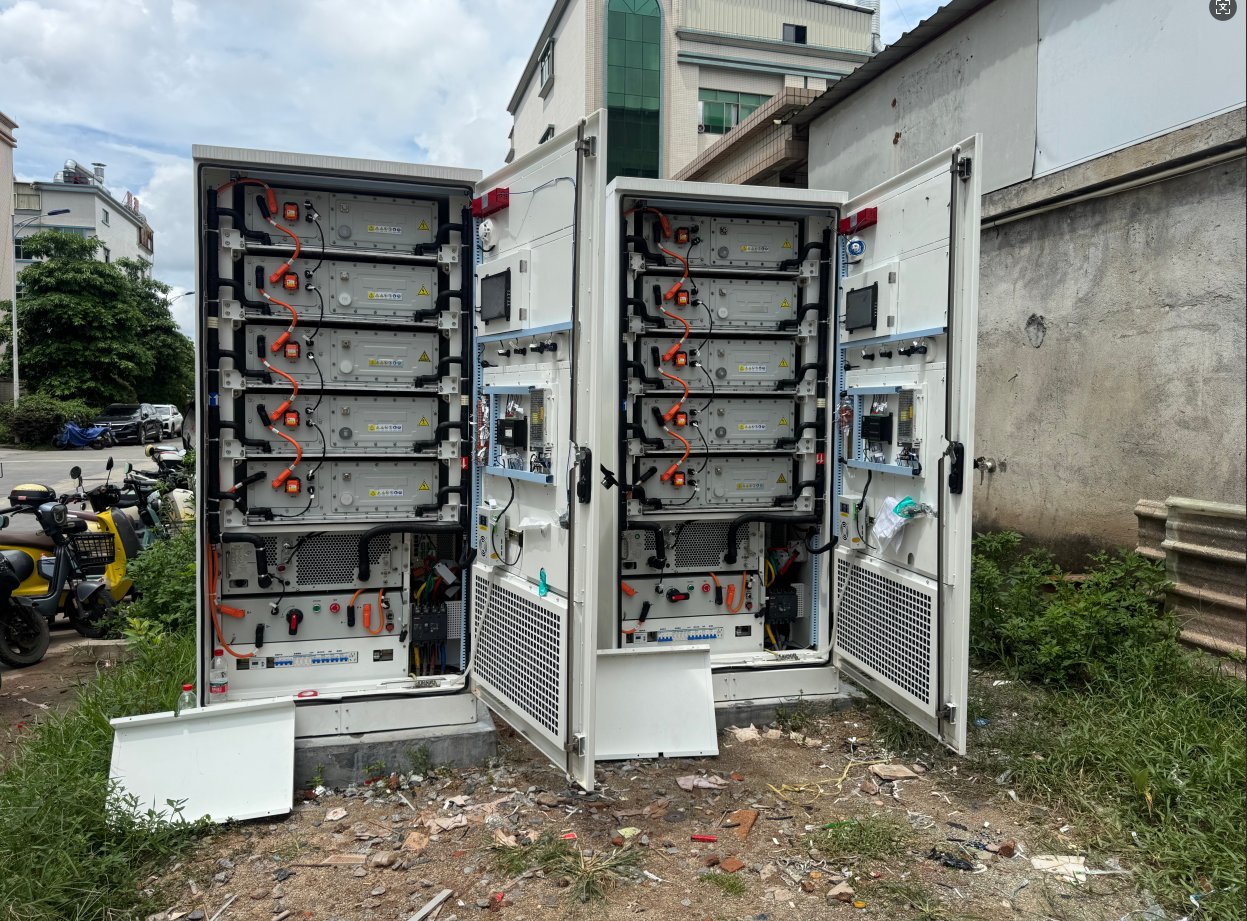
A true manufacturer owns the cell-to-pack line: cell sorting and grading, module stacking, laser or resistance welding, busbar crimping, sealing and the final BMS integration, with in-house end-of-line testing. Cell-to-system (CTS) factories go further and assemble complete cabinets. An assembler buys finished modules or complete battery packs from someone else and assembles them into cabinets with a good-looking enclosure, a nameplate and a BMS. A trader buys complete systems and re-labels them.
Assemblers are not villains. Many excellent integrators work this way, and for a 261 kWh commercial cabinet the quality difference can be small. The point is not to judge the business model but to know which one you are dealing with, because it determines who carries the risk when a batch of cells drifts in capacity, who answers at 2 a.m. when the BMS reports a cell imbalance, and whether your 8,000-cycle claim is backed by the cell vendor or by the factory that welded the module.
The three signals that separate real manufacturing from assembly
During a factory visit, three things are worth more than any certificate wall:
1. Equipment that is too expensive to rent. Automatic module stacking lines, laser welding systems, torque-controlled busbar crimping and helium leak testing are capital investments measured in hundreds of thousands of dollars. They exist in factories that make modules and are conspicuously absent in shops that only bolt together modules someone else welded.
2. Traceability that goes back to a serial number. Ask whether a specific cabinet can be traced to the cell lot, the module serial number, the welding record and the operator who signed the end-of-line test. If the answer requires a phone call to three different people, the quality system is a paper exercise.
3. Test equipment, including a real power source. Capacity grading, insulation tests, hi-pot, and a charging and discharging test bench with a rated power source are what turn a cabinet from “assembled” into “commissioned”. A factory with no way to discharge a battery to a controlled depth of discharge has never verified its own product.
Factory Audit Checklist: Nine Points to Verify Before You Sign
Use these nine points as a structure for the factory visit or the video audit. They are ordered the way experienced importers order them, starting with the things that cannot be fixed later.
1. Production floor and in-house equipment
Measure the floor space that is actually in use for ESS production, not the total company campus, and count how many production lines are running on the day of the visit. A factory with one line and a showroom full of sample cabinets is serving a queue, not an order book. A factory running three shifts on two lines usually has predictable delivery. Ask for monthly output in MWh and compare it with the number of shifts and the line cycle time you can observe. Then ask the only question that really matters when a project has a grid-connection date attached to it: how long from purchase order to shipment? For a mainstream 2610 kWh cabinet the honest answer in 2026 is around 30 days, stretching to 45 days in peak season. A supplier promising 15 days is usually telling you that half the cabinet is sitting in somebody else’s warehouse — which is fine right up to the moment that partner stops answering the phone.
2. Cell brand, format and traceability
This is where cost and performance are decided. LFP prismatic cells at 314Ah have become the mainstream for high-capacity C&I systems, because fewer cells means fewer welds, lower resistance and fewer failure points inside the same enclosure. Ask which cell brand and lot the quotation is built on, and insist the cell specification is written into the contract rather than left as “LFP cells”. Also confirm the rated cycle life at a stated depth of discharge and temperature, since “8,000 cycles” is meaningless without those conditions.
3. Cell-to-pack or module-to-cabinet
Ask where the boundary sits between the factory’s own work and purchased parts. A cell-to-pack factory welds its own modules, controls cell grading and balances the pack, and can therefore warrant the pack as a unit. A module-to-cabinet integrator inherits the module vendor’s warranty and inherits their traceability gaps. Both are legitimate, but the second type cannot answer a cell-level question, and that is exactly the question that arrives at 2 a.m.
4. BMS and EMS: developed in-house or white-labelled?
The BMS manages cell protection and balancing; the EMS decides when the system charges, discharges, or sheds load. Both are where a project quietly loses its value. White-labelled firmware with a supplier’s logo removed is common, and it is not disqualifying — but you should know whose code it is, whether the source can be escrowed, whether the EMS exposes Modbus TCP and standard protocols for your SCADA, and whether local energy price and tariff logic can be configured for your market without a factory engineer flying in.
Ask to see the EMS running on a live site with your own meter data. A dashboard that only shows state of charge tells you nothing; the useful screen is peak shaving against a real load curve, with the savings calculation visible.
5. PCS: own hardware or rebadged inverter?
Most C&I cabinets in this class are sold as “integrated systems”, which frequently means the power conversion stage is an OEM inverter with the integrator’s logo on the enclosure. What matters is whether the factory supports grid-forming control, because grid-following PCS cannot start a dead grid and cannot hold voltage on a weak one. If your project includes microgrid, black-start or weak-grid duties, grid-forming capability is not optional, and it is a design decision made in the PCS, not in the marketing. Our guide to choosing a PCS for a BESS covers the sizing and voltage-window questions in detail.
6. Type testing and certifications matched to the exact model
Ask for the certificate list, then ask which certificate covers the exact model in your quotation, at the exact voltage, capacity and chemistry you ordered. Suppliers routinely hold documents for one variant while quoting another. The documents worth checking are CE marking with the applicable EN/IEC standards, IEC 62619 for industrial secondary cells and batteries, IEC 62477 for safety of power electronic converter systems, UN38.3 transport documentation, and the fire-test evidence referenced by UL 9540A and NFPA 855 for the installation jurisdiction. For grid-connected systems in the United States, ask about UL 1741 and IEEE 1547-2018 compliance for the inverter and the interconnection study that depends on it.
7. Factory acceptance test and pilot run
Every serious supplier runs a FAT before shipment. Ask to witness it, or to receive the protocol in advance. For one representative cabinet, the test should cover capacity verification at rated conditions, cell voltage and temperature spread under load, BMS response to simulated cell faults, communication verification with the EMS, and a full charge-discharge cycle with logged curves. For a large project, ask for a pilot run on one unit or one line before the production batch starts. A supplier who refuses a FAT is telling you something.
We had a client come to us the year before last after a bad import, and the story is worth repeating because it comes up again every few months. The “factory” they had audited had no charge-and-discharge test bench at all — just a cabinet standing in the corner with a charger plugged into it. The units shipped happily, because nobody had ever actually cycled them. Six months after commissioning, one cabinet showed a cell voltage spread of more than 80 mV under load, and the BMS spent days balancing without catching up: a pack that should have been rejected on the factory floor. The client had no way to prove it afterwards, because the supplier had never run the test we now insist on. Since then we have made the FAT protocol a condition of the purchase order, and we ask for the logged charge-discharge curves of the actual serial numbers — not a certificate from a different project.
8. Warranty terms and who carries the risk
Read the warranty as a risk allocation, not a marketing line. Key questions: is the cell warranty provided by the cell manufacturer and does it travel with the product; what is the warranted capacity retention curve, usually expressed at a given number of cycles; what is excluded, and specifically how shipping damage, improper DC protection and operation outside the temperature envelope are treated; who pays for labour and logistics during a claim; and does the warranty transfer if the project is refinanced or resold. A 10-year warranty that excludes capacity fade and only covers “no power output” is worth very little.
9. After-sales, spares and response time
Ask where the spares will physically be when you need them. A spare PCS, a BMS board, a contactor set and a cooling fan sitting in China means weeks of downtime; the same list in a European or Middle East warehouse means hours. Ask for a named service engineer, a written response-time commitment for a critical fault, remote access to the EMS, and a training programme for your own technicians. This is the single most undervalued item in the whole evaluation, because it decides the cost of the second year rather than the first.
Product Range: What a Complete C&I Portfolio Looks Like
A factory that only makes one capacity is usually a specialist, and specialists are excellent at that capacity and unable to support you when the project changes. A credible C&I portfolio covers the range a real project portfolio needs: small commercial systems around 215 kWh / 50 kW, mid-size cabinets such as the 783 kWh / 300 kW unit and the EnerCore 522 kWh / 250 kW Smart BESS, large containerised systems like the 2610 kWh / 1250 kW solution and the 1566 kWh / 500 kW cabinet, plus grid-forming container configurations for microgrid and weak-grid duty up to 20 MWh.
Two configurations matter for procurement. A grid-tied system is a pure arbitrage and peak-shaving asset: it charges from the grid or from PV when energy is cheap and discharges into the load during the tariff peak. A hybrid system adds PV and generator inputs, which changes both the EMS logic and the enclosure layout. Factories that offer both from the same platform shorten the engineering cycle, because the same cabinet, the same BMS and the same EMS cover both cases.
Pricing, Payment Terms and Incoterms
The quoted price is the easy part. The landed cost is decided by four variables that importers regularly forget to negotiate.
Cell chemistry and format set the floor. 314Ah LFP cells with 8,000+ cycle life are priced differently from 280Ah cells with 6,000 cycles, and the difference compounds across a 2610 kWh container. Cheaper cells are frequently the reason two quotations for the same kWh look very different, and it is the cheapest part of the system to change later, which means it is the most expensive thing to get wrong.
Incoterms shift more than freight. EXW puts transport, insurance and export clearance on you. FOB puts the main carriage on the seller. CIF adds marine insurance and minimum cover. DAP moves the risk all the way to the site. On a multi-container project, the difference between EXW and DAP can exceed the value of the negotiation on the battery itself.
Payment terms are a credit decision. The industry norm for a first order is 30% advance with the balance against FAT pass and a set of shipping documents. Paying 100% in advance to a factory you have not audited transfers every risk to you. If a supplier pushes for full prepayment, ask what the risk premium is worth and what the reference projects look like.
Warranty reserves and scope gaps hide in the fine print. Scope the quotation line by line: PCS included or excluded, EMS engineering and commissioning excluded, HV or MV switchgear, transformers, fire detection and suppression, HVAC sizing for the site climate, craneage, installation and grid-connection studies. A quotation that is 8% cheaper but excludes EMS commissioning is not cheaper.
Seven Pitfalls That Cost Importers the Most
None of this is exotic. It is the same short list of stories we hear every quarter, and every one of them comes back to the same root cause: nobody verified anything before the money moved. The most expensive is the certificate that does not cover your model — the paperwork describes a different variant, and the audit is done on documents the installed system does not match. Close behind it sits single-cell-source dependency: one cell vendor behind every cabinet means one allocation decision, one price rise or one quality drift touches your entire fleet, and you find out when the second delivery does not match the first.
The quieter failures cost more over time. Firmware and EMS lock-in turns a tariff change into a factory engineer flying in. No regional spares turns a minor fault into a month of downtime. A PCS sized for average load rather than peak load means the system is installed and then cannot deliver the peak shaving the business case was built on. Two more are purely contractual: shipping damage, which is frequently written out of the warranty and lands on the buyer as a replacement cabinet; and optimising the purchase price instead of the delivered cost, which is how a cheap quotation ends up being the expensive one once efficiency, cycle life, spares and downtime are counted.
How TAOYAN Answers This Checklist
TAOYAN is a C&I energy storage manufacturer based in Dongguan, China, operating a 30,000 m² facility with in-house R&D and production of commercial and industrial energy storage systems and lithium battery packs, since 2014. Against the nine points above:
- Production: in-house cell-to-pack production and cabinet assembly, with the company profile describing the plant and the About TAOYAN page covering the engineering team behind it.
- Cells: 314Ah LFP cells as the standard high-capacity platform, specified for 8,000+ cycles, so cell format and cycle life are contractual rather than aspirational.
- Range: 215 kWh to 2610 kWh in grid-tied and hybrid configurations, including the 522 kWh / 250 kW EnerCore Smart BESS and 20 MWh grid-forming containers.
- Documentation: CE, IEC and UN38.3 documentation as the baseline, with project-specific safety test evidence available on request.
- Lead time: a 2610 kWh cabinet currently runs about 30 days from order to shipment, stretching to roughly 45 days in peak season; grid-forming and custom-enclosure configurations are quoted case by case.
- OEM and ODM: the cell-to-cabinet platform is offered for partner brands as well as TAOYAN systems, which is the practical way to launch a product line without building a factory.
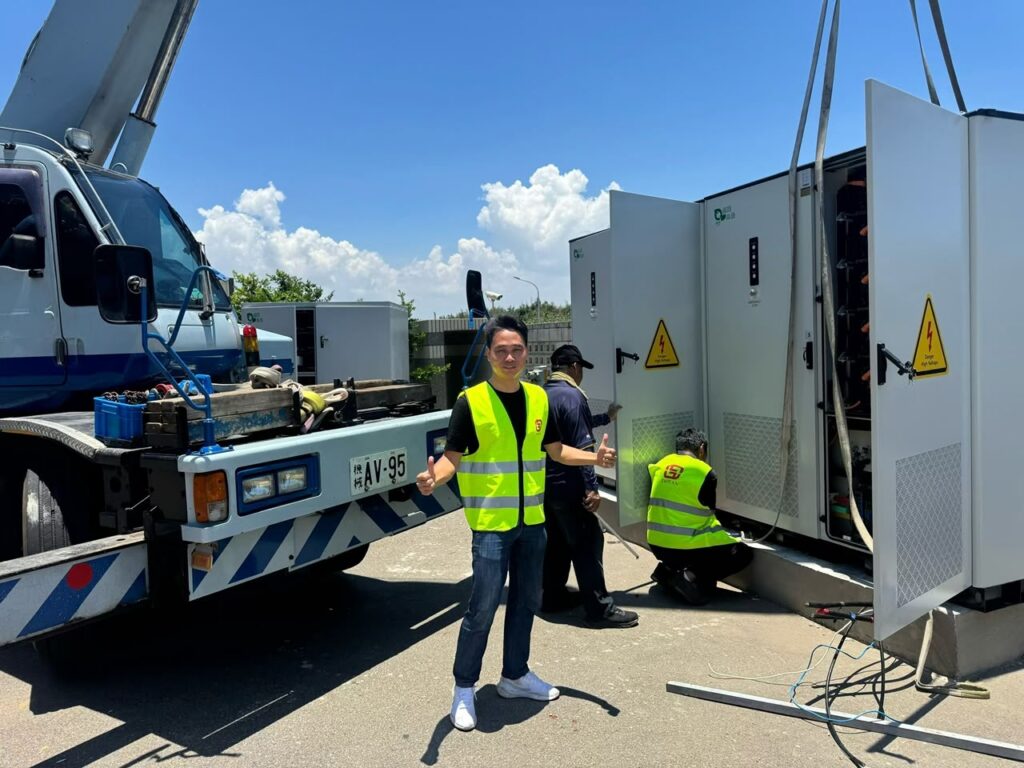
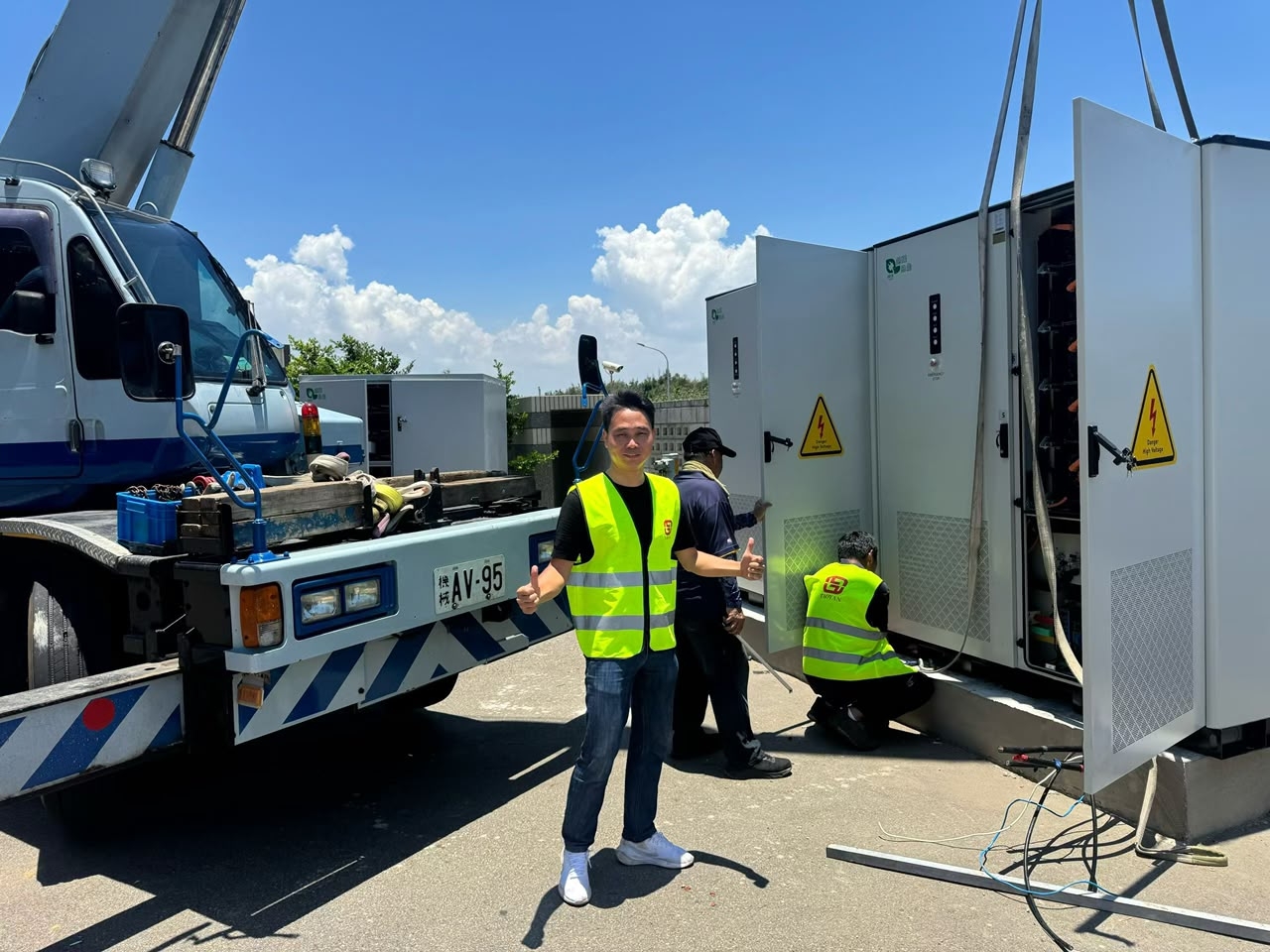
- References: deployed systems include the 20 MWh grid-forming microgrid project in West Asia, the 2610 kWh container deployment in Taiwan, the 783 kWh solution for Brazil, and the 522 kWh commissioning in Malaysia.
- Contact: engineering answers on request, with technical datasheets, layout drawings and certification documents released under NDA during evaluation, and a reply within 24 hours.
Twelve Questions to Send Any Supplier
Send these in writing before you request a quotation; the quality of the answers is itself the evaluation. Start with the cell: which brand, which model, which lot, and what cycle life at what depth of discharge and what temperature — then get that sentence into the contract, because it is the only protection you get. Then the floor: which steps happen under their own roof, and can they trace a finished cabinet back to a cell lot and a weld record? Move to the paperwork: which certificates cover the exact model, voltage and capacity you are quoting, and what does the factory acceptance test protocol look like? Ask to see that protocol before the order, not after the shipment.
Then the commercial half, which is where projects quietly lose money. What is the real delivery time from purchase order to shipment, and how much of that is their own production versus purchased parts? Which reference projects can you verify, in which countries, for which duty? Where will the spare PCS, BMS, contactor and cooling parts physically sit when you need them, and what is the response-time commitment for a critical fault? Which protocols does the EMS expose, and can the data be exported? What are the payment terms and the Incoterm, and what does the warranty actually cover? And the last one, which settles whether you are dealing with a manufacturer or an integrator: do they support OEM and ODM projects, and what is the minimum order quantity for a customised enclosure?
Frequently Asked Questions
How do I verify that a Chinese BESS supplier is a real factory?
Audit the production floor, not the showroom. Look for cell-to-pack equipment, module welding and grading lines, end-of-line test benches with a real power source, and a traceability system that maps a cabinet serial to a cell lot. Ask for a live video walkthrough of the line running your product type, and verify the output figures against the number of shifts you can observe.
What is the minimum viable audit for a first-time importer?
Four things: a witnessed or recorded factory walkthrough, the certificate list mapped to the exact model, a FAT protocol and an end-of-line test record, and two verifiable reference projects in comparable markets. Add a cell specification written into the contract, and you have covered the risks that actually materialise.
Which certifications should a C&I battery energy storage supplier hold for export?
At minimum, CE marking with the relevant EN/IEC standards, IEC 62619 for industrial cells and batteries, IEC 62477 for the power conversion system, and UN38.3 transport documentation. For the United States, UL 1741 and IEEE 1547-2018 apply to the inverter and interconnection, with UL 9540A and NFPA 855 as the installation and fire-code framework. The decisive question is not which certificates exist, but which certificate covers the model you are buying.
Should I buy a container BESS or a cabinet BESS?
Containers suit utility-scale and large C&I projects where the site can take a 20-foot unit and where shipping is efficient; cabinets suit commercial and industrial sites where space, access and staged installation matter. The form factor should follow the delivery route and the site, not the trend. Our article on container versus cabinet BESS in 2026 works through the trade-offs.
How much does cell quality change the cost of a battery energy storage system?
More than any other single factor. Cell format, cycle life and consistency set the usable kWh per cabinet, the number of replacements over the asset life, the efficiency losses and the warranty exposure. The cheapest quotation is often the one that buys the fewest cycles per delivered kWh, which is why cycle life at a stated depth of discharge belongs in the contract rather than in the brochure.
How long does it take to manufacture a C&I battery energy storage system?
For a mainstream 2610 kWh cabinet the realistic lead time is around 30 days from purchase order to shipment, stretching to 45 days in peak season. It runs longer for a custom enclosure, a new EMS configuration or grid-forming hardware, and shorter when the core components are already in stock. Any supplier quoting 15 days for a complete system is describing a stock build, not a manufacturing slot.
Can a Chinese factory support OEM and ODM projects?
Yes, and this is one of the main reasons to work with a manufacturer rather than a trader. An ODM partner builds the enclosure, the BMS configuration and the EMS interface to your specification and your brand, using an existing cell-to-cabinet platform. The practical constraints are minimum order quantity, tooling or enclosure cost for a customised cabinet, and the lead time for a custom EMS configuration.
Related Reading
More engineering notes from the TAOYAN team on the TAOYAN Blog.
Container vs Cabinet BESS: How to Choose in 2026Capacity, deployment time, cost and site constraints compared
Commercial & Industrial BESS Cost & ROI 2026Where the money goes and how payback is actually calculated