
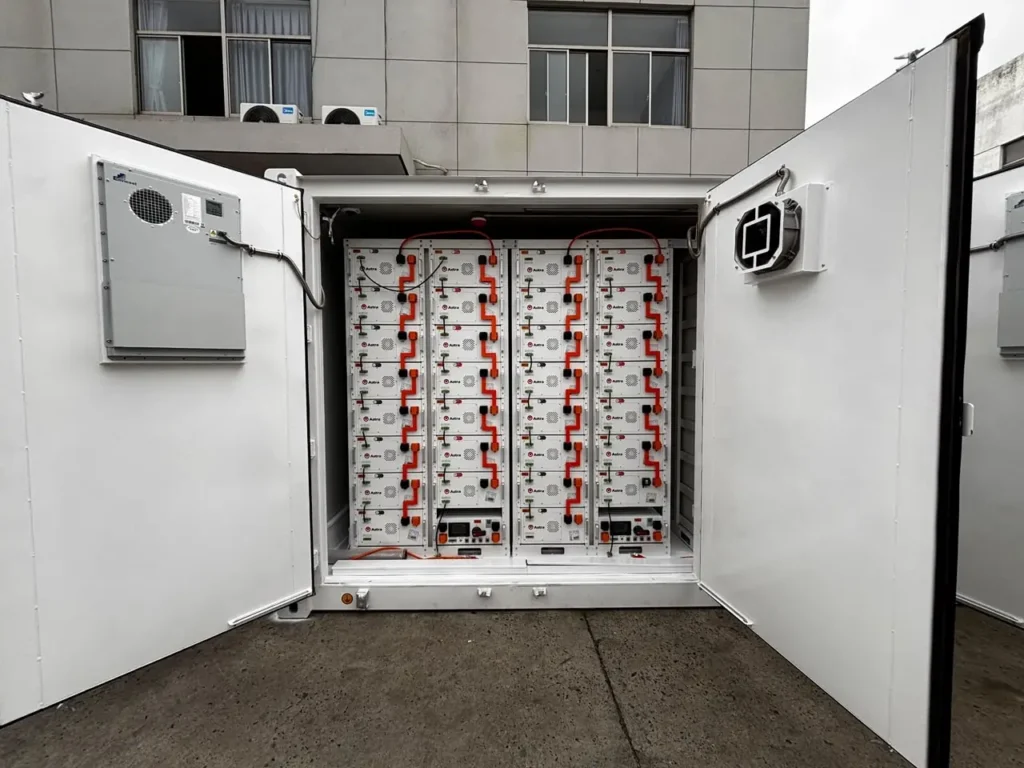
Liquid-Cooled vs Air-Cooled BESS: How Thermal Management Decides Battery Life, Safety and Site Cost
Most people comparing a commercial battery energy storage system look at capacity, power and price. Those three numbers are on the datasheet, so they are easy to compare. The number that quietly determines whether the system is still delivering what you bought in year eight is the temperature of the cells — and the reason you cannot control it is written in the cooling specification you did not read closely.
Air cooling and liquid cooling are not two tiers of the same product. They are two different thermodynamic answers to the same question: how do you get heat out of a battery that, by chemistry, is not supposed to be hot? Each one places a different ceiling on how fast you can charge, how much usable capacity you get in summer, how much auxiliary power the system burns, and how long the warranty lasts. Once you understand what each cooling method physically does, the choice stops being a preference and becomes arithmetic.
This guide is written for EPC contractors, developers and industrial buyers who are comparing quotations that all claim the same kWh. It covers how each cooling method works, the real numbers behind cell temperature and degradation, the eight questions to put to a supplier before you accept a cooling specification, and where a battery energy storage system integrator such as TAOYAN lands when the site is hot, the schedule is short and the battery has to last.
Key Facts
- Cells have a temperature window, not a temperature rating: an LFP cell charges fastest and ages slowest roughly between 10°C and 30°C, and its calendar life roughly halves for every 10°C of sustained excess above 35°C — which is why “operating range -25°C to 55°C” on a datasheet tells you almost nothing about life
- Air cooling is a low-cost answer that scales badly: it works well for small cabinets in mild climates, but heat rejection depends on ambient air, so in a 40°C ambient the same cabinet needs materially more surface area, more fan power and more derating than it did at 25°C
- Liquid cooling removes heat from the cell, not the air: circulating coolant picks up heat at the module surface and dumps it into a heat exchanger, so cell temperature stays close to setpoint regardless of ambient — the reason high-density cabinets like the 2610 kWh and 3132 kWh systems are liquid cooled at all
- Auxiliary power is the hidden line item: air-cooled cabinets in a hot climate can consume a material share of their own stored energy on fans and air conditioning, and that energy is bought at retail and lost forever — liquid cooling typically runs at a fraction of that, but it is not free
- Liquid cooling introduces a maintenance system: coolant chemistry, pumps, filters, leak detection and a heat-exchanger service interval become part of your obligations, and in a project with no local technician this is a bigger risk than a failed fan
- The specification details that decide everything: cell temperature uniformity (±3–5 K), maximum cell temperature at full rated load, the cell temperature at which warranty coverage begins, and the coolant type — all of these belong in the contract, not in a brochure
Why Cell Temperature Governs Battery Life
A lithium iron phosphate cell is not damaged by heat in the way a combustion engine is damaged by heat. There is no internal combustion, no fuel, no flame inside the cell. What heat does is accelerate the chemistry that is always running: the SEI layer on the anode thickens, the electrolyte degrades, lithium plating accumulates during charging, and the internal resistance rises. None of these failures announce themselves. The cabinet still holds the same nominal kWh, the BMS still reports full state of charge, and the customer still gets billed for a system that no longer performs to specification.
This is what makes thermal management an economics question rather than an engineering one. The relationship between temperature and degradation is close to exponential, which means the difference between a cell running at 30°C and one running at 45°C is not a small percentage of extra wear — it is a multiple of the whole asset life. Below 10°C the constraint reverses and becomes charging: cold cells cannot accept charge efficiently and, below freezing, charging attempts can plate lithium internally, which is a direct and largely irreversible capacity loss.
It also explains why cell uniformity matters as much as cell average. A cabinet where every cell sits at 30°C is a healthy cabinet. A cabinet where the average is 30°C but one rack runs 12 K warmer is a cabinet where the weak cells are being cycled harder than the strong ones, which is exactly the configuration that produces early pack replacement.
How Air Cooling Works and Where It Stops Being Enough
An air-cooled cabinet moves ambient air across the modules, either by convection inside the enclosure or by forcing conditioned air through it. The heat path is simple and there is nothing to leak: air enters, picks up heat from the cell surfaces, and leaves. There is no fluid, no pump, no pipework, no coolant chemistry and no heat exchanger to service.
That simplicity is genuinely valuable, and for a 100 kWh cabinet in a temperate industrial park it is usually the right answer. The economics work because the amount of heat to remove is small and the air is already at a comfortable temperature.
The limits appear in three places, and they all arrive at once as the cabinet gets bigger or the site gets hotter.
Heat rejection is bounded by the air, not by the design
An air-cooled cabinet can only push heat into the ambient air, and it can only do so at a rate the cabinet’s surface area and airflow allow. When ambient temperature rises, the temperature difference that drives heat transfer shrinks. At 25°C ambient you have a 25 K push; at 40°C ambient you have a much smaller one, and to move the same heat the system needs more surface, more fan power and a higher internal temperature — all three of which cost money and all three of which push cells out of their sweet spot.
Every 10 kW of cooling becomes energy you pay for twice
Air conditioning a cabinet is not a design detail, it is a continuous load on the project. In a hot climate the fans and air conditioning of a single large air-cooled cabinet can consume a meaningful percentage of the energy the cabinet stores, and it is drawn from the same meter the customer is trying to save money on. Over a fifteen-year life with daily cycling, this compounds into a real number that belongs in the ROI model — and it is the number most often missing from a comparative quotation.
Density is the ceiling
Air cooling scales with surface area, and enclosure surface area does not scale with capacity. This is the fundamental reason high-density cabinets are liquid cooled. TAOYAN’s 2610 kWh / 1250 kW system packs 2610 kWh into a standard ISO container footprint with a 1250 kW PCS — a power density that is simply not achievable by pushing air through a cabinet of that size, and a thermal design that runs at 832 V nominal with a 314 Ah LFP cell configuration to keep the current and therefore the heat manageable in the first place.
How Liquid Cooling Works and What It Costs You
A liquid-cooled system circulates a coolant — typically a water-glycol mixture — through cooling plates or channels in contact with the cells, or through a cold plate bonded to the module. The coolant picks up heat at the cell surface, travels to a heat exchanger, gives up the heat to ambient air or a water loop, and returns. Because the heat is carried by the coolant rather than by the air, the cell can be held within a couple of kelvin of setpoint no matter what the weather is doing.
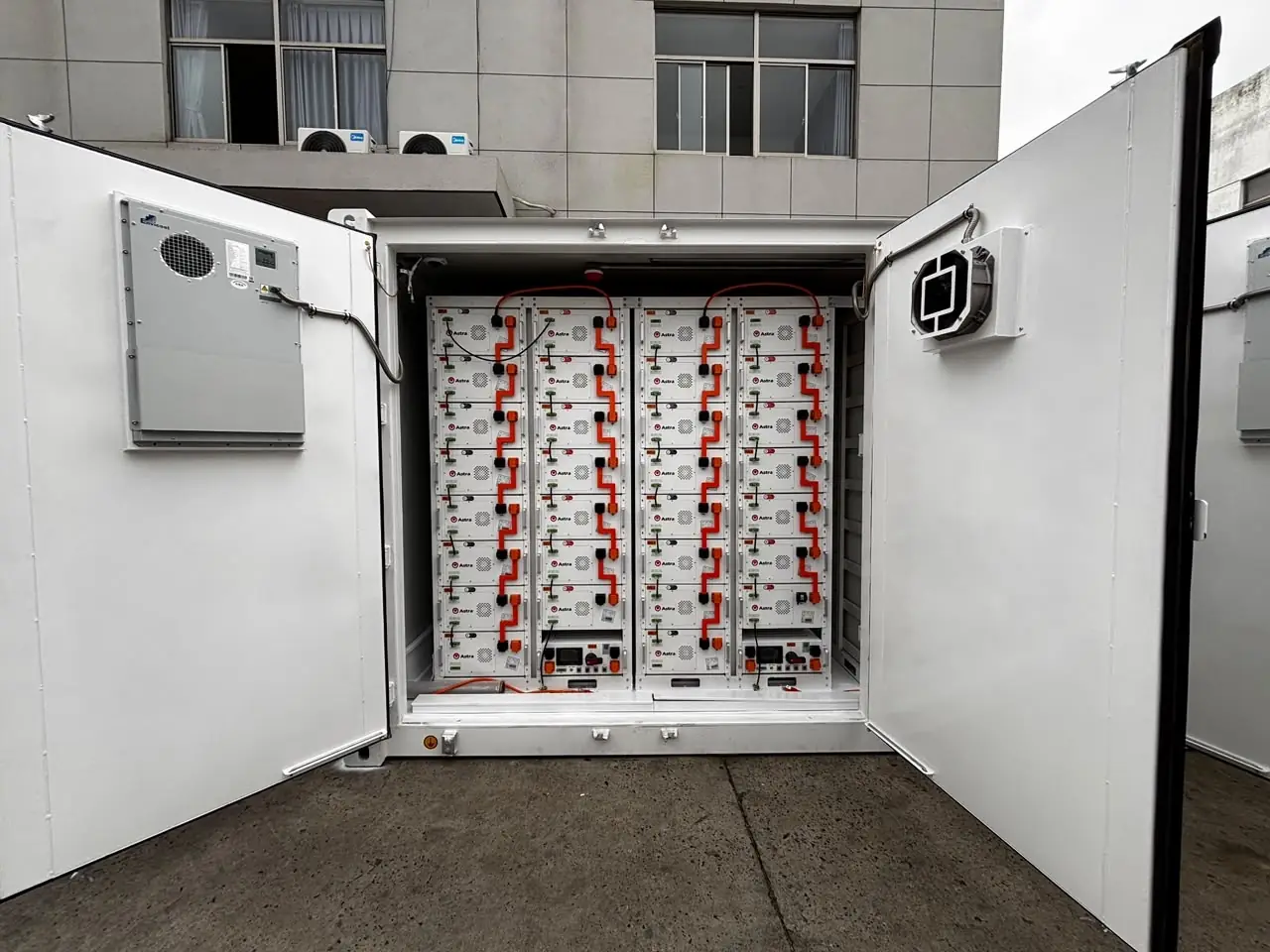
The engineering payoff is straightforward. Cell temperature stays flat across the day, in every season, at any ambient. The system can be derated far less often. Charge and discharge rates stay available in summer. Cycle life is protected because the cells never spend time hot. And because the coolant is doing the heat transfer rather than the enclosure air, the cabinet can be physically smaller for the same capacity.
It is not free, and a good supplier is candid about this. You are buying four additional subsystems: the coolant circuit with its pump and expansion vessel, a heat exchanger, the glycol chemistry, and a leak detection and monitoring system. These need maintenance on a schedule, and in a container that ships to a site with no local technician, the failure mode of a stopped pump is more severe than a failed fan in an air-cooled cabinet. A liquid-cooled system also has a higher initial cost, and in a mild climate on a small system that cost is not recovered.
Head-to-Head: Where Each Method Wins
| Criterion | Air cooling | Liquid cooling |
|---|---|---|
| Cell temperature vs ambient | Rises with ambient; needs bigger delta as site heats up | Held near setpoint; largely independent of ambient |
| High-density cabinets | Not practical beyond roughly 1–1.5 MWh per enclosure | Standard from 2 MWh upward, including 2610 kWh and 3132 kWh builds |
| Auxiliary energy | Higher in hot climates; scales with ambient | Lower and flatter; mainly pump and heat-exchanger load |
| Maintenance obligations | Filters, fan bearings, AC service, dust ingress | Coolant chemistry, pump seals, filter, flush, heat-exchanger cleaning, leak detection |
| Cold-climate behaviour | Simple; needs no special provisions | Needs glycol concentration and freeze protection specified correctly |
| Failure severity | Fan or AC failure → derate, usually recoverable | Pump failure → rapid temperature rise, needs prompt response |
| Upfront cost | Lower | Higher |
| Best fit | Small to mid cabinets, mild climates, sites with local technicians | High density, hot or variable climate, high cycling, export-grade containers |
Two things are worth noticing about this table. First, every row is a trade-off rather than a step up — liquid cooling buys thermal performance with complexity and cost, and that is a genuine engineering decision, not a marketing tier. Second, the right answer is strongly site-dependent. A 215 kWh cabinet in a temperate industrial park has little to gain from liquid cooling. A 2.6 MWh container in a 45°C ambient has almost everything to gain from it.
The Numbers That Decide It: Heat, Derating and Auxiliary Power
Three quantitative factors turn this from an opinion into a calculation.
Thermal management loss
Heat that enters the cell has to come out of it again, and every watt of thermal management load is a watt of stored energy you paid for, converted into heat you gave away. For a large cabinet the round-trip efficiency difference between well-managed and poorly managed thermal design shows up directly in your revenue model, because a system that discharges less than it charged bills as if it had discharged fully.
Summer derating
When cell temperature approaches its upper limit, the BMS reduces charge and discharge power to protect the battery. The customer who signs for 1250 kW and receives 950 kW for four months of the year has a capacity problem, not a temperature problem, but the temperature is the cause. The size of this effect is entirely a function of the cooling design and it belongs in the contract as a stated output at a stated ambient.
Site altitude and ambient extremes
Thin air at altitude reduces the heat that can be rejected to atmosphere and degrades the performance of air-cooled equipment — a real constraint at the elevations found in West Asia, where TAOYAN delivered a 20 MWh grid-forming BESS for a weak-grid microgrid at high altitude and 45°C ambient. Liquid cooling keeps the cell at setpoint in exactly these conditions, which is one of the reasons the architecture was chosen for that project.
Eight Questions to Ask Before You Accept a Cooling Specification
Send these in writing and require the answers in the technical datasheet rather than in a reply email. The quality of the answers tells you whether you are talking to an engineer or a catalogue.
- What is the maximum cell temperature at full rated load, at the worst ambient on site? Not the ambient rating. The cell temperature. If the answer is a single number rather than a table with ambient and load, the thermal design has not been engineered for your site.
- What is the cell temperature uniformity across the cabinet, in kelvin? Anything wider than about 5 K and the pack ages unevenly. This is the number that determines whether the second half of the pack life matches the first half.
- At what cell temperature does warranty coverage begin and end? Some suppliers void coverage outside a narrow band while still publishing a wide operating range on the datasheet. Ask for the warranty conditions with the cell temperature limits stated inside them.
- What is the auxiliary energy consumption, and at what ambient? Ask for it as kWh per day or as a percentage of stored energy, with the test ambient stated. This number belongs in your ROI model and is usually missing.
- What is the derating curve? Ask for output power and usable capacity against ambient temperature, so you can see exactly when and how much you lose.
- For liquid cooling: what is the coolant, and what is the service interval? Get the glycol type and concentration, the flush and sampling schedule, the pump and filter replacement intervals, and the heat-exchanger cleaning interval. These are your obligations after handover, and they belong in the O&M manual before you sign.
- What happens on a pump failure or a leak? You want to know whether the system derates gracefully, whether there is automatic isolation, and how quickly a fault is detected and reported remotely. A liquid-cooled system without leak detection is a specification you should reject.
- Who maintains it, and where are the spares? If the answer is a distributor three countries away, the practical risk of a cooling-related outage rises sharply. This connects to the wider questions of warranty coverage and response time covered in our guide to choosing a C&I energy storage manufacturer.
A field note worth reading before you sign
“We once had a client in a high-altitude region who chose air-cooled to save 5% on CapEx, only to find the system derating to 70% power during summer peaks. That’s why we insist on putting the derating curve in the contract.”
Five per cent of capital cost, recovered in a single summer of reduced output. The derating curve is the cheapest line in the whole specification, and the only one that can be written as a number before the equipment is built.
Why TAOYAN Builds Liquid-Cooled Systems
TAOYAN is a C&I energy storage system integrator based in Dongguan, China. We source 314Ah LFP cells, integrate them into cabinets and containers on our own assembly line, and develop the BMS and EMS firmware ourselves. We do not operate a cell production line, and we do not pretend to; what we control is the cabinet, the thermal design, the control firmware and the factory acceptance test — and the thermal design is where a great deal of the real engineering value sits.
Every high-density product in our range is liquid cooled, and the reason is specific rather than fashionable. It is the same reason we insist on a derating curve in the contract: on the projects where cooling decides the outcome, guessing is the expensive option. The field note above is the reason we write that clause, and the product family below is the answer we give.
- 2610 kWh / 1250 kW containerised system — 2610 kWh capacity, 832 V nominal battery architecture in a 260S 1P configuration, 1250 kW PCS with 1300 kW maximum output, liquid cooling, IP54, −25°C to 55°C operating range, 6058 × 2438 × 2440 mm and 23,073 kg. A 1250 kW power density inside one standard container is a thermal problem before it is an electrical one. You can read the full specification on the 2610 kWh product page.
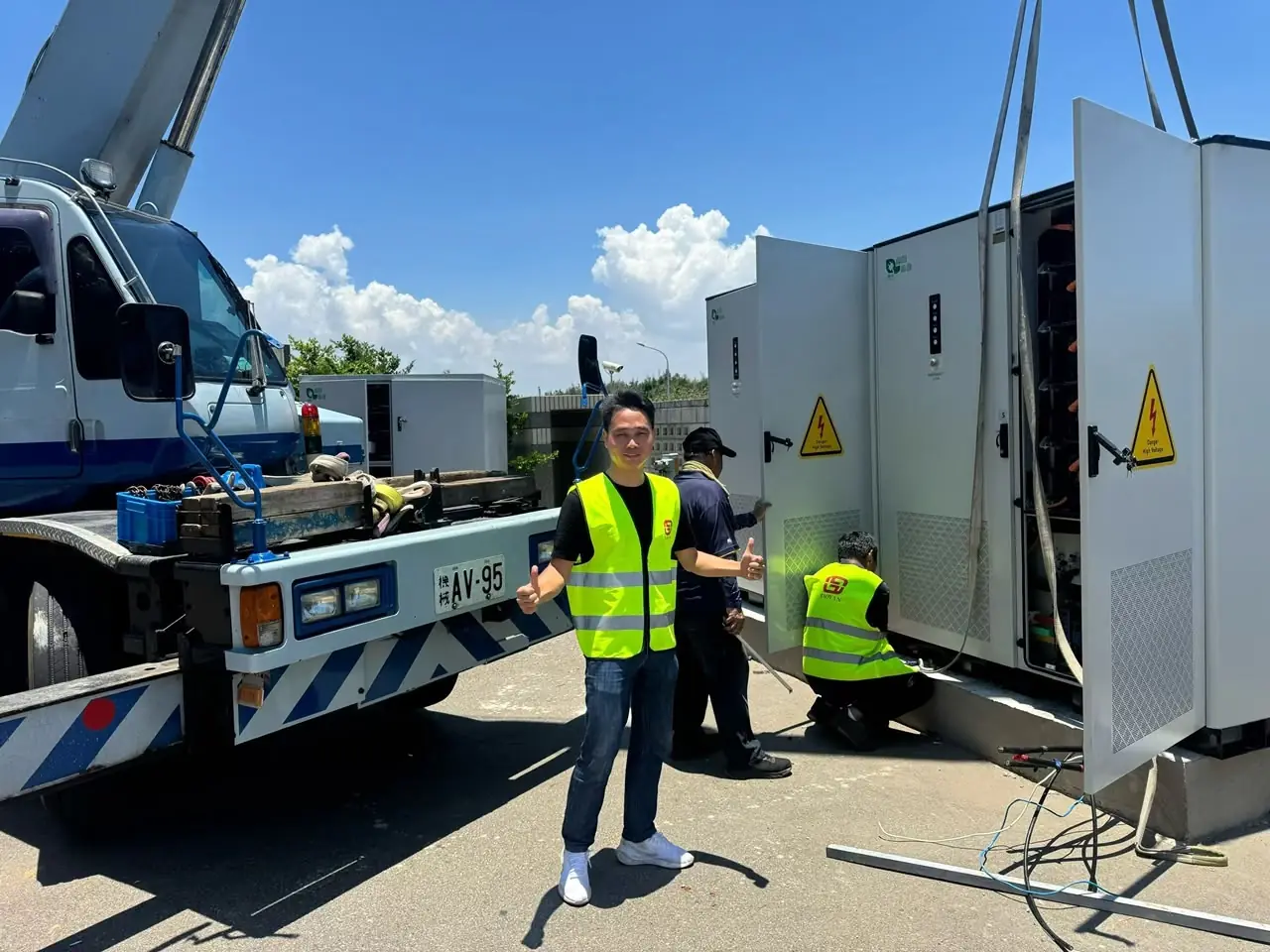
- 3132 kWh / 1500 kW Taiwan project — six 522 kWh / 250 kW liquid-cooled cabinets in a 2P260S configuration at 832 V nominal, combined through an integrated transfer switch for sub-20 ms grid-to-battery changeover, installed in a subtropical climate where thermal performance under summer load is the difference between a working system and a derated one. The project detail is on the 3132 kWh Taiwan solution page.
- Self-developed EMS that speaks to the cooling system directly — our TY-EMS communicates with the PCS, the BMS, the liquid cooling units and the site meters over Modbus RTU and TCP, and synchronises with the cloud backend for remote policy distribution across multiple sites. Thermal control is therefore part of the energy management strategy rather than a standalone thermostat, which is what makes the low auxiliary consumption achievable in the first place.
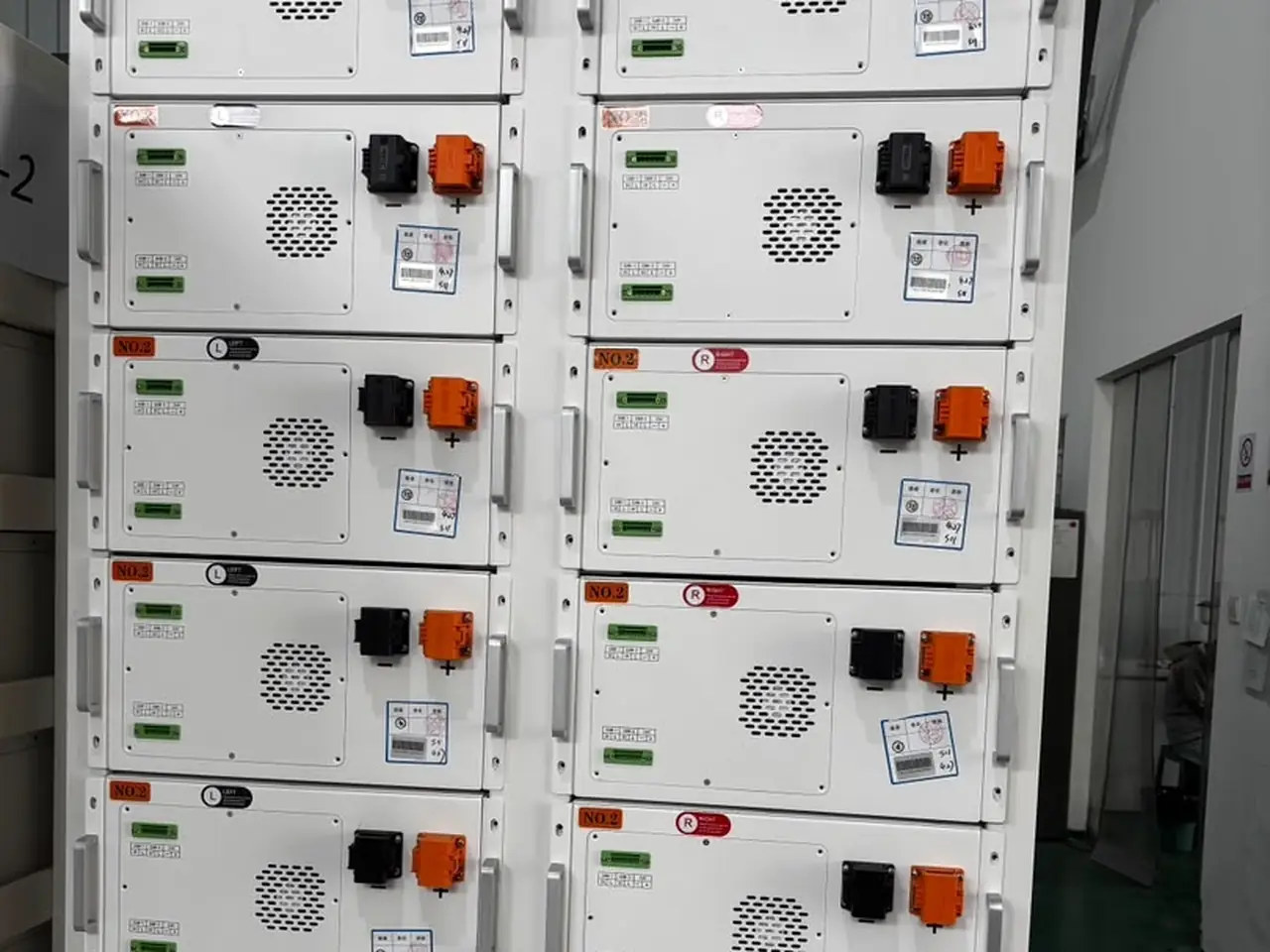
We are also direct about what liquid cooling does not solve. It does not make the battery safer in a thermal runaway event — that is a cell chemistry and module design question, covered in our article on BESS safety standards and thermal runaway. It does not remove the need for a fire strategy and the separation distances your authority will ask for. And it does not excuse you from the coolant maintenance schedule, which is why every TAOYAN liquid-cooled system ships with the service intervals and the leak detection specified in the documentation rather than left to the installer.
The Decision in One Paragraph
Choose air cooling when the cabinet is small, the climate is mild, the site has people who can maintain it and the capital cost matters more than the last few percent of performance. Choose liquid cooling when the cabinet is large or dense, the ambient is high or swings hard, the system cycles daily for fifteen years, the site has no technician, or the auxiliary energy cost of air conditioning would show up in the ROI. Then, regardless of which you choose, put the eight questions above into the contract: maximum cell temperature at rated load, uniformity in kelvin, the warranty temperature band, auxiliary consumption at a stated ambient, the derating curve, and the coolant service regime. Those six documents are worth more than any adjective on the front of the datasheet, and they are the difference between a system that performs for its whole life and one that quietly does not.
Frequently Asked Questions
Is liquid cooling always better than air cooling for a battery energy storage system?
No. Liquid cooling is better for high-density cabinets, hot or variable climates, high cycling and sites without local technicians, because it holds cell temperature near setpoint regardless of ambient. Air cooling remains the right answer for small to mid-size cabinets in mild climates where capital cost matters more than the last few percent of performance and where maintenance is straightforward. Every row of the comparison is a trade-off rather than a step up.
How much does cooling affect battery life?
Substantially. Calendar life for an LFP cell roughly halves for every 10°C of sustained excess above 35°C, so a cell held at 45°C ages several times faster than one held at 30°C. Heat also accelerates electrolyte degradation and lithium plating during charging, and it raises internal resistance. Because the degradation is close to exponential, the gap between a well-cooled and a poorly-cooled cell multiplies over a fifteen-year asset life rather than adding to it.
What is the maximum cell temperature a BESS should run at?
Ask for the maximum cell temperature at full rated load at the worst site ambient, not the enclosure operating range. As a working rule, an LFP cell charges fastest and ages slowest roughly between 10°C and 30°C, and sustained operation well above 35°C accelerates calendar ageing significantly. A datasheet range of −25°C to 55°C describes what the equipment survives, not the conditions under which it will last its designed life.
What is cell temperature uniformity and why does it matter?
Uniformity is the spread in cell temperature across a cabinet, measured in kelvin. Anything wider than about 5 K means the weakest cells in the pack are being cycled harder than the strongest ones, so pack ageing becomes uneven and replacement comes earlier than the headline cycle life suggests. It is one of the most valuable figures to get from a supplier and one of the least often provided.
Does liquid cooling increase the safety risk of a battery energy storage system?
It does not change the fundamental thermal runaway risk, which is a question of cell chemistry and module design rather than cooling. What it does change is the maintenance system: a coolant circuit with a pump, filters, glycol chemistry, a heat exchanger and leak detection becomes part of the long-term obligations. Pump failure is a more serious event than a fan failure because temperature rises quickly, so automatic isolation, remote fault reporting and a defined response procedure matter. Cooling is a performance system, not a fire safety system.
What maintenance does a liquid-cooled BESS require?
Scheduled tasks include coolant sampling and glycol concentration checks, pump and seal inspection, filter replacement, periodic flush and heat-exchanger cleaning, and verification of the leak detection and alarm chain. The service intervals should be stated in the documentation at handover, along with the coolant type and specification. For a project with no local technician, the location of spare parts and the supplier’s response-time commitment are as important as the intervals themselves.
How much auxiliary energy does BESS cooling consume?
It varies with the design and the site ambient, and it is one of the most frequently missing numbers in a comparative quotation. Air-cooled cabinets in a hot climate can draw a material share of their own stored energy for fans and air conditioning, and that cost is repeated on every cycle for the life of the project. Liquid cooling typically runs at a fraction of that load. Require the figure in kWh per day or as a percentage of stored energy with the test ambient stated, then put it into the ROI model.
How do I compare cooling specifications between different BESS suppliers?
Ask six questions in writing and require the answers in the technical datasheet: maximum cell temperature at full rated load and at the worst site ambient, cell temperature uniformity in kelvin, the cell temperature band inside the warranty conditions, auxiliary energy consumption at a stated ambient, the derating curve of output power and usable capacity against ambient, and the coolant type with its service interval. A supplier who answers these precisely is one who has actually engineered the thermal design for a site.
Related Reading
More engineering notes from the TAOYAN team on the TAOYAN Blog.
BESS Safety: How Modern Battery Energy Storage Systems Stay SafeWhat thermal runaway risk management actually requires from an integrator
How to Choose a PCS for Your BESS: Inverter Sizing, Voltage and Grid-LinkingWhy the conversion side of the system decides the heat that the cooling side must remove