
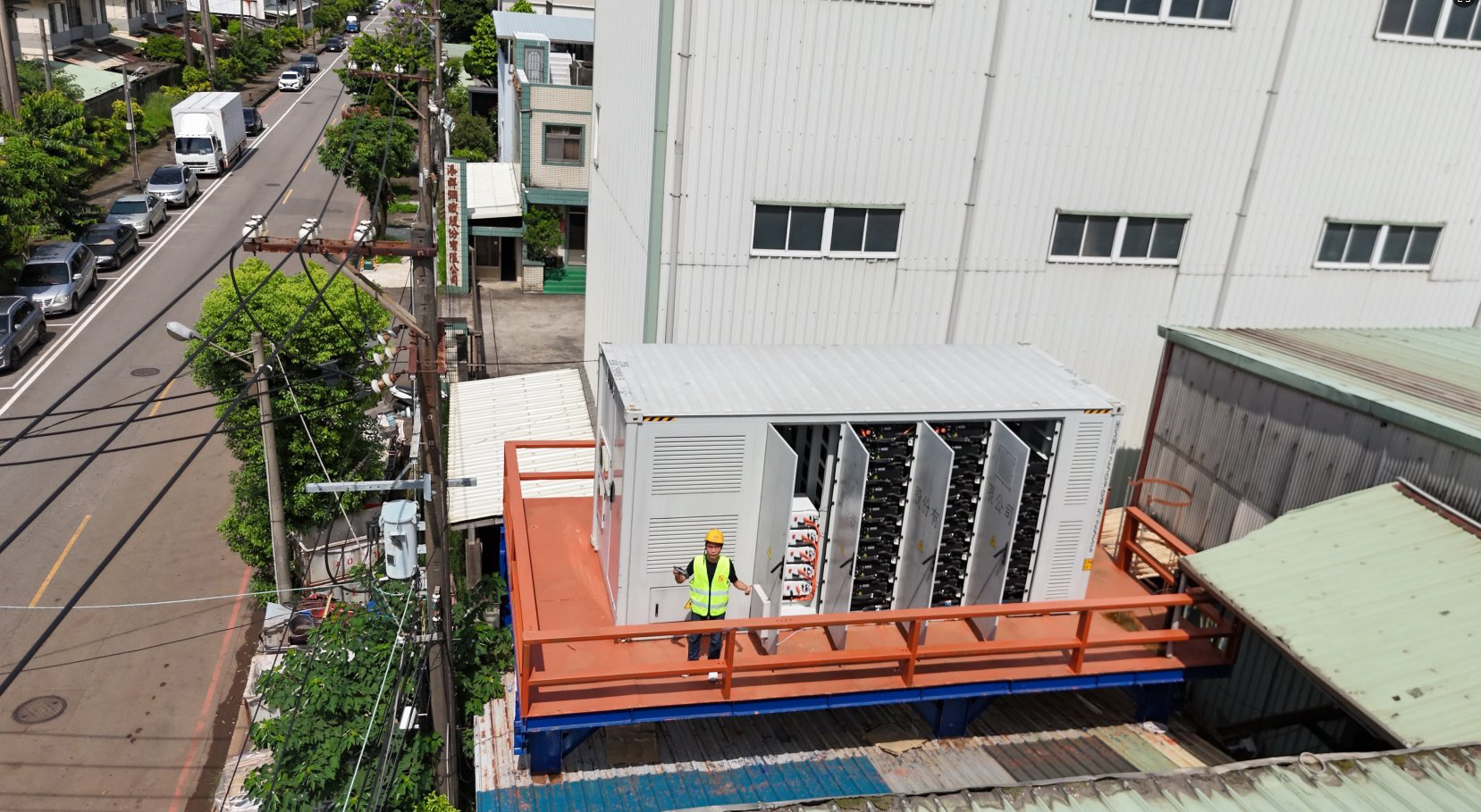
2610KWH-1250KW Lösung
Projektbeschreibung
This project delivers a 2.61MWh / 1.25MW grid-connected battery energy storage system (BESS) built around an advanced liquid-cooled lithium iron phosphate (LFP) architecture. The system is engineered for industrial-scale peak shaving, load shifting, and frequency regulation, enabling facilities to dramatically reduce electricity costs through intelligent energy time-of-use arbitrage.
The solution is housed in a single 20-foot ISO containerized unit featuring a dual-chamber design: a battery chamber with ten (10) strings of liquid-cooled LFP battery clusters (832V / 314Ah each), and a power conversion chamber housing a modular 1250kW PCS composed of ten parallel 125kW inverter modules. The integrated liquid thermal management system maintains optimal cell temperatures across a wide -25°C to 55°C operating range, delivering superior cycle life and round-trip efficiency compared to air-cooled alternatives.
Gesamtenergiekapazität
Nennausgangsleistung
20ft-Container
PCS-Wirkungsgrad
Zellchemie
Schutzart
🔌 Schlüsselinnovation: Flüssiggekühltes All-in-One-Container-BESS
This solution packs 2.61MWh of liquid-cooled LFP storage plus a 1250kW PCS into a single 20ft container. The liquid cooling system uses an integrated die-cast cold plate design that merges the cooling plate with the battery module enclosure, eliminating coolant leakage risk while achieving IP67 protection at the module level. Ten battery clusters (each 832V / 261.248kWh) connect via a centralized DC bus to ten 125kW PCS modules operating in parallel, delivering up to 1300kW peak output to the 400V AC grid with four-quadrant control and power factor >0.99. The result: industry-leading energy density, extended cycle life (≥8000 cycles), and rapid deployment with minimal site preparation.
- Flüssiggekühltes LFP Battery System: Ten clusters of 832V / 314Ah LFP cells (2610 kWh total) using 3.2V prismatic cells with integrated die-cast liquid cooling plates. Each module (52S1P, 166.4V / 52.25kWh) achieves IP67 protection. Cycle life ≥8000 cycles at 80% DOD.
- Modular PCS Architektur: Ten × 125kW PCS modules (EPCS1250-AS) operate in parallel via centralized DC bus, delivering 1250kW rated / 1300kW maximum output. Four-quadrant active/reactive control, power factor >0.99, THD <3%.
- Advanced Thermal Management: Dual-circuit liquid cooling (refrigeration + heating) maintains battery temperature within optimal range. PTC heater ensures reliable charging in cold environments down to -25°C. Compressor-based refrigeration handles high-rate discharge heat rejection.
- Integrated Safety Systems: Multi-layer protection including three-level BMS (BMU/BCMU/BAMS), heptafluoropropane gas fire suppression with <8s fill time, smoke/heat detection, emergency lighting, and access control interlock. IP54 container protection.
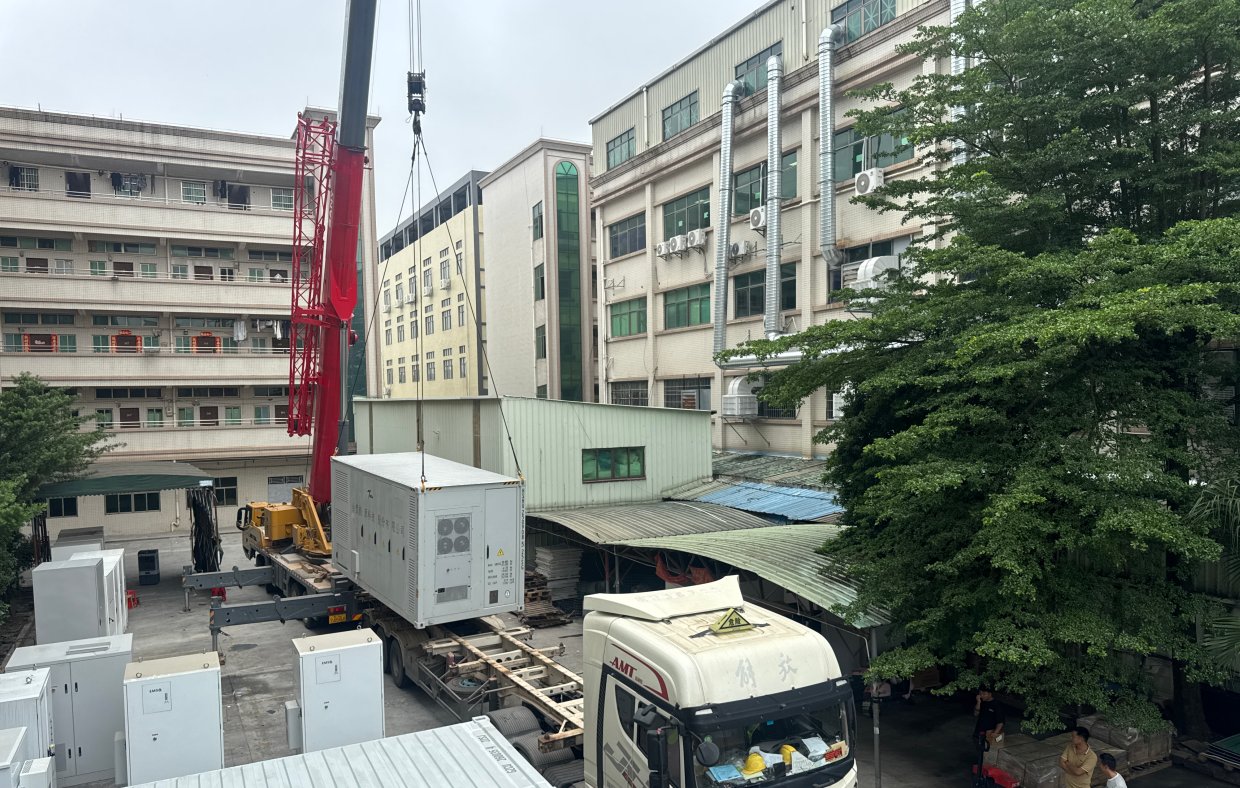
- Rapid Deployment: Single-container design eliminates need for dedicated battery building. Factory-tested complete unit transported to site, installed on concrete plinth with only grid connection required. 25-tonne total weight.
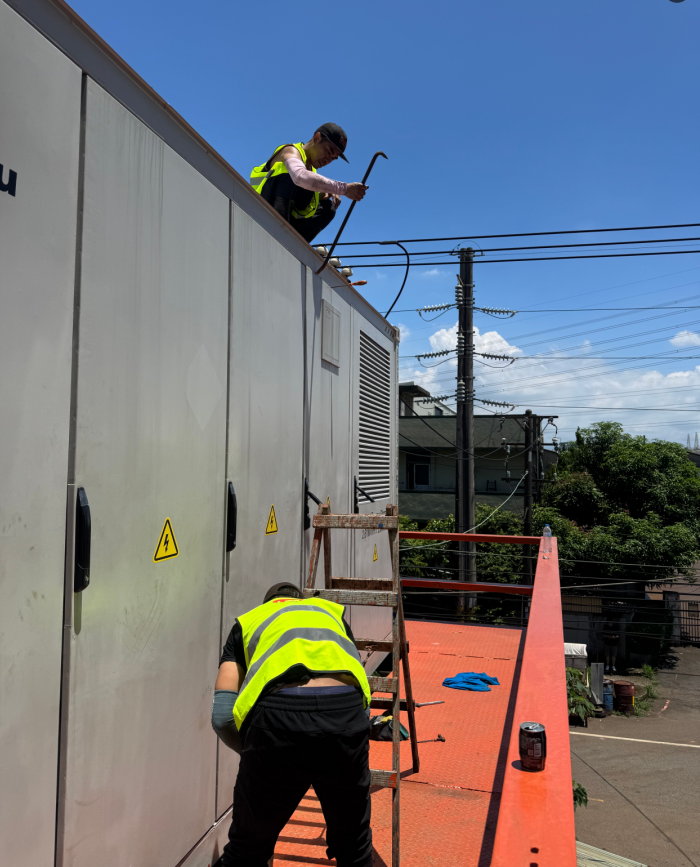
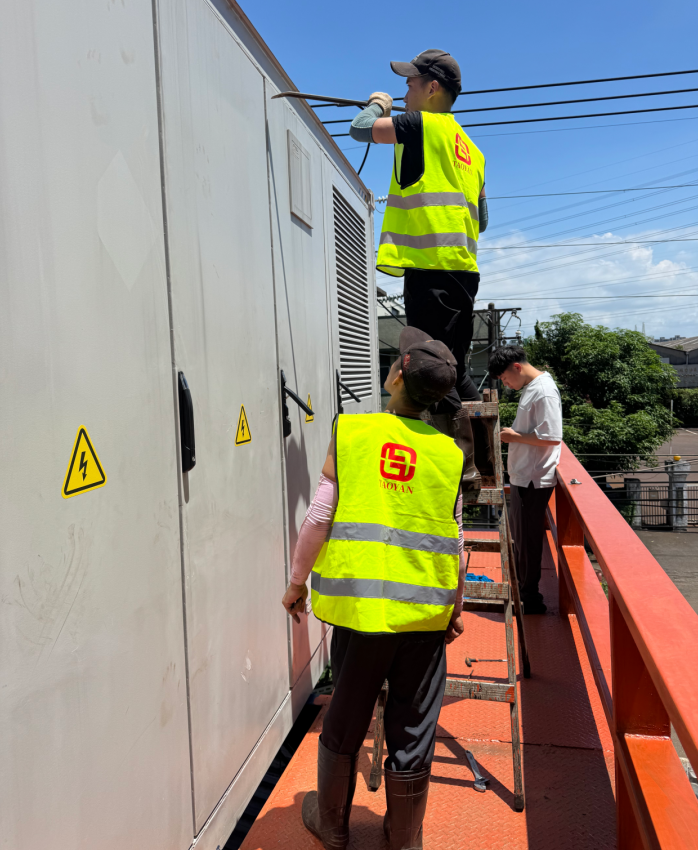
Projektbilder
Batteriesystem-Spezifikationen
| Batteriepack-Parameter | |
|---|---|
| Zelltyp | LFP – 314Ah prismatisch |
| Gesamtkapazität | 2,610 kWh (2612.48 kWh) |
| Batteriekonfiguration | 10P260S (10 clusters × 260S) |
| Nennspannung | 832 V DC |
| Spannungsbereich | 748 V – 915 V DC |
| Betriebstemperatur | -25°C to 55°C |
| Kühlmethode | Flüssiggekühlt (integrierte Druckguss-Kaltplatte) |
| Zykluslebensdauer | ≥ 8,000 cycles @ 80% DOD |
| Schutzart | IP54 (Container) / IP67 (Module) |
| Maximale Höhe | ≤ 4,000 m |
| Abmessungen (B×T×H) | 6,058 × 2,438 × 2,896 mm (20ft container) |
| Gesamtgewicht | ≈ 25 Tonnes |
| Batteriemodul-Spezifikationen | |
| Modulkapazität | 52.25 kWh |
| Modulkonfiguration | 1P52S (52 cells in series, 1 parallel) |
| Nennspannung | 166.4 V DC |
| Zellkapazität | 314 Ah |
| Modulabmessungen (B×T×H) | 810 × 1,150 ×245 mm |
| Modulgewicht | 360 kg |
| Batteriestrang-Spezifikationen | |
| Strangkapazität | 261.248 kWh |
| Strangkonfiguration | 5 modules × 1P52S + High-Voltage Box |
| Nennspannung | 832 V DC |
| Arbeitsspannungsbereich | 728 V – 936 V DC |
| Anzahl der Stränge | 10 clusters per container |
Wechselrichter- & PCS-Spezifikationen
| PCS-Parameter (EPCS1250-AS) | |
|---|---|
| Wechselrichtertyp | Netzgekoppelt (On-Grid) |
| Nennausgangsleistung | 1,250 kW |
| Maximale Ausgangsleistung | 1,300 kW |
| DC-Spannungsbereich | 650 V – 950 V DC |
| Maximaler DC-Strom | 1,630 A (163 A × 10 strings) |
| DC-String-Anzahl | 10 strings |
| AC-Nennspannung | 400 V AC (3-phase 4-wire) |
| Netzspannungsbereich | 320 V – 450 V AC |
| Maximaler AC-Strom | 1,590 A |
| Nennfrequenz | 50 / 60 Hz |
| Leistungsfaktor | > 0.99 (at rated power) |
| Leistungsfaktor-Bereich | -1 (leading) ~ 1 (lagging) |
| Gesamtklirrfaktor (THD) | < 3% (at rated power) |
| Maximaler Wirkungsgrad | 98% |
| Kühlmethode | Gebläsezwangskühlung |
| Geräuschpegel | < 70 dB |
| Abmessungen (B×T×H) | 1,600 × 1,000 × 2,400 mm |
| Weight | 750 kg (10 × 125kW modules) |
Container- & Sicherheitssystem-Spezifikationen
| Container-Überblick | |
|---|---|
| Containertyp | 20ft Standard ISO Container |
| Außenabmessungen (L×B×H) | 6,058 × 2,438 × 2,896 mm |
| Gesamtgewicht | ≈ 25 Tonnes |
| Kabinenlayout | Zweikammer: Batteriekammer + Wechselrichterkammer |
| Batteriekammer-Kühlung | Flüssigkühlsystem (40kW Kälte + PTC-Heizung) |
| Wechselrichterkammer-Kühlung | Zwangslüftung (Gebläsekühlung) |
| Schutzart | IP54 (Container) / IP67 (Battery Module) |
| Feuerlöschsystem | |
| Löschmitteltyp | Heptafluorpropan (HFC-227ea) Gas + Trockenpulver-Reserve |
| Füllzeit | < 8 seconds (full battery chamber coverage) |
| Erkennung | Rauchsensoren + Hitzesensoren + akustischer/optischer Alarm |
| Sicherheitsverriegelung | Automatische Systemabschaltung bei Erkennung; Gasfreigabe-Anzeige |
| BMS (Batteriemanagementsystem) | |
| Architektur | 3-stufig: BMU (Modul) → BCMU (Strang) → BAMS (Array) |
| SOC-Schätzgenauigkeit | ≤ 5% |
| Kommunikation | CAN-Bus + RS485 + Ethernet |
| Hauptfunktionen | Echtzeitüberwachung, Zellbalancierung (passiv), Über-/Unterspannungs-/Strom-/Temperaturschutz, Thermomanagement, Ereignisprotokollierung (128MB Speicher) |
| EMS (Energiemanagementsystem) | |
| Funktionen | Echtzeitüberwachung, Lastspitzenkappungsplanung, TOU-Optimierung, Fernsteuerung, Störungsalarm, Berichterstellung, Kurvenanalyse |
| Protokollunterstützung | MODBUS RTU/TCP |
| Benutzeroberfläche | Touchscreen-HMI + Remote-SCADA-Anbindung |
TAOYAN Energiemanagementsystem (EMS)
This project is equipped with TAOYAN’s self-developed Energiemanagement System (EMS) — a comprehensive monitoring, control, and revenue optimization platform designed specifically for industrial BESS deployments. The EMS provides real-time visibility into every aspect of the energy storage system, from individual cell-level data to grid-wide economic performance.
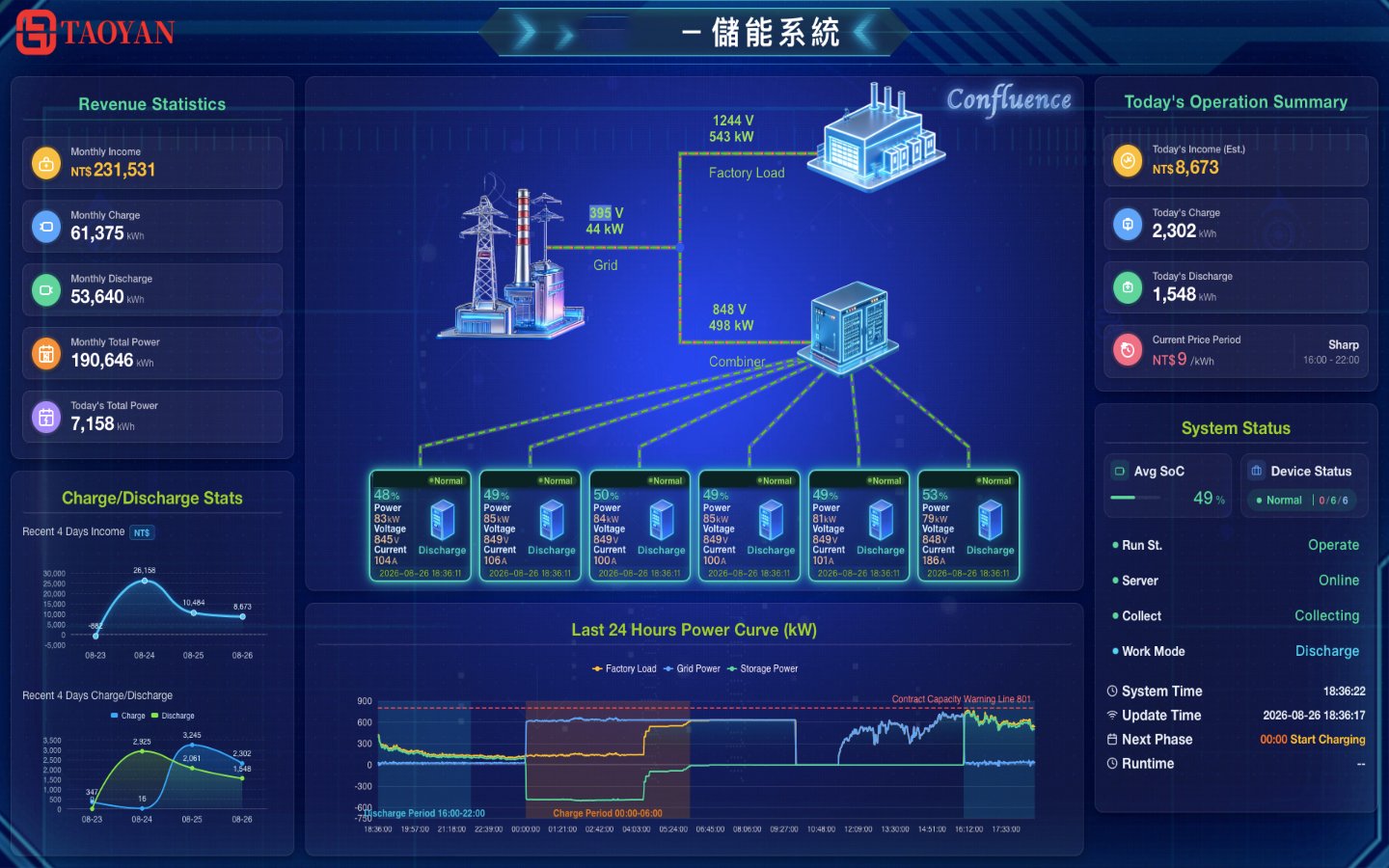
EMS-Confluence-Dashboard — Echtzeit-Systemtopologie, Einheitenstatus, Ertragsstatistik & Leistungskurven
Kernfunktionen
- System Topology Visualization: Interactive single-line diagram showing real-time power flow between Grid, Combiner, Battery Units, and Factory Load — with live voltage, current, and power readings at each node.
- Unit-Level Überwachung: Individual status for each battery cabinet — SoC %, charge/discharge power (kW), voltage (V), current (A), temperature, and health status with normal/warning/fault indicators.
- PCS Power & SoC Verfolgung: 24-hour rolling charts for PCS output power and battery State of Charge, enabling operators to verify scheduling execution and identify anomalies.
- Batch Steuerung Panel: One-click operation mode switching between Manual Charge, Manual Discharge, All-weather Auto, and Scheduled modes — with immediate effect confirmation.
- Ertrag Analytics: Daily/monthly/yearly income tracking broken down by tariff period (Sharp / Peak / Flat / Valley) with profit calculation based on Taiwan Power Company (Taipower) rate schedules.
- Charge/Discharge Statistics: Comprehensive kWh accounting with daily bar-chart comparison, cumulative totals, and exportable reports for financial reconciliation.
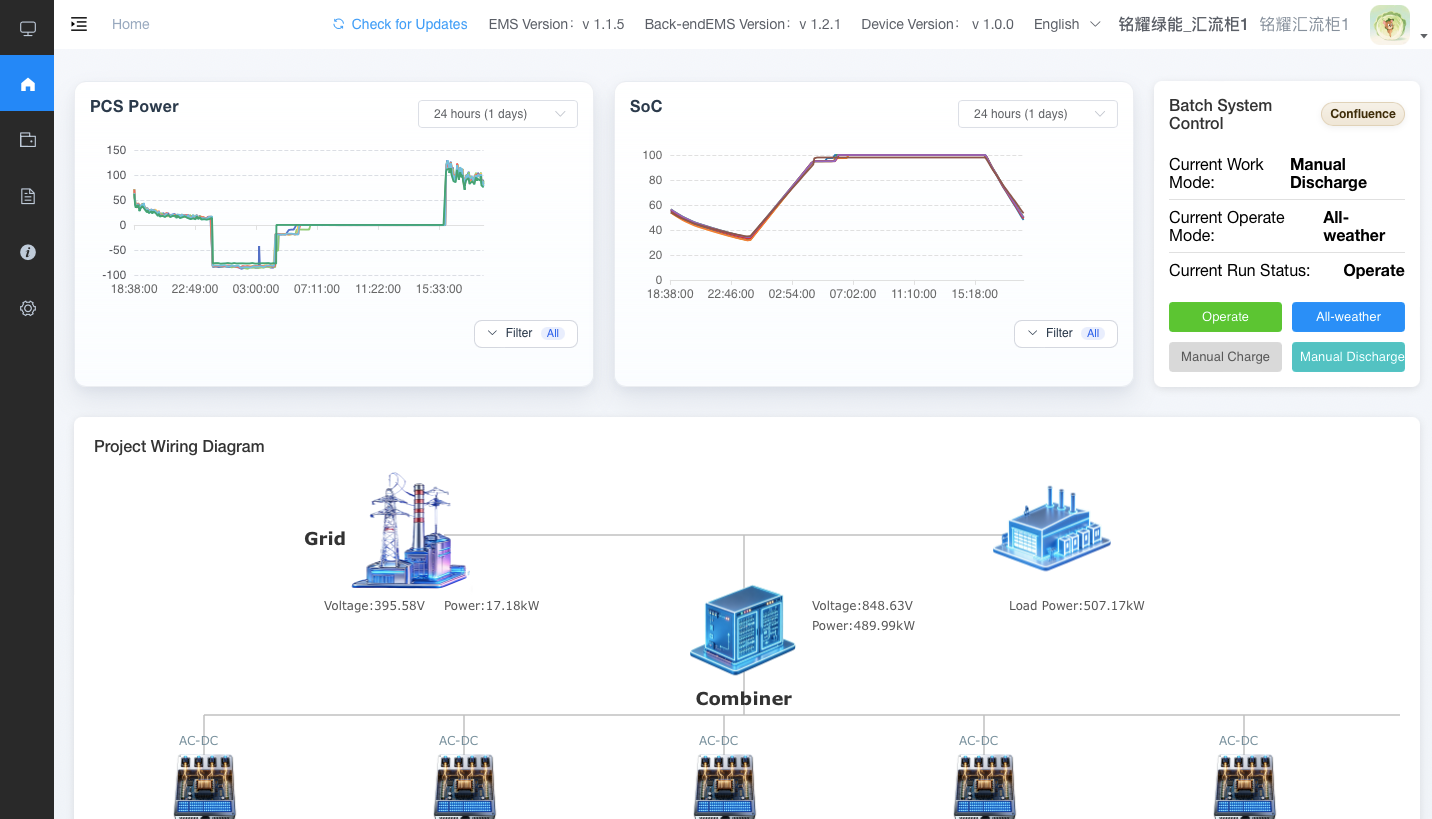
PCS-Leistungskurven, SoC-Verfolgung, Batch-Steuerungspanel & Echtzeit-Verdrahtungsplan
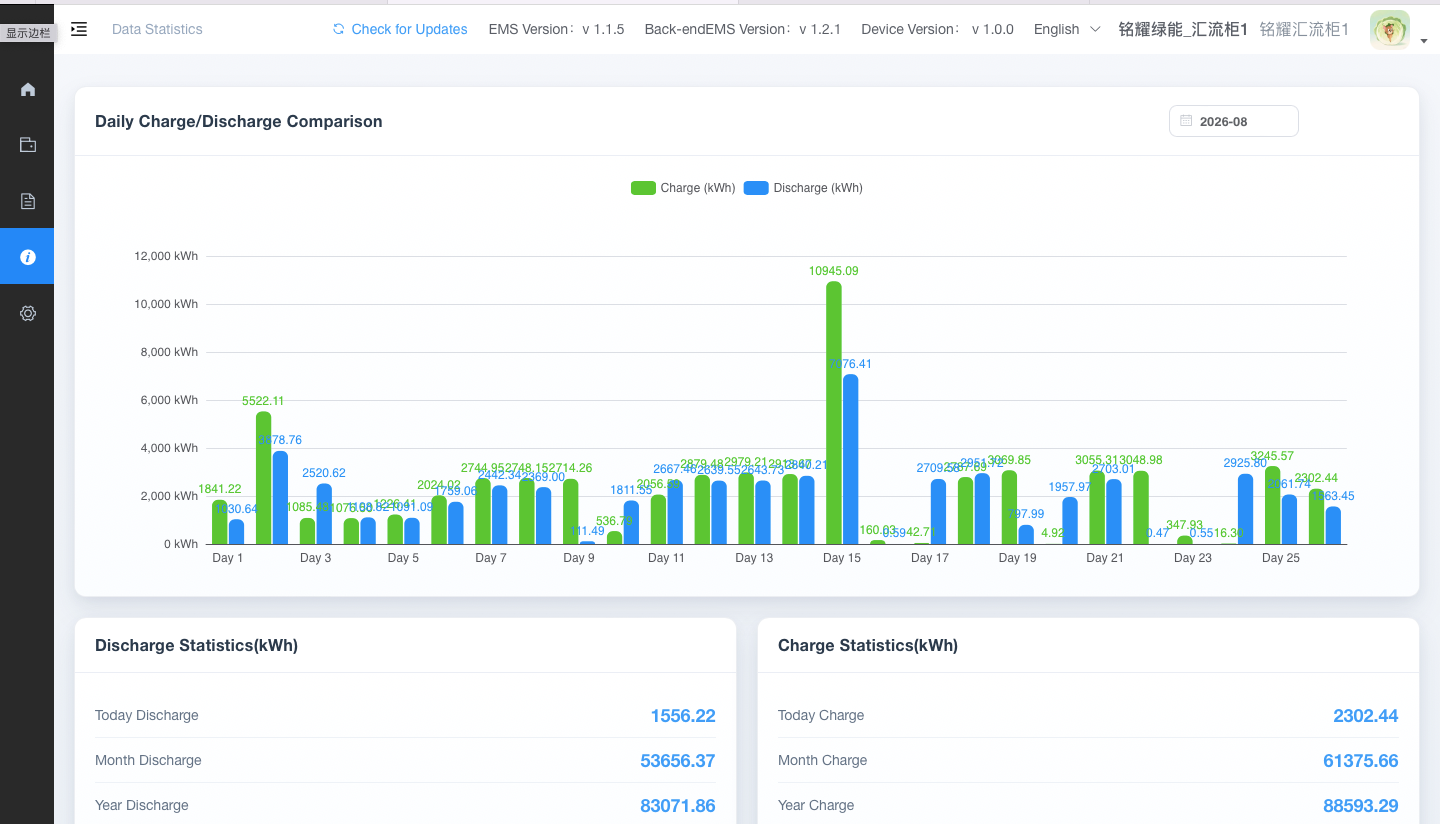
Tägliches Lade-/Entlade-Vergleichsdiagramm mit periodenbasierter Ertragsaufteilung