Views: 309 Author: taoyan-Jenny Publish Time: 2026-03-14 Origin: Site


Content Menu
● Beyond Liquid: The Structural Revolution of Solid-State Batteries
● 10,000+ Cycles: Why SSBs are the Ultimate Investment for 20-Year Projects
● Extreme Environment Resilience: From Arctic Cold to Desert Heat
● Operating Without the "Thermal Crutch"
● The Road to Mass Adoption: Semi-Solid vs. All-Solid-State in 2026
● Integrating SSB into C&I Systems: What Engineers Need to Know
● Higher Energy Density, Lower Footprint
● Conclusion: The New Gold Standard
● Frequently Asked Questions (FAQ)
● 1. Are solid-state batteries really non-flammable?
● 2. Is the cost of SSB much higher than LFP in 2026?
● 3. Can I use solid-state batteries in extremely cold climates?
● 4. How does the energy density compare?
● 5. Are there enough manufacturers for SSB in 2026?
For decades, the energy storage industry has been refined within the boundaries of liquid-electrolyte lithium-ion chemistry. While we have achieved remarkable efficiencies, the inherent limitations of "liquid" systems—flammability, temperature sensitivity, and gradual SEI layer degradation—have remained the final frontiers. In 2026, those boundaries are being erased. The commercialization of Solid-State Batteries (SSB) and their integration into Battery Energy Storage Systems (BESS) marks the most significant architectural shift in a generation. By replacing volatile liquid electrolytes with stable solid mediums, SSB technology is not just offering an incremental upgrade; it is redefining the safety, density, and longevity of industrial power.
The fundamental "pain point" of traditional lithium-ion batteries is the liquid electrolyte. It is the flammable component that creates the risk of thermal runaway. In 2026, the transition to solid-state electrolytes (including oxide, sulfide, and polymer-based mediums) has fundamentally changed the physics of the cell.
In a solid-state BESS, the risk of a puncture or an internal short-circuit leading to a catastrophic fire is virtually eliminated. Because there is no liquid to leak or vaporize into explosive gases, the "thermal runaway" chain reaction is physically suppressed. For mission-critical infrastructure—such as hospitals, high-density urban data centers, and underground mining operations—this non-flammable characteristic is the single most important factor driving the 2026 SSB adoption wave.
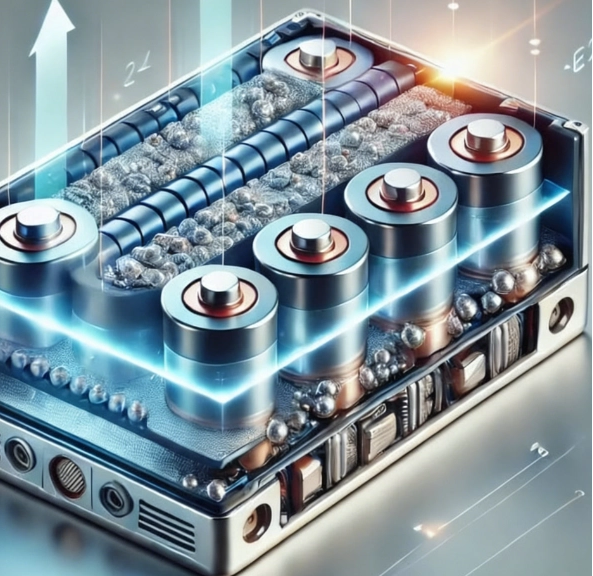
One of the hidden costs of traditional BESS is the "pack swap" or augmentation required after 7-10 years of heavy use. Solid-state technology is rewriting the financial depreciation curves of energy assets.
The solid electrolyte is far more resistant to the side reactions that plague liquid systems. In 2026, commercial-grade semi-solid and all-solid-state cells are demonstrating cycle lives exceeding 10,000 to 12,000 cycles at 80% Depth of Discharge (DoD). This allows for a "one-and-done" investment strategy. A project commissioned today can realistically operate for 20 to 25 years without a significant drop in capacity, aligning the battery's lifespan with that of the solar or wind farm it supports. This reduces the Levelized Cost of Storage (LCOS) to levels previously thought impossible for high-density systems.
Traditional batteries are notoriously finicky about temperature, requiring massive liquid cooling systems to stay within the "Goldilocks zone" of 15°C to 35°C. In 2026, solid-state batteries are proving to be the ultimate survivors.
Solid-state electrolytes maintain high ionic conductivity across a much wider temperature spectrum. In 2026, SSB installations are successfully operating in temperatures as low as -40°C (without the need for energy-intensive internal heaters) and as high as 90°C (without risking thermal runaway). This makes them the premier choice for remote desert microgrids and high-altitude mining sites. By eliminating or drastically simplifying the cooling infrastructure, the overall system footprint is reduced, and the "parasitic load" (the energy used to cool the battery) is cut by up to 40%.
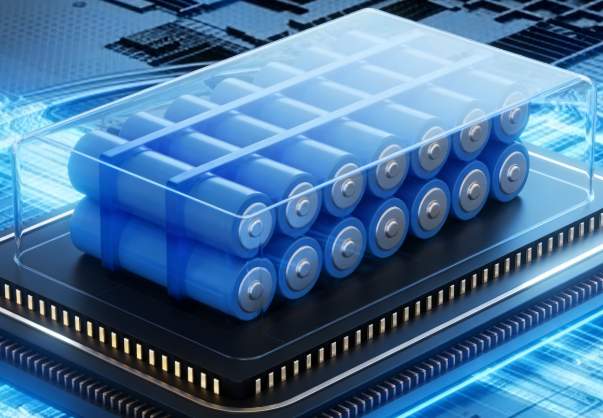
As we navigate through 2026, it is important to distinguish between the two dominant paths of this technology:
Semi-Solid State: These cells use a hybrid approach, containing a small amount of liquid or gel electrolyte to facilitate ion movement while maintaining most of the safety benefits of solids. In 2026, semi-solid systems are the market leaders for C&I applications due to their balance of cost and performance.
All-Solid-State (ASSB): The "Holy Grail" of battery tech. These contain zero liquid. In 2026, ASSBs are beginning to enter the high-end industrial market, particularly where maximum energy density and zero-volatility are mandatory. While currently at a price premium, their volume production is scaling rapidly.
For the engineers and EPCs designing systems in 2026, the move to SSB involves more than just swapping cells.
Because solid-state cells can be stacked more tightly (due to reduced fire separation requirements and smaller cooling needs), the volumetric energy density of an SSB container can be up to 50% higher than a traditional LFP container. This is a game-changer for urban projects where land cost is high. Furthermore, the simplified BMS (Battery Management System) architecture for SSBs allows for more modular designs, enabling "plug-and-play" expansions that were previously complicated by thermal management constraints.
The energy storage market of 2026 has reached a consensus: while liquid lithium-ion remains a reliable workhorse for many, the Solid-State Battery is the new gold standard for high-performance, high-safety, and long-duration industrial assets. By breaking the cycle of flammability and degradation, SSB technology has moved BESS from a "chemical experiment" to a "solid-state appliance." For the forward-thinking energy developer, the solid-state era isn't a distant future—it is the competitive advantage of today.
Yes. Unlike traditional batteries, they do not contain the volatile liquid organic electrolytes that catch fire during an internal short. Even under extreme physical trauma or high heat, solid-state electrolytes remain stable.
While the initial CAPEX for SSB is currently 20-30% higher than high-end LFP, the total TCO (Total Cost of Ownership) is often lower. This is due to the 20-year lifespan, the lack of pack replacements, and the significantly lower maintenance and cooling costs.
Absolutely. One of the greatest strengths of SSB is its performance in low temperatures. Many solid-state chemistries retain over 80% of their capacity at -30°C, whereas traditional liquid batteries can struggle to function at all without significant heating.
Solid-state batteries generally offer 1.5x to 2x the energy density of traditional LFP. This means you can store more power in a smaller footprint, which is critical for space-constrained industrial sites or urban data centers.
By 2026, several tier-1 manufacturers have transitioned to mass production of semi-solid cells, and dedicated all-solid-state lines are coming online in major manufacturing hubs. The supply chain is maturing rapidly, supported by global "green tech" subsidies.