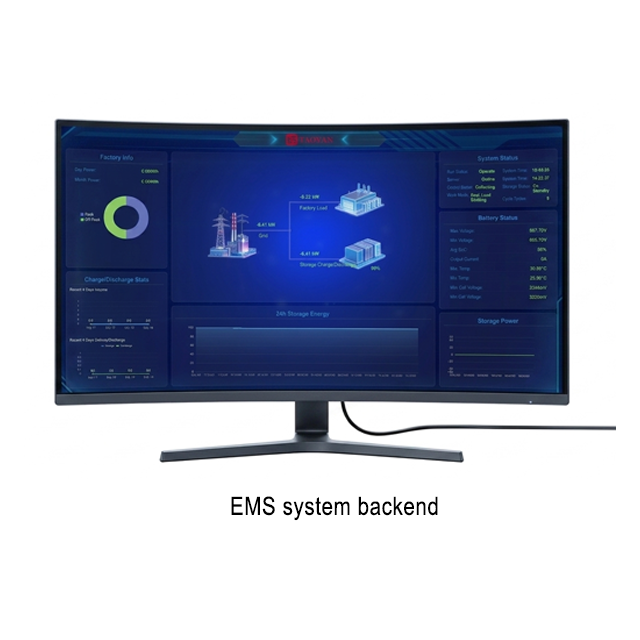
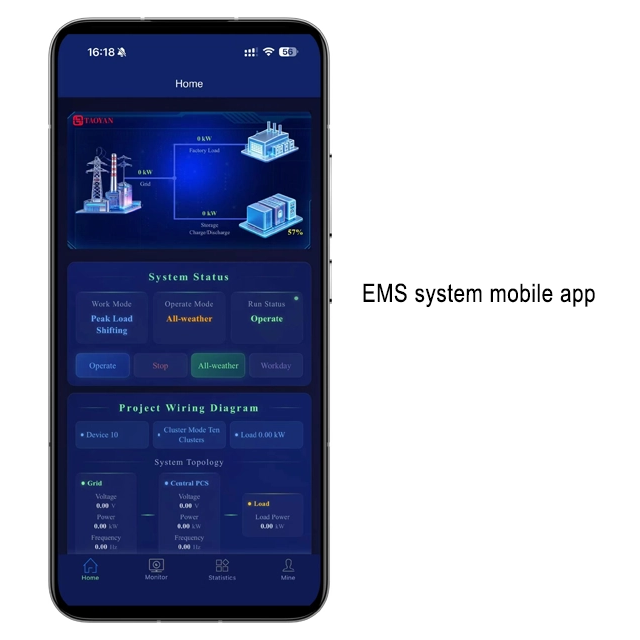
This technical guide provides a rigorous protocol for the transportation, installation, and pre-commissioning of the 1250kW / 2610kWh liquid-cooled energy storage system in the 2026 market. It addresses the specialized logistics of handling high-density 314Ah cells, the structural requirements for 1500V foundations, and the essential safety inspections required to secure a 15-year service life. By focusing on thermal uniformity, mechanical integrity, and staged energization, this article serves as a vital resource for EPC contractors and industrial operators looking to deploy megawatt-class assets with maximum reliability and safety.

This article details a strategic procurement visit by an Indian delegation to Taoyan New Energy, focusing on bulk orders for home backup batteries, solar generators, and industrial UPS. Highlighting the synergy between Taoyan’s decade of R&D and the booming Indian demand for grid stability, the visit resulted in preliminary agreements for customized, high-safety energy storage solutions. It emphasizes Taoyan’s commitment to the South Asian market and global energy transition through technological innovation and international service excellence. (508 characters)

Content Menu● Sustainable Energy Solutions: Taoyan New Energy’s Strategic Layout in Home and C&I Storage>> I. Technological Innovation & Full-Scenario Product Matrix>> II. Core Advantages of Home Energy Storage Systems>> III. Addressing Industry Challenges & Future OutlookSustainable Energy Solution

This comprehensive analysis details the technical and economic significance of the 522kWh energy storage system in 2026. It examines LFP cell chemistry, active liquid cooling, and the strategic roles of peak shaving and solar shifting in industrial settings. The article concludes that this modular capacity is the essential bridge to commercial energy independence and grid resilience.

This technical analysis explores the 1250kW / 2610kWh liquid-cooled energy storage system, the premier industrial energy solution of 2026. It details the transition to 314Ah LFP cells, which provide a 12% boost in density, and the 1500V PCS architecture that ensures 98% efficiency. The article highlights how liquid cooling maintains a 2°C temperature variance to enable a 10,000-cycle lifespan. Furthermore, it examines the strategic value of the system as a "virtual transformer" for peak shaving and AI data center expansion. By combining high power output with high energy capacity, this 0.5C system offers a robust, safe, and financially viable path for global industrial decarbonization and energy independence.

This analysis explores the 2026 breakthrough in Long-Duration Energy Storage (LDES), focusing on iron-air batteries and advanced compressed air energy storage (CAES). It highlights the 12 GWh "AI Factory" agreements and the 71% efficient 2.4 GWh salt cavern project in China. The piece positions LDES as the essential technology for achieving 24/7 carbon-free energy and securing multi-day grid resilience beyond the limitations of lithium-ion.

This article analyzes the 2026 commercialization of All-Solid-State Batteries (SSB). It highlights the breakthrough in sulfide electrolytes, the achievement of 500Wh/kg energy density, and the intrinsic safety that makes SSB the "holy grail" for eVTOL and extreme-environment storage. The piece concludes with a roadmap toward cost parity by 2030, marking the end of the liquid electrolyte era.

This article explores the critical role of BESS in supporting the 2026 rollout of Megawatt Charging Systems (MCS) for heavy-duty electric trucks. It details how storage acts as a "power booster" to overcome grid limitations, the efficiency of DC-coupled architectures, and the economic benefits of using Second-Life batteries to lower infrastructure costs and demand charges.

Content Menu● The GPT-6 Crisis: Why Traditional Backup Power is Melting● The Harmonic Nightmare● Millisecond Mastery: BESS as a "Megawatt-scale UPS"● The 10ms Seamless Switch● Liquid Cooling Synergy: The Integrated Thermal Loop● The Circular Heat Economy● ROI of Reliability: Preventing the $100M "Tr

This article analyzes the role of Giga-scale Battery Energy Storage Systems (BESS) in the 2026 global "Supergrid" era. It explores how these massive hubs provide "Virtual Inertia" through Grid-Forming technology, the architectural shift to "Energy Campuses," and the economic impact of Storage as a Transmission Asset (SATA). The piece concludes that Giga-scale storage is the essential infrastructure for transcontinental renewable energy trade and regional energy security.