Views: 202 Author: taoyan-Jenny Publish Time: 2026-04-30 Origin: Site


Content Menu
● The All-In-One Architecture: Engineering Efficiency in a Compact Frame
>> The Power of 314Ah Cells in a Modular Format
>> Advanced Liquid Cooling for Distributed Assets
● Tactical Applications: Where 522kWh Excels
>> 1. EV Charging Station Buffer (The "Boost" Mode)
>> 2. Agricultural and Remote Microgrids
>> 3. Commercial Peak Shaving for SMEs
● Technical Breakdown: The 522kWh Standard
● Frequently Asked Questions (FAQ)
As the global energy transition matures in 2026, the demand for energy storage has branched into two distinct paths: massive grid-scale resilience and hyper-local distributed optimization. While gigawatt-hour projects grab the headlines, the real operational transformation for small-to-medium enterprises (SMEs) is happening through the deployment of 522kWh Energy Storage Systems. This capacity represents the "Strategic Sweet Spot"—large enough to buffer significant industrial loads but compact enough to be deployed as a "plug-and-play" asset in urban and space-constrained environments.
The 522kWh system is rarely a collection of loose components; in 2026, it is defined by its All-In-One (AIO) cabinet design. This integration is what allows it to be the preferred choice for rapid-deployment projects.

Much like its larger counterparts, the 522kWh unit leverages the high energy density of 314Ah Phosphates (LFP). However, the engineering challenge here is different: it requires maximizing energy within a much smaller thermal envelope. By utilizing these advanced cells, the system achieves a 522kWh nameplate capacity within a single outdoor-rated cabinet, significantly reducing the civil engineering costs and the physical footprint required on-site.
A common misconception in early storage markets was that smaller systems could rely on air cooling. In 2026, the 522kWh standard has shifted decisively toward Active Liquid Cooling. This ensures that even when placed in a sun-drenched parking lot or near a heat-generating factory wall, the internal cell temperatures remain uniform. This thermal stability is the primary reason why these units can now offer a 15-year operational life with minimal capacity degradation.

In the 2026 energy market, the 522kWh system is not just a battery; it is a specialized tool for three high-value industrial scenarios.
With the explosion of heavy-duty electric trucks and high-speed passenger EV charging, local grid transformers are often overwhelmed. A 522kWh unit acts as a Power Buffer. It slowly siphons energy from the grid during low-usage periods and "boosts" the output when a vehicle plugs in for an ultra-fast charge. This prevents the station from triggering massive grid-upgrade costs or incurring high demand charges.
For automated greenhouses, vertical farms, and remote wineries, power quality is as important as power availability. The 522kWh system provides the necessary inertia to stabilize local microgrids, integrating seamlessly with on-site solar arrays to ensure that sensitive climate-control systems never skip a beat, even during grid fluctuations.
For a medium-sized manufacturing plant or a large retail complex, the 522kWh capacity is perfectly sized to "shave" the highest peaks of daily electricity consumption. By discharging during the most expensive two hours of the day, the system significantly lowers the facility's utility tier, often delivering a full return on investment (ROI) within 4 to 5 years in high-tariff regions.
| Feature | Specification | Industrial Value |
| Nominal Energy | 522 kWh | Optimized for 2-4 hour discharge windows |
| Cell Chemistry | LFP (314Ah Grade) | High safety and 8,000+ cycle life |
| Cooling Method | Liquid Cooling | Precision temp control $\le 3^\circ\text{C}$ |
| Enclosure | IP55 / NEMA 3R | All-weather outdoor deployment |
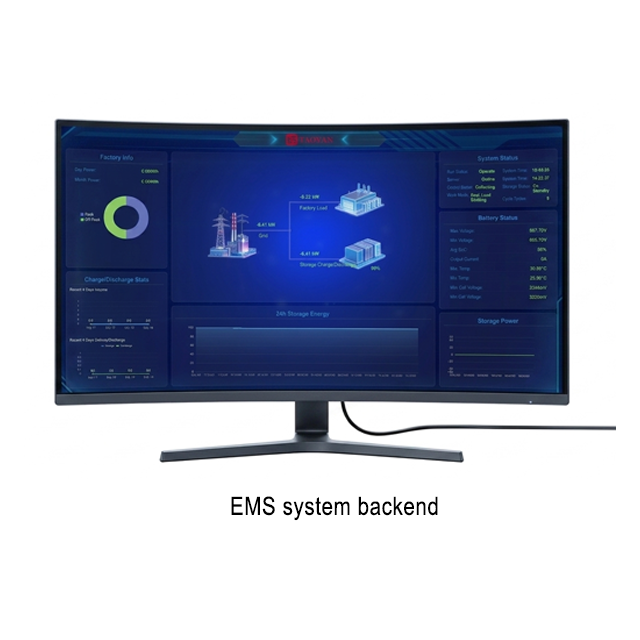
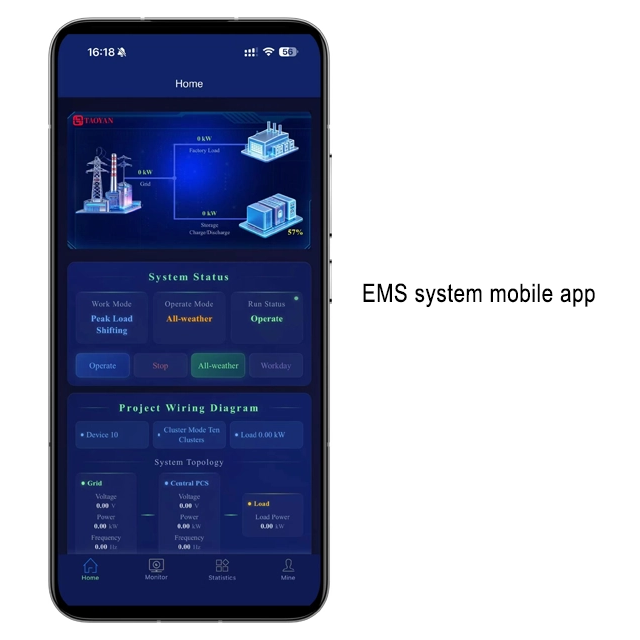
| Connectivity | AI-Enabled EMS | Real-time cloud monitoring and optimization |
Q1: Is 522kWh enough to provide full backup power for a factory?
A: It depends on the load. For a critical load of 100kW (lighting, servers, basic machinery), it can provide over 5 hours of backup. For full industrial operations, it is typically used to support "orderly shutdown" or to bridge the gap until a backup generator synchronizes.
Q2: How does this system integrate with existing solar panels?
A: Most 522kWh units come with a DC-coupled or AC-coupled option. In 2026, AC-coupling is the standard for retrofitting existing factories, allowing the storage cabinet to be added to any solar installation without replacing existing inverters.
Q3: Can these cabinets be "daisy-chained" if our needs grow?
A: Yes. The modular design allows you to start with one 522kWh unit and add up to 10 units in parallel, effectively scaling your storage to over 5MWh as your business grows.
Q4: What is the safety rating for installing this near a building?
A: These units meet the NFPA 855 and UL 9540 standards of 2026. Because of the LFP chemistry and integrated fire suppression, they are rated for installation as close as 10 feet from structures in many jurisdictions, subject to local codes.
Q5: What maintenance does the liquid cooling loop require?
A: The system is essentially sealed. Maintenance is limited to an annual check of the coolant levels and the heat exchanger’s air filters, similar to maintaining a high-end commercial HVAC unit.