
Views: 302 Author: taoyan-Jenny Publish Time: 2026-05-09 Origin: Site


Content Menu
● Technical Logistics and Specialized Transportation
>> Strategic Weight and Balance Management
>> Vibration Mitigation and Impact Monitoring Protocols
>> Environmental Protection and Moisture Control
● Structural Site Engineering and Foundation Standards
>> Precision Foundation Design
>> Thermal Separation and Maintenance Buffers
● Rigging and Precision Positioning Procedures
>> Vertical Load Path and Spreader Bar Mandate
>> Final Alignment and Anchoring
● Pre-Operational Inspection: The Multi-Tiered Safety Protocol
>> Thermal Management and Mechanical Verification
>> Electrical Integrity and Torque Validation
>> BMS Synchronization and Digital Twin Check
● Staged Energization and Commissioning Flow
>> Auxiliary Power Stabilization
>> DC Pre-Charge and Grid Synchronization
● Frequently Asked Questions (FAQ)
In the industrial landscape of 2026, the deployment of a 1250kW / 2610kWh energy storage system represents the integration of a critical infrastructure asset designed for high-stakes energy management. This system, built upon the high-density architecture of 314Ah lithium iron phosphate (LFP) cells and a high-efficiency 1500V DC bus, is a significant technical undertaking. Because a 2.6MWh unit acts as a concentrated power plant within a single 20-foot container, the transition from the manufacturing facility to the operational site must follow a rigorous, non-negotiable protocol. Every phase—from specialized maritime or overland logistics to precision structural engineering and multi-tiered safety inspections—is designed to protect the integrity of the 314Ah cell clusters and ensure a reliable 15-year service life. This article provides an exhaustive technical roadmap for the safe and efficient deployment of these megawatt-class liquid-cooled assets.
The transportation of a 2610kWh system is a sophisticated logistical operation due to the immense weight and sensitivity of the internal 1500V electrical components and liquid-cooling manifolds. Although the exterior is a standard 20-foot high-cube ISO container, the internal density of the battery racks makes it a specialized load.
The internal layout of a 2610kWh system is typically asymmetrical, with the 1250kW power conversion system (PCS) located at one end and the dense battery racks filling the remainder of the space. This configuration creates a center of gravity that is offset from the geometric center of the container, requiring specialized hauling equipment. Heavy-duty tri-axle trailers are utilized to ensure even weight distribution across the chassis, preventing structural stress during high-speed transit or sharp maneuvers. Drivers must be briefed on this specific balance profile to maintain stability on diverse road grades.
The 1500V busbars and the precision-engineered liquid-cooling pipework are sensitive to the sustained resonance and sudden shocks typical of long-distance rail or maritime transport. In 2026, it is mandatory to equip every 2610kWh unit with active G-force impact recorders that track longitudinal, lateral, and vertical accelerations in real-time. Any impact event exceeding the factory-specified threshold triggers an immediate internal inspection of the battery rack mounts and coolant connectors upon arrival, ensuring that no latent damage is carried into the installation phase.
During transit, the internal electronics are vulnerable to humidity and salt spray before the system’s environmental control units are powered on. All external vents and PCS intakes are sealed with industrial-grade vapor barrier film to prevent the ingress of contaminants. Large-capacity desiccant packs are distributed throughout the battery and conversion compartments to maintain an internal relative humidity of less than sixty percent, protecting sensitive control boards from condensation.
The longevity of a 1250kW / 2610kWh system is fundamentally tied to the quality of its foundation. A 2.6MWh asset represents a concentrated static load that requires professional structural engineering to prevent settling or mechanical stress.
A reinforced concrete slab is the mandatory foundation for a system of this scale. The pad must be engineered not only for the static weight of the fully loaded container but also for dynamic loads, such as localized seismic activity or extreme wind uplift. A critical requirement is the leveling tolerance; the pad must be level within five millimeters across its entire 20-foot length. An unlevel foundation can cause the container frame to twist slightly, which compromises door seals and places mechanical stress on the rigid 1500V electrical couplings.
Site planning must adhere to 2026 safety standards, such as NFPA 855, which dictate physical placement for fire safety and operational access. A minimum ten-foot thermal separation is generally required from buildings or other storage units to prevent heat propagation in the unlikely event of an emergency. Furthermore, at least five feet of unobstructed space must be maintained around the PCS intake and battery access doors. This clearance is vital for performing thermal imaging inspections and servicing the liquid-cooling system.
Positioning a twenty-foot container filled with thousands of 314Ah cells is a high-precision rigging operation that requires certified personnel and specialized hardware.
The only approved method for lifting a 2610kWh system is a four-point vertical lift using the corner casting points. The use of a spreader bar is mandatory to ensure that the lifting cables pull purely vertically. A diagonal pull without a spreader bar exerts crushing horizontal forces on the top edges of the container, which can damage internal liquid-cooling expansion tanks or compromise the IP55-rated seals of the roof panels.
Once the crane lowers the unit onto the concrete pad, precision alignment is required to match the pre-installed underground conduits for AC power and communication cables. Once positioned, the unit is secured using heavy-duty anchor bolts. This mechanical coupling to the foundation is essential to prevent the container from shifting during the high-torque events of the 1250kW power conversion system’s operation or during extreme weather events.
Before the 1500V DC bus is energized for the first time, a comprehensive series of inspections must be conducted to identify any issues that may have arisen during transportation or installation.
The liquid-cooling system is the lifeblood of the 2610kWh unit, responsible for maintaining a cell-to-cell temperature variance of less than two degrees Celsius. Technicians must perform a visual and pressure-based verification of the entire coolant loop, inspecting every joint for signs of glycol seepage. The coolant level in the expansion tank must be verified, and the pump should be manually cycled to ensure there are no air locks that could lead to localized overheating.
High-voltage electrical connections are prone to loosening due to the vibrations of long-distance transport. A representative sample of the 1500V busbar connections and battery terminal bolts must be re-checked with a calibrated torque wrench to prevent high-resistance hot spots. Additionally, an insulation resistance test, or Megger test, is performed on all DC and AC circuits to ensure that no grounding faults exist.
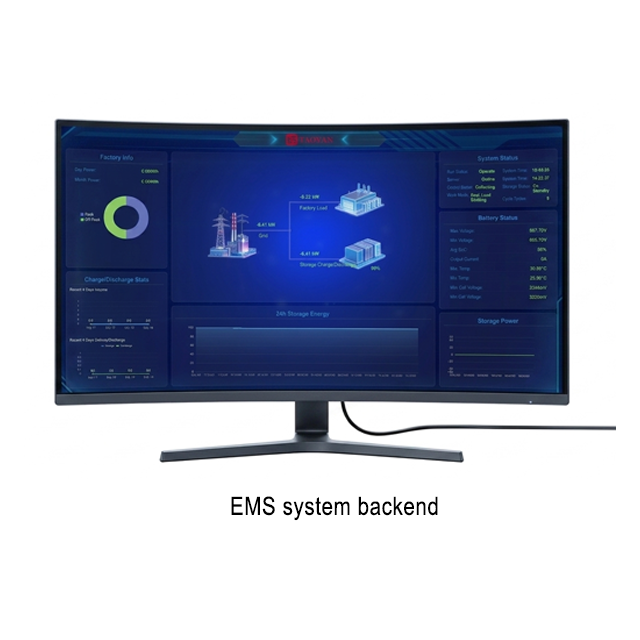
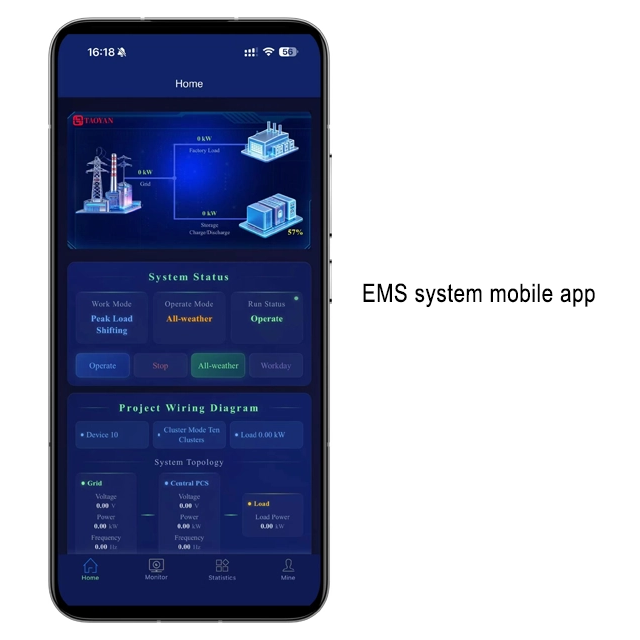
The Battery Management System (BMS) must be fully synchronized with the site’s Energy Management System (EMS). This involves verifying that every 314Ah cell is reporting its voltage and temperature correctly. In 2026, this data is often compared against a cloud-based digital twin to ensure the field performance matches the factory baseline. Any cell showing a voltage deviation of more than a few millivolts must be investigated before the system proceeds to energization.
The transition from a static asset to a live 1.25MW power plant is a controlled sequence designed to protect the equipment and personnel.
The first step is energizing the auxiliary AC circuit to power the cooling pumps, internal climate control, and BMS electronics. The system is allowed to run in this idle state for several hours to stabilize the internal temperature of the battery racks and ensure that the thermal management system is responding correctly to the ambient site conditions.
Closing the main DC breakers of a 2.6MWh system into an empty PCS would cause a massive inrush current. Therefore, a pre-charge circuit is used to gradually equalize the voltage between the battery bank and the 1250kW PCS DC bus. Once the DC bus is stable, the PCS begins its grid-synchronization routine, matching the phase and frequency of the local utility. Only after these steps are successful can the system begin its first commissioning charge, typically conducted at a low 0.1C rate to calibrate the state-of-charge algorithms.
Can the 2610kWh container be shipped with the liquid coolant pre-filled?
Yes, systems are typically shipped with coolant to keep seals lubricated, though levels must be verified and air purged on-site.
What is the most common issue found during the pre-use inspection?
Loosened communication cables and minor coolant seepage at manifold joints are the most frequent findings due to transit vibrations.
Does the concrete foundation require a specific grounding loop?
Yes, a dedicated grounding grid with a resistance of less than four ohms is required to protect the 1500V electronics from lightning and surges.
How long does the on-site installation and commissioning process typically take?
A professional team can typically complete the physical installation and initial checks in three to five business days.
Are there restrictions on installing the 1250kW unit in high-altitude areas?
Yes, at high altitudes, the thinner air reduces cooling efficiency and insulation gaps, which may require de-rating the 1250kW output.


