Views: 223 Author: taoyan-Jenny Publish Time: 2026-04-13 Origin: Site


Content Menu
● The Foundation of Energy Density: The 314Ah LFP Cell Revolution
>> The Leap from 280Ah to 314Ah
>> Pre-lithiation and Extended Cycle Life
● The Brain of the System: 1500V Power Conversion Technology
>> Efficiency Gains of the 1500V Architecture
>> Grid-Forming Capabilities and Microgrid Stability
● Advanced Thermal Management: The Science of Liquid Cooling
>> Homogeneous Temperature Distribution
>> AI-Driven Predictive Cooling
● Strategic Implementation: Maximizing ROI in Industrial Contexts
>> Mastering Peak Shaving and Demand Charge Reduction
>> The "Virtual Transformer" for Rapid Scalability
● Safety and Compliance: The 2026 Gold Standard
>> Three-Level Fire Suppression
>> Digital Twin Monitoring and Remote Diagnostics
● Commonly Asked Questions and Answers
The global energy landscape of 2026 is defined by a shift from centralized power generation to distributed, intelligent energy management. For industrial parks, manufacturing facilities, and data centers, energy is no longer a static utility cost but a dynamic asset that requires precision handling. Within this context, the 1250kW / 2610kWh Energy Storage System (ESS) has emerged as the definitive "Goldilocks" solution. By offering a 0.5C discharge rate—perfectly balancing two hours of sustained energy with high power output—this specific configuration addresses the most pressing challenges of modern infrastructure: grid instability, rising peak-demand charges, and the urgent need for decarbonization.

At the heart of every 2610kWh system lies a sophisticated array of lithium iron phosphate (LFP) cells. In 2026, the industry has standardized the 314Ah cell as the baseline for high-performance industrial storage.
For years, the 280Ah cell was the workhorse of the energy storage industry. However, the 314Ah cell represents a significant material science breakthrough. By optimizing the internal chemistry and increasing the active material density without altering the physical dimensions of the cell, manufacturers have achieved a 12% increase in total energy capacity. This allows the 2610kWh system to fit comfortably within a standard 20-foot high-cube container, a feat that would have required a 40-foot container only a few years prior. This compact footprint is critical for urban factories where every square meter of real estate carries a high premium.
Longevity is the primary driver of return on investment in energy storage. The 314Ah cells used in this system incorporate advanced pre-lithiation technologies. During the manufacturing process, a reserve of lithium is embedded into the anode to compensate for the natural loss of active lithium that occurs during the initial cycles. This ensures that the system can maintain over 80% state of health even after 8,000 to 10,000 full charge-discharge cycles. For an industrial operator running two cycles per day to capture morning and evening price peaks, this translates to a reliable service life exceeding 12 years.

If the battery cells are the heart, the Power Conversion System (PCS) is the brain. The 1250kW rating of this system is not an arbitrary number; it is a calculated output designed to match the specific thermal and electrical characteristics of the 2610kWh battery bank.
By 2026, the transition from 1000V to 1500V DC bus architectures is complete. This higher voltage is the key to the system's 98% round-trip efficiency. In a 1500V system, the current required to transmit the same amount of power is significantly lower. Because electrical resistance losses are proportional to the square of the current, reducing the amperage dramatically cuts down on heat generation and energy waste within the internal cabling and the PCS itself. This translates to more usable energy for the end-user and a lower thermal load for the cooling system to manage.
One of the most critical features of the 1250kW PCS is its "grid-forming" capability. Unlike traditional "grid-following" inverters that require an existing external voltage signal to operate, a grid-forming PCS can act as an independent voltage source. In the event of a total grid failure, the 2610kWh system can initiate a "black start," providing the necessary voltage and frequency to run critical factory loads. With a response time of less than 20 milliseconds, the system can intervene so quickly that sensitive electronic equipment, such as AI servers or high-precision robotics, continues to function without interruption.
As battery density increases, managing heat becomes the single most important factor for safety and performance. The 1250kW / 2610kWh system utilizes a closed-loop active liquid cooling system that represents the pinnacle of 2026 thermal engineering.
Traditional air-cooled systems often suffer from "hot spots" where cells in the center of a rack operate at significantly higher temperatures than those on the edges. This temperature variance causes cells to age at different rates, eventually leading to a reduction in the usable capacity of the entire system. The liquid cooling system utilizes micro-channels that circulate coolant directly across the surface of every cell. This maintains a uniform temperature across all 2,610 kilowatt-hours of energy, with a maximum variance of only 2 degrees Celsius. This homogeneity is what allows the system to reach its 10,000-cycle potential.
The cooling system in 2026 is no longer reactive; it is predictive. Integrated AI algorithms monitor external weather forecasts, real-time load demands, and the internal state of each battery string. If the system knows that a high-power discharge event is scheduled for a peak-shaving window, it will pre-cool the battery bank in anticipation of the heat load. Conversely, in extreme cold environments, the system can use the same loop to heat the cells to their optimal operating temperature, ensuring high performance even in sub-zero conditions.
Deploying a 1250kW / 2610kWh system is a strategic financial decision. Its value proposition is built on three pillars: peak shaving, dynamic capacity expansion, and energy arbitrage.
In many industrial jurisdictions, the "demand charge"—the fee based on the highest 15-minute window of power usage—can account for up to 50% of a monthly utility bill. The 1250kW PCS is specifically sized to handle these spikes. When heavy machinery starts up, the BESS detects the surge and instantly injects stored power, preventing the factory's draw from the grid from exceeding a pre-set threshold. For a medium-sized manufacturing facility, this function alone can save tens of thousands of dollars annually.
A common bottleneck for industrial expansion in 2026 is the lead time for physical grid upgrades. If a factory adds a new production line or a data center installs a new GPU cluster, the local utility may take over a year to install a larger transformer. The 1250kW ESS serves as a "virtual transformer." It allows a facility to exceed its physical grid capacity during peak hours by supplementing the available grid power with stored energy. This enables businesses to scale their operations immediately, bypassing the long wait times of traditional infrastructure projects.
With over 2.6 megawatt-hours of energy stored in a single container, safety is non-negotiable. The 1250kW / 2610kWh system incorporates a multi-tiered safety architecture designed to prevent and contain thermal events.
The system features a redundant fire protection strategy. At the module level, individual cells are separated by aerogel materials that prevent heat from jumping between cells. At the rack level, localized gas suppression systems are triggered at the first sign of off-gassing. Finally, the container itself is equipped with a water-mist system and specialized venting panels to ensure that even in the unlikely event of a full thermal runaway, the event is contained and the structural integrity of the site is preserved.
Every unit is connected to a cloud-based "digital twin." This virtual representation of the system uses real-time telemetry to predict potential failures before they occur. By analyzing minute changes in internal resistance or voltage fluctuations, the system can alert operators to a "weak cell" weeks before it becomes a safety risk. This proactive approach to maintenance ensures that the 2610kWh of energy is always available when the grid needs it most.
Q1: Why is the 1250kW / 2610kWh ratio considered a "2-hour system"? A: The ratio of energy (2610kWh) to power (1250kW) is approximately 2.08. This means the system can discharge at its full rated power for just over two hours. In the energy industry, this is known as a 0.5C rate. This specific ratio is ideal for industrial peak shaving and energy arbitrage, where discharge windows typically last between 90 minutes and 3 hours.
Q2: How does the liquid cooling system handle extreme outdoor temperatures? A: The system is designed with an integrated heat exchanger and heater. In temperatures as high as 50°C, the liquid cooling loop uses an external chiller to dissipate heat. In extreme cold, such as -30°C, the system uses an internal heater to warm the coolant, ensuring the 314Ah cells remain within their safe and efficient operating range of 20°C to 30°C.
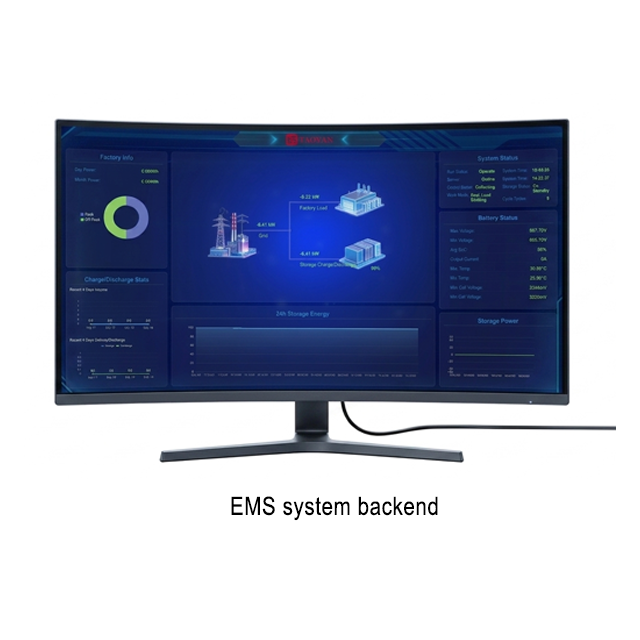
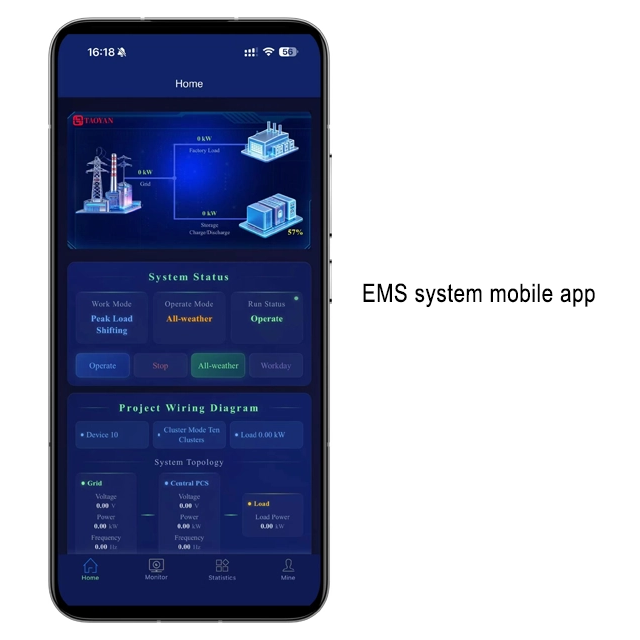
Q3: Can multiple 1250kW units be connected together for larger projects? A: Yes, the system is designed with a modular "plug-and-play" architecture. Using a centralized Energy Management System (EMS), dozens of these 20-foot containers can be synchronized to act as a single utility-scale power plant. This allows for seamless scalability from 2.6MWh up to hundreds of megawatt-hours.
Q4: What is the expected maintenance schedule for this system? A: Thanks to the liquid cooling and AI monitoring, physical maintenance is minimal. It typically involves an annual inspection of the coolant levels, air filters for the PCS, and a check of the fire suppression pressure. Most of the "maintenance" is done via remote software updates that optimize the battery management algorithms based on actual usage patterns.
Q5: Is this system compatible with on-site solar or wind generation? A: Absolutely. The 1500V PCS is designed to integrate directly with renewable energy sources. This allows the system to store excess solar energy during the day and release it at night, maximizing the "self-consumption" of green energy and further reducing the carbon footprint of the industrial facility.