Views: 226 Author: taoyan-Jenny Publish Time: 2026-04-14 Origin: Site


Content Menu
● The Engineering Architecture of the 522kWh System
>> High-Density Lithium Iron Phosphate (LFP) Foundations
>> Advanced Liquid Cooling and Thermal Uniformity
● Economic Drivers: Turning 522kWh into a Profit Center
>> Mastering Peak Shaving and Demand Charge Mitigation
>> Energy Arbitrage and Time-of-Use Optimization
● Integrating with the Green Microgrid
>> Coupling with Solar Photovoltaics (PV)
>> Enhancing Grid Resilience and UPS Functionality
● Scalability and Future-Proofing
>> Preparing for the EV Charging Revolution
The global transition toward a decentralized and decarbonized energy grid has moved past the experimental phase and into a period of rapid infrastructure scaling. For small to medium-sized industrial enterprises, commercial complexes, and localized microgrids, the challenge is no longer just about sourcing green energy; it is about managing the volatility of that energy. Within this specific market segment, the 522kWh Energy Storage System (ESS) has emerged as a critical strategic anchor. This capacity represents a "sweet spot" in energy engineering—large enough to provide meaningful backup and economic arbitrage for substantial commercial loads, yet compact enough to be deployed without the massive land-use requirements of utility-scale installations.

To understand why a 522kWh system is becoming a standard unit for commercial energy autonomy, one must look beneath the enclosure at the integration of chemistry, thermal management, and power electronics.
The bedrock of the 522kWh system is Lithium Iron Phosphate technology. In 2026, LFP has become the undisputed champion for stationary storage due to its chemical stability and long cycle life. Unlike cobalt-based chemistries used in consumer electronics, LFP carries a much higher thermal runaway threshold. For a 522kWh installation—which often sits in close proximity to occupied buildings or expensive manufacturing equipment—this safety margin is the primary engineering requirement.
Furthermore, modern LFP cells within these systems are designed for high-depth discharge. A 522kWh system typically offers a 90% to 95% depth of discharge, meaning the user has access to almost the entire nameplate capacity without risking accelerated degradation of the internal cell structures.
As energy density within a single cabinet increases, the method of heat dissipation becomes the limiting factor for system longevity. The 522kWh configuration typically employs an active liquid cooling system. Unlike older air-cooled designs that rely on fans and ambient air—which can introduce dust and humidity—liquid cooling uses a closed-loop manifold of glycol-based coolant.
This manifold ensures that the temperature variance between the center-most cell and the peripheral cells is kept within a tight margin of two degrees Celsius. This uniformity is vital because battery strings are only as strong as their weakest cell. By preventing "hot spots," liquid cooling ensures that the entire 522kWh block ages at a consistent rate, maximizing the return on investment over a projected fifteen-year lifespan.

While the technical specifications are impressive, the adoption of 522kWh systems is driven primarily by the balance sheet. In the current economic climate, energy is a volatile commodity; storage turns that commodity into a manageable asset.
For many commercial and industrial users, the most expensive part of the electricity bill isn't the total kilowatt-hours consumed, but the "demand charge"—a fee based on the single highest peak of power usage during a billing cycle. A factory starting a heavy motor or a grocery store’s refrigeration units cycling on simultaneously can create a massive power spike.
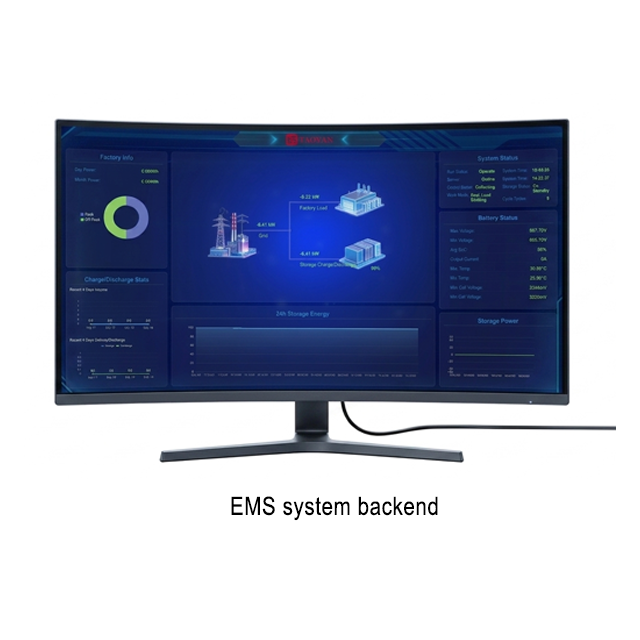
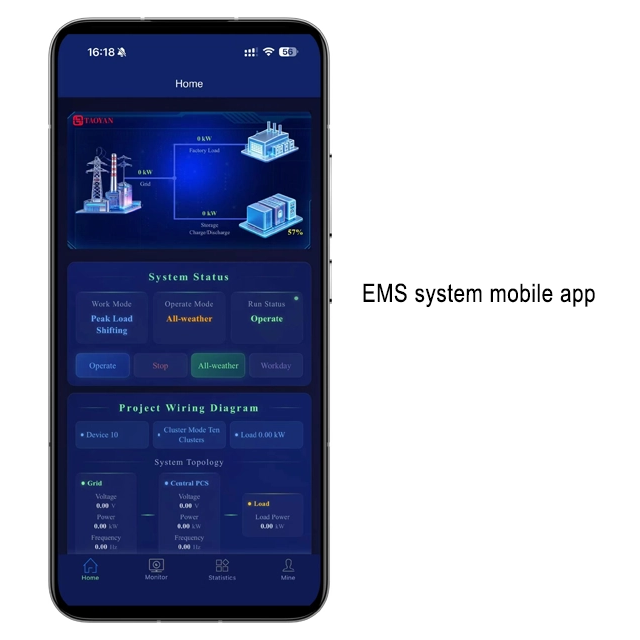
The 522kWh system acts as a high-speed buffer. When the local Energy Management System detects a spike in demand that would normally push the facility into a higher billing tier, the ESS discharges instantly to "shave" that peak. By providing the necessary power from the batteries rather than the grid, the system can reduce monthly demand charges by thirty to forty percent, often paying for itself through these savings alone within four to six years.
In regions with sophisticated power markets, electricity prices fluctuate hourly based on demand and renewable availability. The 522kWh capacity allows a business to engage in energy arbitrage on a meaningful scale. The system can be programmed to charge during the "valley" periods—often at night when wind energy is abundant and prices are low—and discharge during the "peak" periods when prices are highest. For a facility with a consistent daily load, this "buy low, sell high" strategy creates a predictable, daily revenue stream that offsets operational overhead.
The 522kWh system is rarely a standalone asset; it is usually the "glue" that binds renewable generation to a reliable load.
Solar energy is inherently intermittent. A 100kW solar array might produce peak power at noon, but a facility’s peak demand might occur at 8:00 AM or 6:00 PM. Without storage, that excess solar energy is either wasted or sold back to the grid at a disadvantageous rate. The 522kWh system allows for "solar shifting." It captures the mid-day sun and holds it until it is needed most, effectively turning a daytime-only resource into a 24/7 power supply.
In 2026, grid reliability is no longer a guarantee in many parts of the world due to aging infrastructure and extreme weather events. For a business, even a five-minute power outage can result in hours of downtime, lost data, or ruined product batches. The 522kWh ESS provides a seamless Uninterruptible Power Supply (UPS) function. Because the Power Conversion System can switch from "grid-following" to "grid-forming" in less than twenty milliseconds, the transition during a blackout is invisible to sensitive electronic equipment and heavy machinery.
One of the most overlooked benefits of the 522kWh unit is its modularity. As a facility grows, its energy needs evolve.
Manufacturers design these 522kWh units as "plug-and-play" modules. If a business starts with a single cabinet to manage peak shaving but later decides to add a fleet of electric vehicle chargers, they can simply add a second or third unit in parallel. The centralized Energy Management System treats the expanded array as a single logical battery, allowing for a scalable investment path that doesn't require over-purchasing capacity on day one.
As corporate fleets transition to electric vehicles, the local grid connection often becomes a bottleneck. Installing ten Level 2 chargers can easily double a small office building’s peak load. A 522kWh system can buffer this load, allowing the chargers to draw from the battery during peak times rather than triggering a costly and time-consuming upgrade to the local utility transformer.
Q1: How long will a 522kWh system last before it needs to be replaced?A: Most modern systems are rated for 6,000 to 10,000 full cycles. If the system is cycled once per day, this equates to a lifespan of roughly fifteen to twenty years, at which point the battery will typically still retain eighty percent of its original capacity.
Q2: Can a 522kWh system be installed outdoors in harsh climates?A: Yes. These units are usually housed in NEMA 3R or IP55-rated enclosures that are weather-sealed. The internal liquid cooling and heating systems ensure that the batteries stay at an optimal temperature even if the outside air ranges from -30°C to 50°C.
Q3: Is 522kWh enough to run a whole building during a blackout?A: It depends on the building's load. For a typical medium-sized office building with a constant 50kW draw, a 522kWh system could provide over ten hours of backup. However, if the facility has heavy industrial equipment or large HVAC units, the duration would be shorter. It is often used to power only "critical loads" during extended outages.
Q4: What maintenance is required for a system of this size?A: Maintenance is remarkably low. Because the systems are solid-state and the cooling loops are sealed, the primary requirements are annual inspections of the electrical connections, verifying the fire suppression system's pressure, and checking for software updates.
Q5: Are these systems a fire hazard?A: While all high-energy systems carry risks, the use of LFP chemistry and integrated fire suppression makes them very safe. They include multi-level protection: software-based monitoring (BMS), physical fuses, and aerosol or gas-based fire extinguishing agents that trigger automatically if abnormal heat or smoke is detected inside the cabinet.