Views: 220 Author: taoyan-Jenny Publish Time: 2025-12-26 Origin: Site


Content Menu
● What is a Three-Phase High Voltage Inverter?
● Applications of Three-Phase High Voltage Inverters
>> Uninterruptible Power Supplies (UPS)
● Advantages of Three-Phase High Voltage Inverters
● Challenges and Considerations
>> Cost
● Future Trends in Three-Phase Inverter Technology
>> Integration with Smart Grids
>> Use of Wide Bandgap Semiconductors
>> Enhanced Control Algorithms
>> 1. What is the main function of a three-phase high voltage inverter?
>> 2. How does a three-phase inverter differ from a single-phase inverter?
>> 3. What are the common applications of three-phase high voltage inverters?
>> 4. What are the advantages of using three-phase inverters?
>> 5. What challenges are associated with three-phase high voltage inverters?
In the realm of power electronics, three-phase high voltage inverters play a crucial role in converting direct current (DC) into alternating current (AC) for various applications. These devices are essential in industries ranging from renewable energy systems to electric vehicles and industrial motor drives. This article delves into the workings, applications, advantages, and challenges of three-phase high voltage inverters, providing a comprehensive overview of their significance in modern technology.
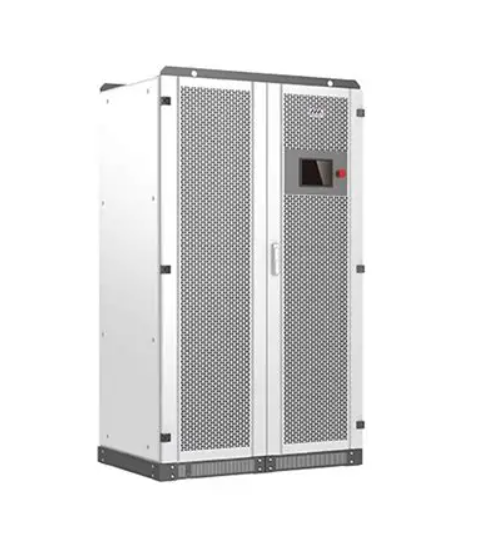
A three-phase high voltage inverter is an electronic device that converts DC power into three-phase AC power. Unlike single-phase inverters, which output power in one phase, three-phase inverters provide a more balanced and efficient power distribution. This is particularly important in applications requiring high power levels, such as industrial machinery and large-scale renewable energy systems.
The fundamental operation of a three-phase inverter involves switching devices, typically insulated gate bipolar transistors (IGBTs) or MOSFETs, that control the flow of electricity. The inverter takes a DC input, often from sources like solar panels or batteries, and uses pulse width modulation (PWM) techniques to generate an AC output. The PWM technique involves varying the width of the pulses in a fixed frequency, allowing for precise control over the output voltage and frequency.
1. Switching Devices: IGBTs or MOSFETs are used for their efficiency and fast switching capabilities.
2. Control Circuit: This includes microcontrollers or digital signal processors (DSPs) that manage the switching sequence and ensure the output meets the desired specifications.
3. Filters: Output filters are used to smooth the AC waveform, reducing harmonic distortion and improving power quality.
4. Cooling Systems: High voltage inverters generate significant heat, necessitating effective cooling solutions to maintain performance and reliability.
Three-phase high voltage inverters are utilized in various applications, including:
In solar photovoltaic (PV) systems, three-phase inverters convert the DC output from solar panels into AC power suitable for grid connection or local consumption. They are essential for maximizing energy harvest and ensuring compliance with grid standards.
In electric vehicles (EVs), three-phase inverters are crucial for driving the electric motors. They convert the DC power from the vehicle's battery into AC power, enabling efficient motor operation and regenerative braking.
Many industrial applications, such as pumps, fans, and conveyor systems, rely on three-phase inverters to control motor speed and torque. This capability enhances energy efficiency and operational flexibility.
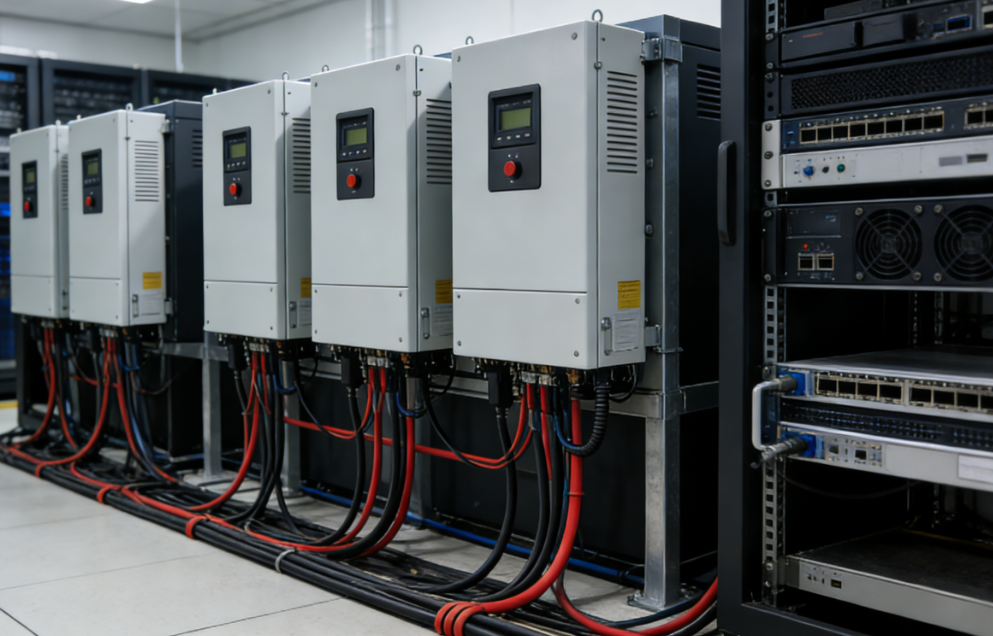
Three-phase inverters are integral to UPS systems, providing backup power during outages. They ensure a seamless transition from grid power to battery power, maintaining critical operations in data centers and hospitals.
Three-phase inverters are generally more efficient than their single-phase counterparts. They can handle higher power levels with lower losses, making them ideal for industrial and commercial applications.
The three-phase output provides a more stable and balanced power supply, reducing voltage fluctuations and improving overall power quality. This is particularly important in sensitive applications like data centers.
By distributing the load across three phases, three-phase inverters can be designed to be more compact and lightweight compared to multiple single-phase inverters, which is advantageous in space-constrained environments.
The redundancy offered by three-phase systems enhances reliability. If one phase experiences a fault, the other two can continue to operate, minimizing downtime and maintenance costs.
The design of three-phase inverters is inherently more complex than single-phase systems. Engineers must consider factors such as phase synchronization, harmonic distortion, and thermal management.
While three-phase inverters offer numerous advantages, they can be more expensive to manufacture and install. The initial investment may be higher, but the long-term savings in efficiency and maintenance can offset these costs.
Three-phase inverters can introduce harmonic distortion into the power system, which can affect the performance of connected equipment. Proper filtering and control strategies are necessary to mitigate these effects.
As technology advances, several trends are emerging in the field of three-phase high voltage inverters:
The integration of three-phase inverters with smart grid technology allows for better energy management and distribution. These inverters can communicate with the grid to optimize energy flow and enhance reliability.
The adoption of wide bandgap semiconductors, such as silicon carbide (SiC) and gallium nitride (GaN), is increasing in three-phase inverters. These materials offer higher efficiency, better thermal performance, and smaller form factors.
Advancements in control algorithms, including model predictive control and artificial intelligence, are improving the performance and adaptability of three-phase inverters in dynamic environments.
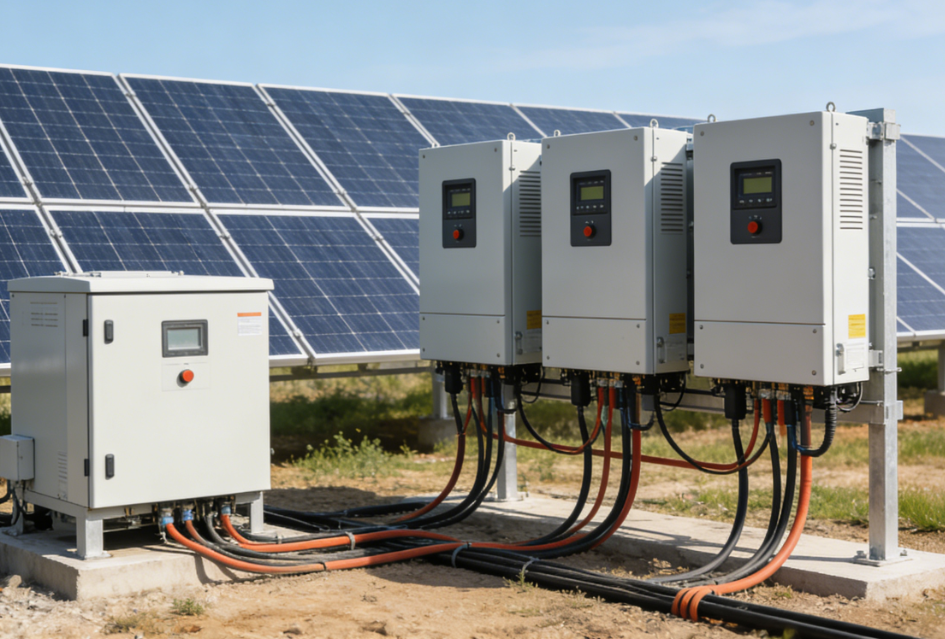
Three-phase high voltage inverters are vital components in modern electrical systems, enabling efficient power conversion for a wide range of applications. Their ability to provide stable and balanced power makes them indispensable in industries such as renewable energy, electric vehicles, and industrial automation. As technology continues to evolve, three-phase inverters will play an increasingly important role in the transition to a more sustainable and efficient energy future.
The main function of a three-phase high voltage inverter is to convert direct current (DC) into alternating current (AC) across three phases, providing a balanced and efficient power supply for various applications.
A three-phase inverter outputs power in three phases, offering better efficiency and power quality compared to a single-phase inverter, which only provides power in one phase.
Common applications include renewable energy systems (like solar PV), electric vehicles, industrial motor drives, and uninterruptible power supplies (UPS).
Advantages include improved efficiency, better power quality, reduced size and weight, and enhanced reliability compared to single-phase systems.
Challenges include design complexity, higher costs, and potential harmonic distortion, which requires careful management and filtering.