Views: 224 Author: taoyan-Jenny Publish Time: 2026-03-21 Origin: Site


Content Menu
● The VPP Revolution: Why Individual Batteries are Stronger Together
● V2G & V2H: Your Electric Vehicle as a Mobile Energy Bank
● AI-Driven Arbitrage: Automating Your Energy Profits
● Grid Stability as a Service: Earning Beyond Energy Sales
● Scaling to C&I: The "VPP-Ready" Small Business
● Conclusion: The Era of Energy Democracy
● Frequently Asked Questions (FAQ)
● 1. Will VPP participation wear out my battery faster?
● 2. Do I need a special charger for V2G?
● 3. What happens if I need to drive my car while it's in VPP mode?
● 4. How much can I actually earn from a VPP?
● 5. Is my data safe in a VPP?
For a decade, residential solar and battery storage were viewed primarily as tools for self-consumption and emergency backup. But in 2026, the script has flipped. Driven by global energy market liberalization and the maturation of bidirectional charging, the home is no longer just a "sink" for electricity—it is a node in a massive, distributed power plant. Through the integration of Virtual Power Plants (VPPs) and Vehicle-to-Grid (V2G) technology, homeowners are transitioning from energy consumers to "Prosumers," transforming their stationary batteries and parked electric vehicles (EVs) into active revenue-generating assets.
A Virtual Power Plant (VPP) is a cloud-based cluster of decentralized energy resources—home batteries, rooftop solar, and even heat pumps—aggregated to work as a single, large-scale power plant. In 2026, utility companies no longer see a single 10kWh home battery as a rounding error; they see 10,000 such batteries as a 100MW flexible power reserve.

When the grid faces a sudden demand spike, the VPP operator sends a signal to your Battery Energy Storage System (BESS). Instead of the utility firing up a costly and polluting "peaker" gas plant, it draws a tiny, unnoticeable fraction of energy from thousands of homes simultaneously. In exchange, the homeowner receives a performance payment or a significant credit on their energy bill. In 2026, participating in a VPP can offset the initial cost of a home storage system in as little as 4 to 5 years.
The most significant shift in 2026 is the mainstream adoption of Vehicle-to-Grid (V2G). An average EV battery today holds between 60kWh and 100kWh—enough to power a typical household for several days.
While your home BESS handles daily load shifting, your EV acts as a high-capacity "Energy Bank" on wheels. With the latest ISO 15118-20 certified bidirectional chargers, your car can charge during the day when solar power is abundant (and free) and sell that power back to the grid during the evening peak when prices are at their highest. If the grid fails entirely, Vehicle-to-Home (V2H) kicks in, seamlessly switching the EV to provide backup power to your home’s critical circuits, ensuring that your lifestyle remains uninterrupted even during extended outages.
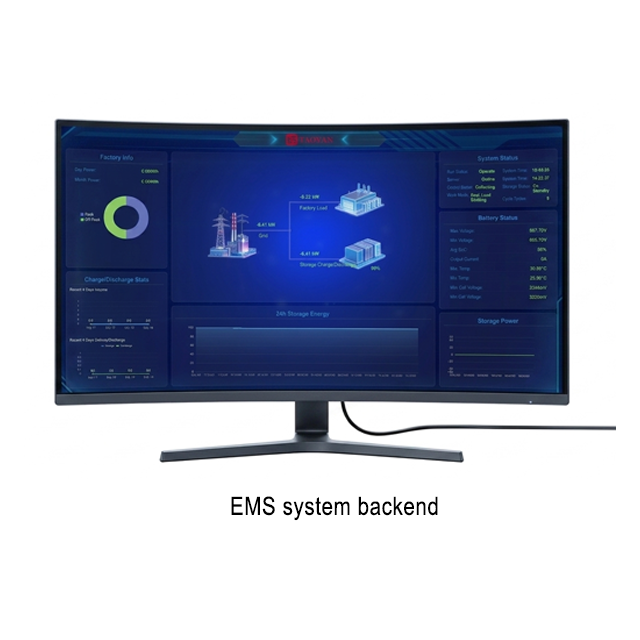
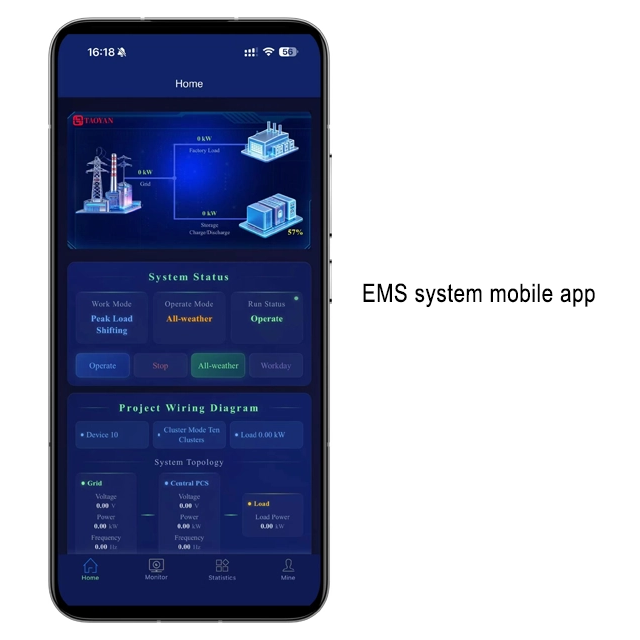
The secret sauce of the 2026 energy economy is AI-based Energy Management Systems (EMS). You don’t need to watch the energy markets; the AI does it for you.

Advanced EMS algorithms now integrate real-time weather forecasts, household behavior patterns, and spot-market electricity prices. If the AI predicts a price spike at 6:00 PM due to a drop in wind power, it will proactively charge your battery and EV from your solar panels at 2:00 PM. It then automatically "shaves the peak" for you or exports energy when the financial reward is greatest. By automating these thousands of micro-decisions, 2026 smart homes are achieving energy cost reductions of over 70% compared to traditional grid-reliant homes.
Beyond simple "buy low, sell high" arbitrage, 2026 VPP participants are earning through Ancillary Services.
Frequency Regulation: Grid operators pay a premium for assets that can respond in milliseconds to stabilize the grid’s frequency. Modern lithium batteries are the perfect tools for this.
Capacity Reserves: You get paid simply for promising to have a certain amount of energy available for the grid if called upon, even if it is never actually used.
Community Energy Sharing: In some 2026 peer-to-peer (P2P) markets, you can sell your excess solar power directly to your neighbor who doesn’t have a solar roof, bypassing the traditional utility markup.
The VPP model is not just for homes. In 2026, small commercial and industrial (C&I) sites—like local supermarkets, gas stations, and small factories—are using integrated storage to transform their energy overhead into a profit center. By aggregating refrigeration loads and EV delivery fleets into VPPs, these businesses are achieving "Net-Zero" status while creating new recurring income streams.
The "Uninterrupted Home" of 2026 is more than a sanctuary; it is an active participant in the global energy transition. By embracing VPP and V2G technologies, we are moving away from a centralized, fragile grid toward a resilient, democratic energy internet. Your battery and your car are no longer just tools for convenience—they are the building blocks of a cleaner, more profitable, and more stable future.
In 2026, VPP algorithms are "battery-aware." They only discharge a small percentage of your capacity and manage the C-rate to ensure that the battery’s lifespan remains within its 10-15 year warranty. The financial incentives usually far outweigh any marginal degradation.
Yes. V2G requires a bidirectional DC or AC charger that is compatible with your vehicle’s software. By 2026, most new premium EVs and many mid-range models come V2G-ready out of the box.
You always have priority. Through your smartphone app, you can set a "minimum state of charge" (e.g., 80%). The VPP will never draw your battery below that level, ensuring you always have enough range for your commute.
Earnings vary by region and usage, but in 2026, a typical household with solar + 10kWh storage + an EV can expect to earn between $500 and $1,500 annually in credits and payments, depending on local grid volatility.
Yes. 2026 VPP platforms utilize end-to-end encryption and decentralized identity (DID) standards to ensure that while the energy is shared, your privacy and personal habits remain confidential.