
Views: 345 Author: taoyan-Jenny Publish Time: 2026-03-09 Origin: Site


Content Menu
● The New Mandatory Hazard Mitigation Analysis (HMA)
● Beyond Thermal Runaway: Understanding UL 9540A and the New UL 9540B
>> The Evolution of Fire Testing
● Liquid Cooling’s Role in Achieving Certification
>> Thermal Uniformity as a Safety Barrier
● The AHJ’s Role in 2026: Tighter Integration with Emergency Response
>> Digital Transparency and Training
● The Bankability of Safety: Why Investors and Insurers Prioritize Certified Systems
>> Reducing the Cost of Capital
● Global Harmony: The Convergence of IEC and UL Standards
● Conclusion: Safety as the Ultimate Competitive Advantage
● Frequently Asked Questions (FAQ)
>> 1. Is UL 9540A a pass/fail test?
>> 2. What is the biggest change in NFPA 855 (2026 Edition)?
>> 3. How does the 314Ah cell shift affect safety certification?
>> 4. Do I need these certifications for a small 100kWh industrial cabinet?
>> 5. Why do insurance companies care about NFPA 855?
As the global energy storage market matures in 2026, the industry has moved beyond the "Wild West" era of rapid deployment at any cost. Today, safety is no longer a peripheral concern or a checkbox for local building inspectors; it is the fundamental gatekeeper of project viability. For Commercial, Industrial, and Utility-scale developers, understanding the evolving landscape of NFPA 855 and UL 9540 is critical. These standards do not just dictate how a system is built—they dictate whether it can be insured, financed, and interconnected. As systems grow in energy density, moving toward 5MWh+ configurations and 314Ah cell architectures, the margin for error has vanished, replaced by rigorous, data-driven safety protocols.
The 2026 Edition of NFPA 855 has introduced several landmark changes, the most significant being the universal requirement for a Hazard Mitigation Analysis (HMA). In previous cycles, an HMA was often only required for indoor installations or systems exceeding certain capacity thresholds. Today, the AHJ (Authority Having Jurisdiction) expects a comprehensive HMA for nearly every professional BESS deployment.
A compliant HMA is no longer a static document. It must be a dynamic risk assessment that evaluates potential failure modes, including thermal runaway, cabinet-level explosions, and toxic off-gassing. The 2026 standards require developers to prove that a failure in one unit will not lead to a cascading event that compromises adjacent infrastructure. This shift forces manufacturers to provide granular data on their "active" safety measures—such as high-speed sensors and aerosol suppression—rather than relying solely on "passive" separation distances.

While NFPA 855 provides the installation code, the UL 9540 series provides the product testing benchmark. The industry has long looked to UL 9540A (Test Method for Evaluating Thermal Runaway Fire Propagation) as the gold standard. However, 2026 marks the widespread adoption of supplemental testing protocols, including the emergence of UL 9540B.
UL 9540A provides the data on how a battery burns and whether fire spreads between racks. However, the 2026 market demands more. The new protocols focus on "Large-Scale Fire Testing," which evaluates the effectiveness of integrated fire suppression systems under real-world conditions. For systems using the latest 314Ah cells, the sheer chemical energy involved means that standard water-based suppression may be insufficient. Testing now emphasizes the containment of the fire within a single enclosure, ensuring that the external skin of a 5MWh container remains below critical temperature thresholds even during an internal thermal event.
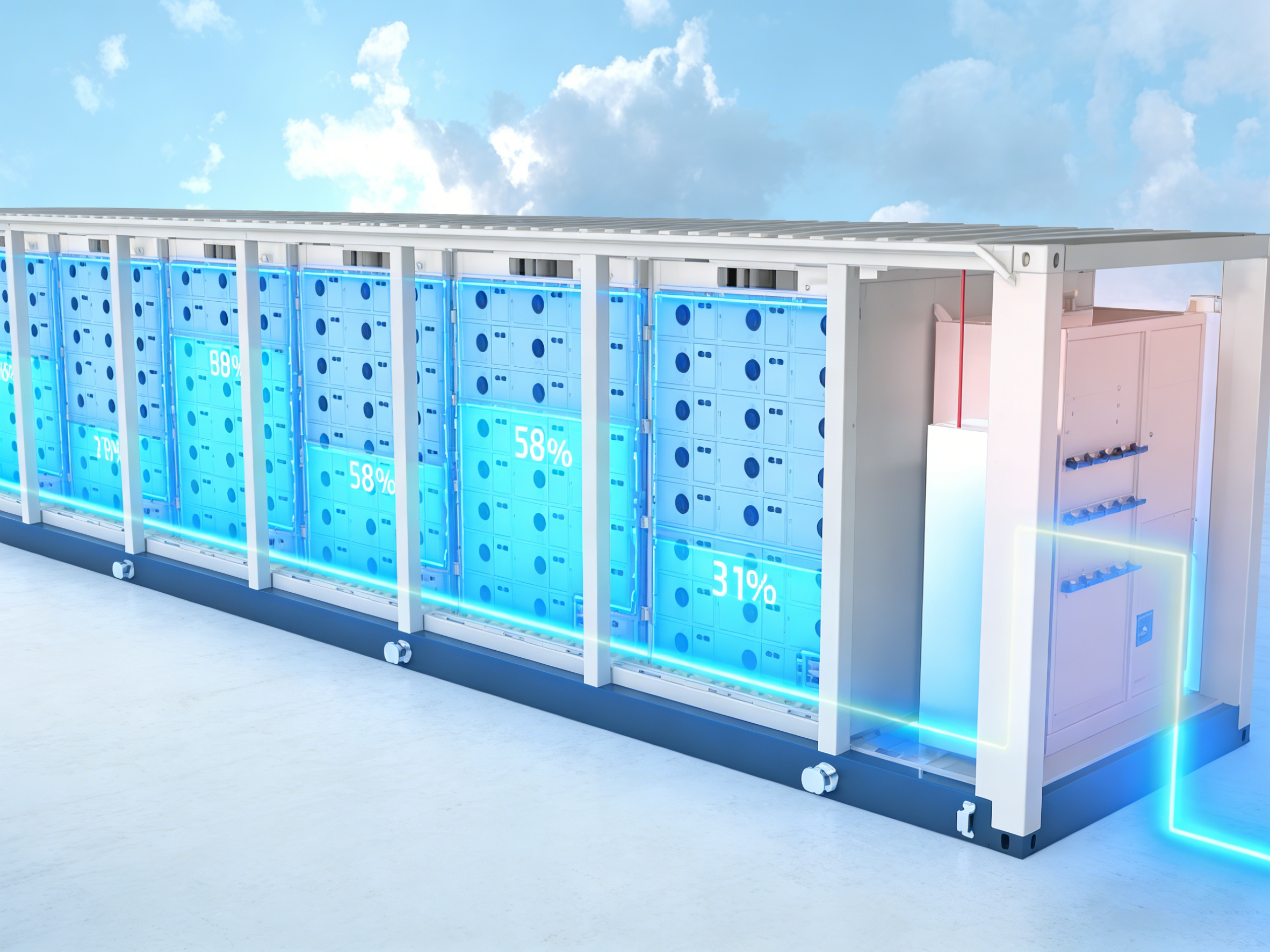
The shift toward liquid cooling is not just about performance; it is a primary safety strategy. In 2026, achieving UL 9540 certification is significantly easier for systems that utilize closed-loop liquid cooling compared to traditional air-cooled designs.
Thermal runaway is often triggered by localized "hot spots" within a cell or module. Liquid cooling provides a level of thermal uniformity that air cooling cannot match, typically maintaining a temperature delta ($\Delta T$) of less than $3^\circ\text{C}$ across the entire system. This stability prevents the cell-level aging variances that often lead to internal shorts. In the eyes of safety auditors, a liquid-cooled system is inherently less likely to reach the "point of no return" for thermal runaway, making the path to site-level approval much smoother.
The 2026 standards have fundamentally changed the relationship between the ESS provider and local emergency responders. Compliance now requires a "Live Emergency Response Plan" (ERP) that is shared with and vetted by the local fire department before the first battery is delivered to the site.
Modern standards now mandate that ESS operators provide local fire crews with a "Digital Safety Passport" for the installation. This includes real-time access to the BMS dashboard and a clear "Kill Switch" protocol that can be executed remotely or on-site. Manufacturers are now expected to provide interactive training modules for local responders, explaining the specific chemistry-based risks (such as Hydrogen Cyanide or Hydrogen Fluoride gas) associated with their systems. This level of transparency is no longer optional; it is a core component of the NFPA 855 compliance framework.
For the financial community, safety is synonymous with risk management. In 2026, the "bankability" of an energy storage asset is tied directly to its certification pedigree. A project that lacks a full UL 9540 listing or a rigorous HMA is essentially uninsurable in the current market.
Insurers have become sophisticated energy analysts. They now offer significantly lower premiums for systems that demonstrate "Passive Propagation Prevention"—the ability to stop a fire at the module level without external intervention. For a 100MWh project, the difference in insurance premiums between a standard system and a high-safety-certified system can amount to millions of dollars over the project’s lifespan. Consequently, lenders are increasingly making UL 9540A compliance a "Condition Precedent" for financial close. Safety is no longer an expense; it is a yield-enhancer.
While North America follows UL/NFPA, the rest of the world has traditionally followed IEC standards (such as IEC 62933). However, 2026 has seen a significant convergence of these paths. The latest updates to international standards have adopted many of the "Large-Scale Fire Testing" requirements originally pioneered by UL. For global manufacturers, this means that a system designed to pass the rigors of NFPA 855 is now much more likely to find a "fast track" to approval in Europe, Australia, and the Middle East. This harmonization is reducing the engineering burden on manufacturers while raising the global safety floor for all users.
The 2,000-word story of energy storage in 2026 is not about who has the cheapest cells; it is about who has the safest system. As we deploy more energy into denser urban and industrial environments, the social license to operate depends entirely on our ability to manage the inherent risks of high-density lithium chemistry. NFPA 855 and UL 9540 are the blueprints for that trust. By embracing these standards—not as hurdles to be cleared, but as the foundation of engineering excellence—manufacturers and developers are ensuring that the energy transition remains both sustainable and secure. In the modern market, the safest system is the only system that truly makes financial sense.
Technically, no. UL 9540A is a "test method" that generates a data report. However, the results of that report determine how the AHJ will allow you to install the system. If the report shows fire propagation between units, the AHJ will likely require much larger separation distances (e.g., 10 feet or more), which can ruin the economics of a space-constrained site.
The most critical change is the expansion of the Hazard Mitigation Analysis (HMA) requirements and the increased focus on explosion control. Systems must now prove they have adequate venting or suppression to prevent a cabinet-level explosion, even if a fire occurs.
Larger cells mean more chemical energy in a single "container." This makes it harder to pass the "non-propagation" part of the UL 9540A test. Manufacturers using 314Ah cells must demonstrate superior thermal management and structural fire-walling between modules to meet the same safety levels as older 280Ah systems.
Yes. While the scale of the HMA might be smaller, NFPA 855 and UL 9540 apply to any "Stationary Energy Storage System." In fact, because industrial cabinets are often placed closer to buildings or parking lots, the AHJ may actually be more strict about fire-spread data.
Insurance companies are responsible for the total loss of the asset and the surrounding property. A system that follows NFPA 855 is designed to contain a fire to a small area, whereas a non-compliant system could lead to a total site loss. Following the standard is the primary way to prove you have taken "reasonable care" to mitigate risk.


