
Views: 307 Author: taoyan-Jenny Publish Time: 2026-02-25 Origin: Site


Content Menu
>> Understanding the Policy: A Multi-Stage Phase-Out
>> The Economic Ripple Effect: Impact on Manufacturing Costs
>> Global Market Consequences: Rising Prices and Project Economics
>> Industrial Consolidation: Survival of the Fittest
>> Strategic Shifts: Moving Production Overseas
>> Technical Innovation as a Cost-Offset Mechanism
>> Comparative Analysis: ESS Costs Before and After Policy Changes
>> Conclusion: Adapting to the New Reality
>> Frequently Asked Questions (FAQs)
The global energy transition is currently navigating one of its most significant fiscal pivots to date. For over a decade, China has dominated the renewable energy and energy storage system (ESS) landscape, fueled by massive industrial scale, technical innovation, and supportive government policies. However, the tide is turning. In a move that signals the "end of an era" for rock-bottom equipment prices, the Chinese government has begun a systematic phase-out of export tax rebates for photovoltaic (PV) and battery products. This policy shift is set to reshape the economic foundations of energy storage projects worldwide, from the scorching deserts of India to the burgeoning storage hubs of Europe and North America.
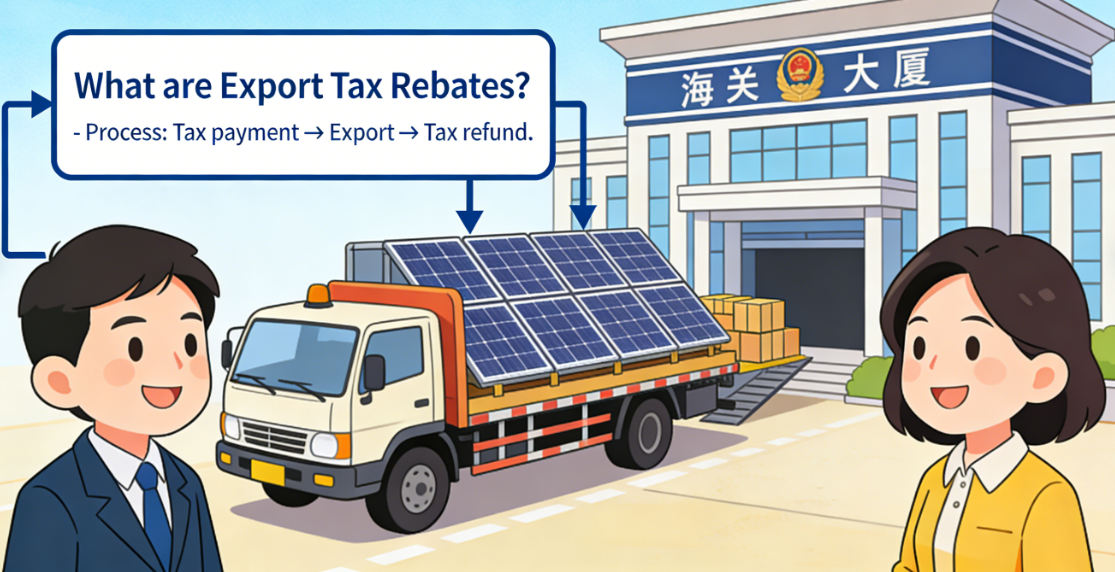
The transition away from export tax rebates is not an overnight shock but a calculated withdrawal designed to mature the industry. Historically, Chinese exporters enjoyed a 13% value-added tax (VAT) rebate on their international shipments, which allowed them to offer highly competitive pricing on the global market.
The first major adjustment occurred in late 2024, when the Ministry of Finance and the State Taxation Administration reduced the rebate for key clean energy products, including lithium-ion batteries and solar components, from 13% to 9%. This 4% reduction served as an initial warning to the market, but the more aggressive cuts are scheduled for 2026 and 2027.
According to the latest announcements, starting April 1, 2026, the export tax rebate for photovoltaic products will be completely abolished. Simultaneously, the rebate for battery products will be further slashed from 9% to 6%, with a final, complete removal of all battery export rebates scheduled for January 1, 2027. This roadmap forces a structural shift from a volume-driven, price-competitive model toward one focused on value, brand premium, and technological differentiation.
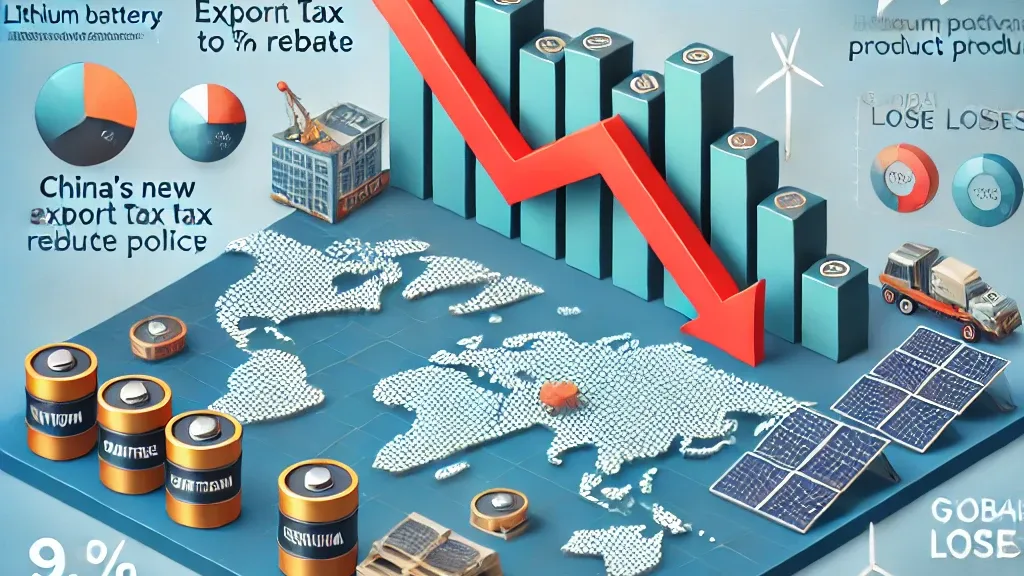
*The gradual reduction and eventual cancellation of export tax rebates mark a significant pivot in China's industrial strategy.*

The primary and most immediate result of the rebate cancellation is an increase in the "effective cost" of exports for Chinese manufacturers. When a 13% or 9% rebate is removed, that cost doesn't simply disappear; it must be absorbed by the manufacturer, passed on to the buyer, or split between the two.
For a top-tier manufacturer of Battery Energy Storage Systems (BESS), the 9% rebate reduction is estimated to increase product costs by approximately 0.06 to 0.07 yuan per watt-hour. In a market where margins have been razor-thin due to overcapacity and fierce domestic competition, many manufacturers have no choice but to adjust their quotations upward. This has already led to "panic buying" and a surge in orders ahead of the 2026 deadline, as developers rush to lock in lower prices before the next round of cuts.
[Video Placeholder: Industry Expert Analysis - How Chinese Battery Giants like CATL and BYD are adjusting their global pricing strategies following the tax rebate policy changes.]
The impact of China's policy shift is felt most acutely in markets that are heavily dependent on Chinese imports. Given that China supplies over 80% of the world's solar modules and roughly 90% of the lithium iron phosphate (LFP) battery packs used in stationary storage, the global benchmark for ESS pricing is directly tied to Beijing's fiscal decisions.
* Impact on India: India's solar and BESS developers are particularly vulnerable. Analysts suggest that module prices could rise by as much as 14% by late 2026 as the full impact of the rebate cancellation takes hold. This increase threatens the internal rate of return (IRR) for many large-scale storage projects that were planned based on the "rock-bottom" price projections of 2023 and 2024.
* European and UK Markets: In Europe, where energy security and the "Green Deal" are high priorities, developers are seeing the introduction of price-adjustment clauses in long-term contracts. The cost of UK solar and storage projects is expected to rise by approximately 9% in the short term, potentially slowing the deployment of small-to-medium scale systems if local subsidies do not rise to meet the gap.
* The US Market: While the US has its own set of tariffs and incentives under the Inflation Reduction Act (IRA), the baseline price of the global battery supply chain still influences US project economics. The reduction in Chinese rebates adds another layer of cost complexity for US importers who are already navigating Section 301 tariffs and other trade barriers.
One of the hidden objectives of the Chinese government's policy shift is to curb overcapacity and encourage "rational competition." For years, smaller, less efficient manufacturers were able to stay afloat by leveraging export rebates to offer unsustainably low prices.
With the rebates disappearing, these "marginal" players are facing a crisis. Reports indicate that over 50 solar and battery-related companies in China faced bankruptcy or severe financial distress in 2025 as margins tightened. The industry is now entering a phase of rapid consolidation. The dominant players—the "Tier 1" giants—have the scale and technological depth to absorb some of the cost increases or command a brand premium that justifies higher prices. Smaller manufacturers, however, may find themselves priced out of the international market entirely.
*Large-scale storage projects must now account for higher procurement costs in their long-term financial modeling.*
The cancellation of export tax rebates serves as a powerful "nudge" for Chinese companies to localize production in foreign markets. By manufacturing batteries and ESS components in the regions where they are sold—such as the United States, Hungary, or Morocco—companies can bypass both the export rebate issue and the rising tide of international tariffs.
We are already seeing a wave of Chinese investment in overseas "Gigafactories." This "China + 1" strategy allows manufacturers to maintain their global market share while reducing their reliance on the shifting fiscal policies of the mainland. For global developers, this might eventually mean a more diversified supply chain, though the transition period will likely be characterized by higher costs as these new overseas facilities scale up.
To remain competitive in a post-rebate world, the industry is doubling down on innovation. If the "tax subsidy" is gone, the only way to keep total system costs down is to improve efficiency and energy density.
1. High-Capacity Cells: The transition from 280Ah cells to 300Ah+ and even 500Ah+ cells is accelerating. Larger cells reduce the number of components required in a system, lowering assembly and integration costs.
2. Solid-State and Sodium-Ion: Research into alternative chemistries is gaining more funding. While LFP remains the king of the ESS market, sodium-ion batteries offer a potentially lower-cost alternative that is less reliant on expensive lithium, helping to offset the loss of tax rebates.
3. Software-Driven Value: Manufacturers are increasingly focusing on "Energy Management Systems" (EMS) and AI-driven optimization. By proving that their systems can generate more revenue through smarter grid participation, they can justify the price increases caused by the rebate cancellation.
The following table illustrates the projected shifts in the global ESS market as the rebate policies take full effect.
| Feature | Pre-2024 (13% Rebate) | 2025-2026 (9% to 6% Rebate) | 2027+ (0% Rebate) |
| :--- | :--- | :--- | :--- |
| Pricing Strategy | Aggressive, price-driven | Defensive, cost-recovery | Value-based, premium |
| Market Atmosphere | Oversupply / Price War | Consolidation / Panic Buying | Rational / Stable |
| Typical BESS Price | Record Lows ($100-$110/kWh) | Moderate Increase ($120-$135/kWh) | Market-Driven ($140/kWh+) |
| Primary Driver | Volume and Market Share | Policy Compliance / Efficiency | Innovation and Localization |
The cancellation of China's export tax rebates for energy storage systems marks a watershed moment for the global renewable energy industry. While it effectively ends the "era of cheap storage," it also signals the maturation of the market. By removing what many trade partners viewed as an "indirect subsidy," China is aligning its clean energy exports with international market standards and reducing the risk of further trade frictions.
For developers and investors, the message is clear: the days of relying on ever-declining equipment costs are over. Success in the next decade of the energy transition will depend on rigorous financial planning, strategic partnerships with Tier 1 manufacturers, and a focus on long-term system performance rather than initial purchase price. As the industry consolidates and moves toward localized production, the global energy storage market will likely emerge more resilient, technologically advanced, and economically sustainable.
*
Q1: Why did China decide to cancel the export tax rebate for batteries and ESS?
The move is intended to reduce industrial overcapacity, curb "unhealthy" price wars, and mitigate international trade tensions. By allowing export prices to rise to market-driven levels, China also eases its own fiscal burden while encouraging domestic companies to focus on high-value innovation rather than low-cost volume.
Q2: How much will energy storage system prices increase because of this?
Industry analysts project a price hike of approximately 9% to 14% by the time the rebates are fully removed in 2027. This includes the direct impact of the rebate loss as well as secondary factors like supply chain consolidation and rising raw material costs.
Q3: When exactly do these changes take effect?
The rebate was reduced from 13% to 9% in late 2024. It will drop to 6% on April 1, 2026, and will be completely removed (0%) on January 1, 2027. Photovoltaic (solar) rebates will be fully abolished earlier, on April 1, 2026.
Q4: Will this policy change benefit non-Chinese battery manufacturers?
In the short term, yes. Manufacturers in countries like India, South Korea, and the United States may find themselves more price-competitive as the "subsidy" for Chinese exports disappears. However, Chinese firms are countering this by building factories within those same regions.
Q5: Should developers buy ESS equipment now to avoid future price hikes?**
Many developers are already doing so, leading to a surge in orders through late 2025. However, "panic buying" comes with risks, such as potential issues with storage of equipment and the rapid obsolescence of battery technology. It is often better to balance early procurement with long-term strategic supply agreements.


