
Views: 308 Author: taoyan-Jenny Publish Time: 2026-03-04 Origin: Site


Content Menu
● Defining Grid Parity in the Age of High-Density Storage
>> The Shift from LCOE to LCOS
>> Why 5MWh is the Economic "Sweet Spot"
● The Role of 314Ah Cells in Achieving Economical Scale
>> Reducing CapEx through Physical Density
>> Manufacturing Efficiency and the Negative Price Premium
● Revenue Stacking: Maximizing Asset Utilization with 5MWh Systems
>> Ancillary Services and Frequency Regulation
>> Arbitrage and Peaker Plant Displacement
● From CapEx to OpEx: The Financial Benefits of Liquid Cooling
>> Reducing Parasitic Load and Boosting RTE
>> Minimizing Degradation and Augmentation Costs
● Global Regulatory Shifts and the Value of Carbon Credits
>> The Inflation Reduction Act and International Equivalents
>> Carbon Markets and ESG Compliance
● The 5MWh Standard and the Future of Project Finance
>> Lowering the Cost of Capital
>> Insurance and Risk Mitigation
● Conclusion: The Era of Economical Storage
● Frequently Asked Questions (FAQ)
>> 1. How does a 5MWh system help in achieving Grid Parity?
>> 2. Why is the 314Ah cell important for project ROI?
>> 3. What is "Revenue Stacking" and how does it apply to 5MWh systems?
>> 4. Does the use of liquid cooling in these systems affect the LCOS?
>> 5. Are 5MWh systems considered "bankable" by international lenders?
The global transition to a carbon-neutral power grid is no longer a matter of technological feasibility but of economic inevitability. As we progress through 2026, the energy industry is witnessing a historic convergence where the cost of renewable energy plus storage is becoming competitive with, or even cheaper than, traditional fossil fuel generation. This phenomenon, known as Grid Parity, is being accelerated by a new industry benchmark: the 5MWh Energy Storage System (ESS). By integrating high-density 314Ah cells and advanced liquid cooling architectures into a standardized twenty-foot container, the 5MWh ESS has become the primary catalyst for reshaping the financial landscape of global energy. In this analysis, we explore how this specific capacity threshold is lowering costs, enabling new revenue streams, and securing the long-term viability of renewable energy investments.

For decades, the primary argument against wind and solar energy was their intermittency. To make renewables reliable, massive amounts of energy storage were required, but the high cost of that storage often made the total project price prohibitive. Grid Parity occurs when the Levelized Cost of Energy (LCOE) from renewable sources, including the cost of firming that energy with storage, is equal to or less than the cost of electricity from the grid or conventional peaking plants.
In the energy storage sector, the industry has refined its metrics to focus on the Levelized Cost of Storage (LCOS). LCOS accounts for every dollar spent over the lifetime of a storage asset, divided by the total energy throughput. The arrival of the 5MWh ESS has drastically improved this metric. By packing more energy into the same physical footprint and utilizing the standardized 314Ah cell, the industry has achieved a significant reduction in both the initial Capital Expenditure (CapEx) and the ongoing Operational Expenditure (OpEx), finally bringing LCOS within the range required for global grid parity.
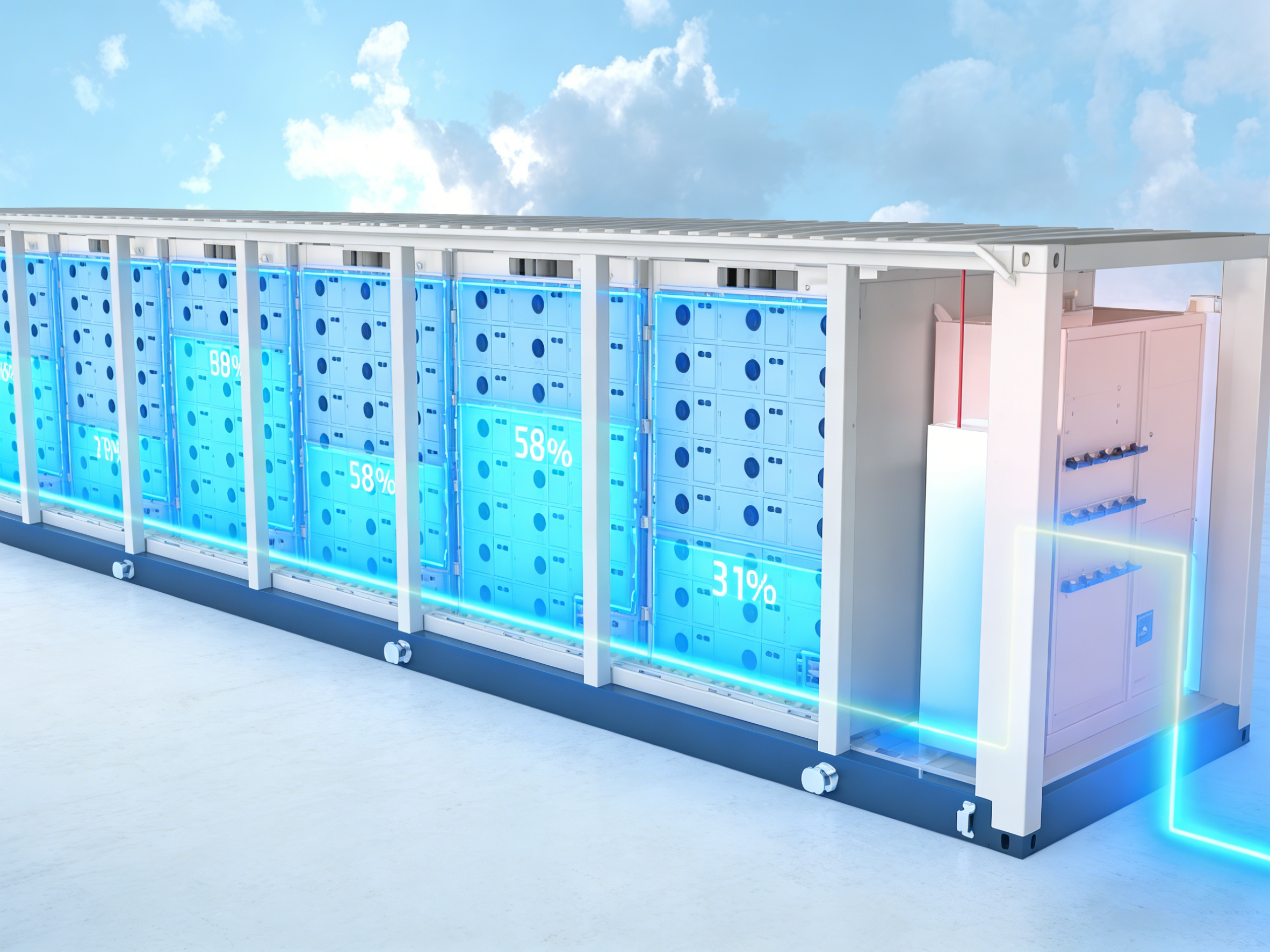
The leap to 5MWh represents more than just a capacity increase; it is an optimization of the entire supply chain. At 5MWh, the system utilizes the full volume and weight capacity of a standard shipping container and the maximum output of modern 1500V string inverters. This alignment creates an ideal ratio of energy capacity to balance-of-plant costs. It is the point where the economies of scale meet the limits of logistical standardization, providing the lowest possible cost per kilowatt-hour for utility-scale deployments.
The economic engine inside every 5MWh container is the 314Ah Lithium Iron Phosphate (LFP) cell. This specific cell capacity has become the industry favorite in 2026 because it balances the need for high energy density with the practical requirements of mass manufacturing.
The primary way 314Ah cells contribute to grid parity is through the reduction of physical materials. When a system integrates 314Ah cells instead of the older 280Ah models, it effectively increases the container’s energy capacity by over thirty percent without increasing the number of containers. For a 100MWh project, this means the developer needs significantly fewer concrete pads, fewer miles of cabling, and fewer communication interfaces. These hardware savings directly reduce the upfront investment required, lowering the barrier for new renewable projects to reach financial close.
By 2026, the massive scaling of 314Ah production lines has resulted in what economists call a negative price premium. Because the global supply chain has aligned around this standard, the cost to produce a 314Ah cell is now virtually identical to, or in some cases lower than, the older 280Ah cells on a per-watt-hour basis. This allows project developers to gain thirty percent more capacity without a proportional increase in battery costs, a fundamental requirement for achieving grid-scale economic competitiveness.

Grid parity is not only about lowering costs but also about maximizing revenue. The high-density nature of 5MWh systems enables a strategy known as revenue stacking, where a single storage asset participates in multiple electricity market services simultaneously.
Because 5MWh systems are highly responsive, they are ideal for frequency regulation—helping the grid maintain its balance between supply and demand in real-time. The increased energy reserves within a 5MWh container allow it to stay in the market longer and respond to more frequent signals from the grid operator. This high utilization rate increases the total revenue generated per year, shortening the payback period for investors.
The most traditional use for ESS is energy arbitrage: buying electricity when it is cheap and selling it when it is expensive. With the lower LCOS provided by 5MWh systems, the "spread" required for a project to be profitable has narrowed. This allows 5MWh ESS to compete directly with natural gas peaker plants. In many regions, it is now more economical to build a 5MWh-based battery site than to keep an aging gas turbine on standby, marking a major milestone in the quest for grid parity.
While the cells provide the energy, the thermal management system ensures that energy remains available for twenty years. The transition to liquid cooling in 5MWh systems is a strategic financial decision designed to protect the long-term ROI of the project.
Every kilowatt of electricity used to cool a battery is a kilowatt that cannot be sold to the grid. Air-cooled systems are notoriously inefficient, often consuming a significant portion of the stored energy just to run fans. Liquid cooling systems in modern 5MWh units have drastically reduced this parasitic load. By increasing the Round-Trip Efficiency (RTE), liquid cooling ensures that more of the purchased or generated energy reaches the market, directly increasing the project’s annual cash flow.
In the early years of the energy storage industry, many projects suffered from "capacity fade" due to poor temperature control, requiring expensive "augmentation"—the addition of new batteries—after just five or six years. The precision of liquid cooling in 5MWh systems keeps cell temperatures within a tight three-degree window. This drastically slows the chemical aging of the 314Ah cells, potentially pushing the first required augmentation out to year ten or twelve. Delaying these massive capital outlays significantly improves the Net Present Value (NPV) of the storage asset.
The economics of 5MWh ESS are being further bolstered by shifting global regulations and the rising value of carbon credits in 2026. Governments are increasingly recognizing storage as a standalone asset class, providing tax incentives and subsidies that were previously reserved for solar and wind generation.
In the United States, the Inflation Reduction Act has provided a stable framework for storage investment, but similar policies are now being mirrored in Europe and Asia. These incentives, combined with the lower baseline cost of 5MWh systems, have pushed many projects into the realm of "instant profitability." When the tax credits are combined with the operational efficiencies of 314Ah technology, the financial case for large-scale storage becomes overwhelming.
For many corporations and utilities, 5MWh ESS projects are a critical component of their Environmental, Social, and Governance (ESG) strategies. As carbon prices rise globally, the ability of a storage system to displace carbon-intensive peaking power becomes a tradable financial asset. The high density of 5MWh systems allows for a greater volume of carbon offsets to be generated per acre of land, providing an additional layer of revenue that was not as prominent five years ago.
The move toward a standardized 5MWh container has also simplified the world of project finance. Banks and insurance companies prefer standardized, predictable assets. The 5MWh configuration, backed by Tier-1 314Ah cells and liquid cooling, has become a "bankable" blueprint.
Because the 5MWh system is now a proven commodity with predictable performance data, the risk premium charged by lenders has decreased. Lower interest rates on project debt mean lower overall project costs. This virtuous cycle of standardization, bankability, and lower cost of capital is perhaps the most important factor in bringing renewable energy storage to every corner of the globe.
Modern 5MWh systems include advanced safety features and real-time monitoring that satisfy the increasingly stringent requirements of global insurers. By meeting or exceeding standards like UL 9540A and NFPA 855, these systems are easier and cheaper to insure. In the world of utility-scale energy, where insurance can be a major operating expense, the safety profile of the liquid-cooled 5MWh container is a significant economic advantage.
The 5MWh Energy Storage System is the hardware manifestation of a mature, economically viable renewable energy industry. It is the tool that has finally allowed us to bridge the gap between "clean energy" and "cheap energy." By leveraging the physical density of 314Ah cells and the operational efficiency of liquid cooling, the 5MWh standard has lowered the cost of storage to the point where grid parity is a reality in most major energy markets. For developers, investors, and grid operators, the 5MWh ESS is no longer a luxury—it is the essential foundation for a profitable, reliable, and sustainable energy future. As we look beyond 2026, the success of the global energy transition will be measured by our ability to deploy these high-density systems at scale, ensuring that clean power is not just a moral choice, but the most logical financial choice for the entire world.
A 5MWh system reduces the Levelized Cost of Storage (LCOS) by packing more energy into a standard footprint. This lowers the capital cost per megawatt-hour (CapEx) for land, foundations, and cabling, and reduces operational costs (OpEx) through higher efficiency, making renewable energy competitive with fossil fuels.
The 314Ah cell is the building block of the 5MWh container. Its higher energy density means fewer cells, modules, and containers are needed to reach a project's target capacity. This reduces the upfront investment and improves the Return on Investment (ROI) by maximizing the energy output of the available space.
Revenue stacking is the practice of using an energy storage system to provide multiple services—such as frequency regulation, peak shaving, and energy arbitrage—simultaneously. The large capacity of a 5MWh system allows it to participate in several markets at once, significantly increasing the total revenue generated.
Yes, liquid cooling significantly improves the LCOS. It increases Round-Trip Efficiency (RTE) by reducing the energy used for cooling and extends the life of the battery cells by maintaining optimal temperatures. This leads to more total energy throughput over the system's life and delays expensive battery augmentation.
Yes. Because 5MWh systems utilize standardized technology (like 314Ah cells) and meet international safety standards (like UL 9540A), they are seen as low-risk assets. This standardization makes it easier for developers to secure project financing at lower interest rates.


