Views: 321 Author: taoyan-Jenny Publish Time: 2026-03-03 Origin: Site


Content Menu
● The Thermal Management Crisis of High-Density Batteries
>> The Limits of Air Cooling Technology
>> Understanding Heat Flux in 314Ah Systems
● Liquid Cooling vs Air Cooling: A Performance Comparison
>> Achieving Superior Temperature Uniformity
>> Maximizing Energy Density and Land Use
● Lowering Total Cost of Ownership (TCO) through Active Thermal Management
>> Impact on Round-Trip Efficiency (RTE)
>> Extending Battery Life and Reducing Augmentation
● Integrating Safety: Fire Suppression and Liquid Cooling Synergies
>> Preventing Thermal Propagation
>> Enhanced Monitoring and Early Warning Systems
● Global Market Trends: Why Liquid Cooling is the New Standard
>> The Influence of Tier-1 Manufacturers
>> Regulatory and Insurance Drivers
● The Engineering Challenges of Liquid Cooling Integration
>> Sealing and Leak Detection Technology
>> Maintenance and Coolant Management
● Future Outlook: What Is Next for Thermal Management?
● Frequently Asked Questions (FAQ)
>> 1. Is liquid cooling more expensive than air cooling for ESS?
>> 2. Can liquid cooling prevent battery fires?
>> 3. How often does the coolant in a liquid-cooled ESS need to be changed?
>> 4. Does liquid cooling consume more power than air cooling?
>> 5. What happens if a liquid cooling system leaks?
The global energy transition is no longer just about adding more battery capacity; it is about how to manage that capacity safely and efficiently over a twenty-year operational lifespan. As we navigate through 2026, the energy storage landscape has undergone a tectonic shift in thermal management technology. While air cooling was the primary method for smaller, legacy systems, liquid cooling has officially become the non-negotiable standard for utility-scale Energy Storage Systems (ESS). This transition is intrinsically linked to the rise of high-capacity 314Ah cells and the industry's push toward 5MWh containerized solutions. In this comprehensive analysis, we explore the technical imperatives, economic benefits, and safety advantages that have made liquid cooling the dominant force in the global energy storage market.
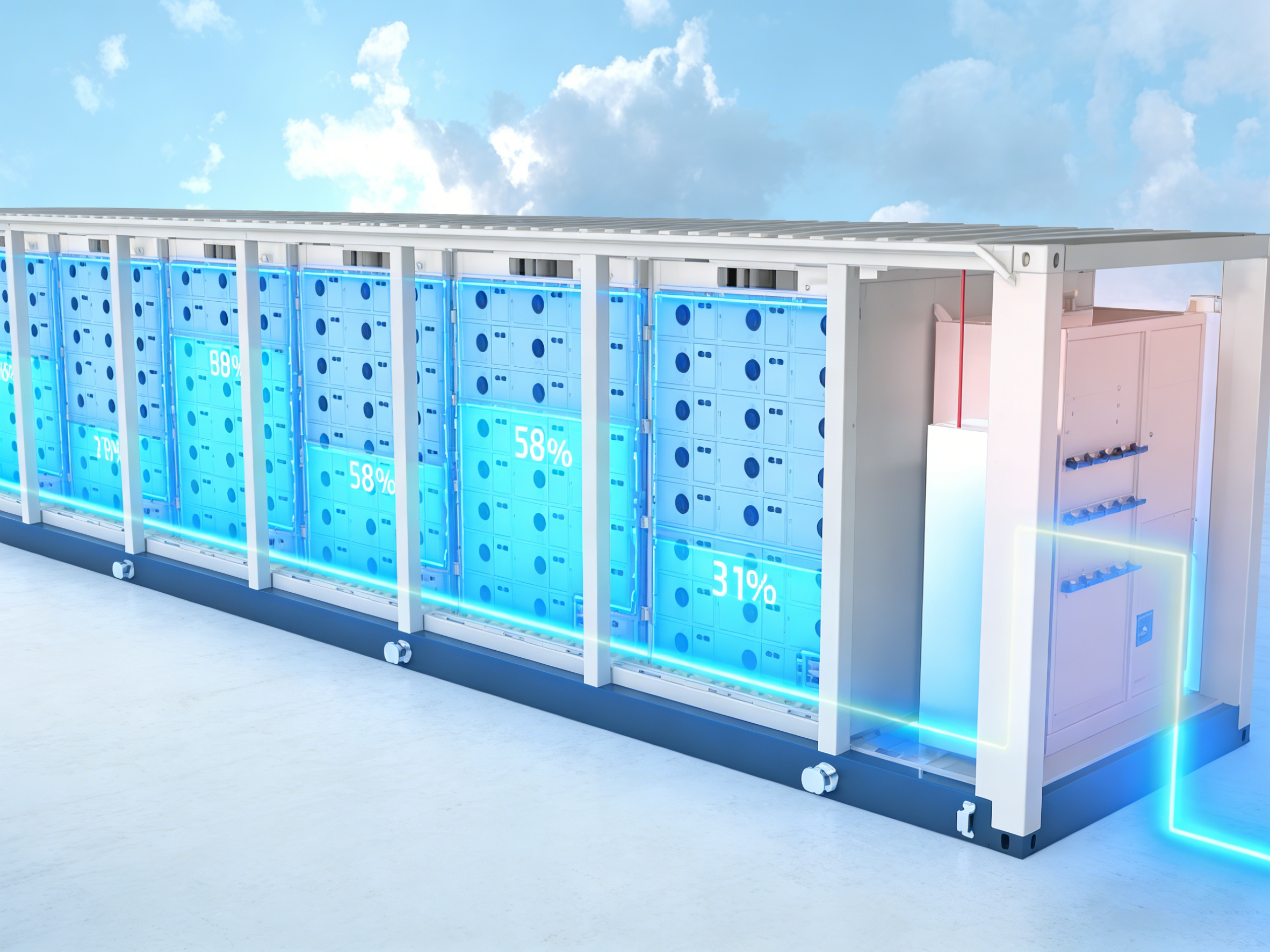
To understand the sudden dominance of liquid cooling, one must first look at the evolution of the battery cells themselves. The widespread adoption of 314Ah Lithium Iron Phosphate (LFP) cells has packed significantly more energy into the same physical footprint. While this is excellent for land use and initial capital costs, it creates a massive thermal challenge. High-density battery racks generate substantial heat during rapid charge and discharge cycles, especially when providing ancillary services like frequency regulation to the grid.
Legacy air cooling systems rely on fans to circulate air through the battery racks. However, air is a poor heat conductor compared to liquid. As battery cells become more densely packed, the air cannot reach the core of the modules effectively. This leads to uneven temperature distribution, where cells in the center of a rack operate at much higher temperatures than those on the periphery. In the era of 314Ah cells, this temperature delta can cause localized overheating, accelerated chemical degradation, and even safety risks that air-based systems simply cannot mitigate.
In a 5MWh container, thousands of cells are working in unison. The heat flux—the rate of heat energy transfer through a given surface—is significantly higher in 314Ah systems than it was in the older 100Ah or 280Ah configurations. Liquid cooling systems utilize a closed-loop circuit of coolant, typically a mixture of water and ethylene glycol, which has a heat capacity hundreds of times greater than air. This allows the system to absorb and carry away massive amounts of thermal energy with minimal temperature rise, keeping the entire battery block within its optimal operating window.
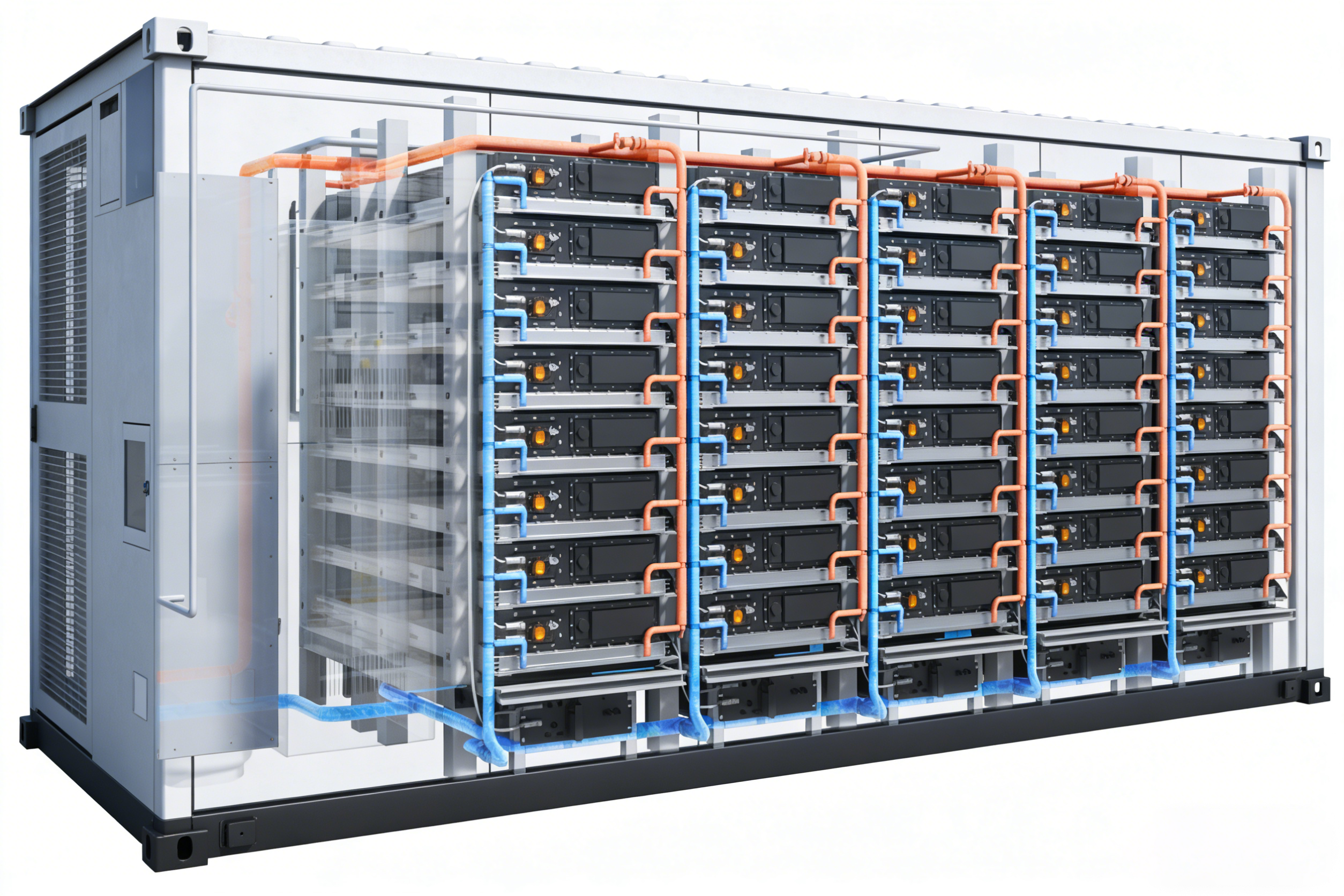
For project developers choosing between thermal management technologies, the comparison often comes down to performance metrics that directly impact the project bottom line. Liquid cooling outperforms air cooling in three critical areas: temperature uniformity, energy density, and parasitic power consumption.
The longevity of a battery system is determined by its weakest link—the cell that degrades the fastest. Temperature uniformity is the most critical factor in preventing premature aging. Liquid cooling systems use cold plates that are in direct or near-direct contact with the battery cells. This ensures that the temperature difference between any two cells in a container is maintained at less than three degrees Celsius. Air cooling systems often struggle to keep this delta under five or even eight degrees. By ensuring every cell ages at the same rate, liquid cooling prevents the "string imbalance" that plagues older air-cooled sites.
Because liquid cooling equipment is more compact than the massive ducting and fans required for air cooling, it allows for much higher system-level energy density. This is how the industry achieved the milestone of 5MWh in a twenty-foot container. Without the space-saving benefits of liquid cooling, such density would be physically impossible due to the sheer volume of air required to keep the cells cool. For developers in regions with high land costs, such as the United Kingdom, Japan, or California, the ability to pack more power into a smaller area provides a massive competitive advantage during the permitting and construction phases.
While the initial capital expenditure for a liquid-cooled system can be slightly higher than an air-cooled one, the Total Cost of Ownership (TCO) over a twenty-year period is significantly lower. This is the primary reason why sophisticated investors and independent power producers have shifted their preference so decisively in 2026.
Round-trip efficiency is a measure of how much energy is lost during the storage and retrieval process. Batteries are most efficient when operated within a narrow temperature range, typically between twenty and thirty degrees Celsius. Liquid cooling provides much tighter control over this range. Furthermore, liquid cooling systems are generally more efficient at moving heat. While fans in an air-cooled system must run constantly and at high speeds, liquid pumps can be modulated more precisely. This reduces the parasitic load—the energy the system steals from itself to keep cool—thereby increasing the overall RTE of the project.
Battery degradation is a multi-billion dollar concern for the ESS industry. Every degree above the optimal operating temperature accelerates the loss of lithium ions and the growth of the solid electrolyte interphase layer. By keeping cells cooler and more stable, liquid cooling can extend the life of a battery rack by several years. This reduces the need for "augmentation"—the practice of adding new battery strings years into a project to maintain the rated capacity. Fewer augmentations mean lower operational costs and a much higher Return on Investment (ROI) for the project owners.
Safety is the paramount concern for any grid-scale energy project. The transition to liquid cooling has brought about significant improvements in how the industry handles the risk of thermal runaway. In 2026, safety protocols like NFPA 855 and UL 9540A have become increasingly stringent, and liquid cooling provides a superior platform for meeting these standards.
The primary goal of modern safety design is to prevent a single cell failure from turning into a full-scale container fire. This is known as preventing thermal propagation. Because liquid cooling systems have a much higher heat absorption capacity, they act as a thermal buffer. If a cell begins to overheat, the surrounding liquid can often absorb enough of that energy to prevent the neighboring cells from reaching their ignition point. Some advanced liquid cooling systems are even designed to flood the battery modules with coolant in the event of a detected thermal anomaly, providing an immediate and effective fire suppression response.
Liquid-cooled systems are inherently more "instrumented" than air-cooled ones. They feature a network of pressure, flow, and temperature sensors throughout the coolant loop. This data, when fed into an AI-driven Battery Management System (BMS), provides an incredibly detailed picture of the system health. Changes in coolant pressure or subtle temperature fluctuations at a specific cooling plate can serve as early warning signs of a failing component, allowing operators to intervene long before a safety incident occurs.
As we look at the global market in 2026, the data is clear: liquid cooling has won the thermal management war for utility-scale storage. Major markets in North America, China, and Europe have seen a near-total pivot toward this technology for all new large-scale tenders.
The world's leading battery and ESS manufacturers, including CATL, Tesla, BYD, and Fluence, have all transitioned their flagship products to liquid-cooled architectures. Their massive production volumes have driven down the cost of liquid cooling components, such as chillers, manifolds, and cold plates. This economies-of-scale effect has narrowed the price gap between liquid and air cooling to the point where the performance benefits far outweigh the minor cost difference.
Insurance companies are also playing a major role in this transition. Given the high-profile nature of battery fires in the early 2020s, insurers have become far more selective about the projects they cover. In many cases, securing affordable insurance for a utility-scale project now requires the use of liquid cooling and advanced safety monitoring systems. Similarly, grid operators are setting stricter requirements for response times and efficiency, both of which are better served by liquid-cooled technology.
Despite the clear advantages, liquid cooling is not without its challenges. It requires a higher level of engineering precision during the manufacturing and installation phases. Dealing with pressurized liquids inside a high-voltage electrical enclosure requires meticulous attention to detail to prevent leaks.
Modern liquid-cooled ESS units use automotive-grade connectors and seals to ensure long-term reliability. Advanced leak detection sensors are placed at the bottom of the containers, capable of detecting even the smallest amount of moisture. If a leak is detected, the system can automatically isolate the affected string and alert maintenance teams. These robust engineering practices have largely mitigated the early industry fears about mixing liquids and electricity.
Liquid cooling systems do require a different maintenance profile than air-cooled ones. Operators must periodically check coolant levels, test the chemistry of the glycol mix to prevent corrosion, and ensure the chillers are free of debris. However, compared to the labor-intensive process of cleaning air filters and maintaining hundreds of individual fans in a legacy air-cooled site, the maintenance of a centralized liquid cooling system is often more streamlined and cost-effective.
As we move toward 2030, liquid cooling will likely continue to evolve. We are already seeing the emergence of "immersion cooling," where battery cells are completely submerged in a non-conductive, dielectric fluid. While this technology offers even higher thermal performance, it remains more expensive and complex than standard liquid-to-plate cooling. For the foreseeable future, the closed-loop liquid cooling system paired with 314Ah cells will remain the industry benchmark for large-scale energy storage.
The transition from air cooling to liquid cooling represents a maturing of the energy storage industry. It is a recognition that to achieve the scale and reliability required for a zero-carbon grid, we must move beyond the simple technologies of the past. Liquid cooling provides the thermal stability, energy density, and safety required to unlock the full potential of high-capacity cells like the 314Ah standard. By lowering the total cost of ownership and increasing the lifespan of critical grid assets, liquid cooling is not just a technical preference—it is the economic engine driving the next phase of the global energy revolution. As the 5MWh container becomes the global norm, liquid cooling will stand as the silent guardian of our renewable energy future.
While the initial purchase price of a liquid-cooled ESS can be five to ten percent higher than an air-cooled system, the total cost of ownership is lower. Liquid cooling reduces energy losses, extends battery life, and requires less land, making it more cost-effective over the typical twenty-year life of a utility project.
Liquid cooling is a significant safety upgrade because it provides superior heat absorption and prevents "thermal propagation"—the spread of fire from one cell to another. While no system can claim to be one hundred percent fire-proof, liquid-cooled systems are much better equipped to manage thermal events than air-cooled ones.
Most Tier-1 manufacturers design their systems to operate for five to ten years before requiring a coolant flush or major chemical adjustment. Regular monitoring of the coolant's PH and anti-corrosion levels ensures the system remains reliable without frequent maintenance.
In most cases, no. While liquid pumps require energy, they are far more efficient at moving thermal energy than air fans. Furthermore, because liquid cooling keeps the batteries at a more optimal temperature, the system operates more efficiently overall, leading to a higher round-trip efficiency for the entire project.
Modern systems are equipped with high-sensitivity leak sensors and automotive-grade sealing. In the event of a leak, the system is designed to trigger an alarm and, if necessary, automatically shut down the affected section. The coolants used are generally non-conductive or have low conductivity to minimize the risk of short circuits.